Explore our high-performance collection of patterned conveyor belts, specifically engineered to prevent material rollback on steep inclines. From Chevron designs to high-strength textile bases, discover components manufactured to exceed international safety standards.
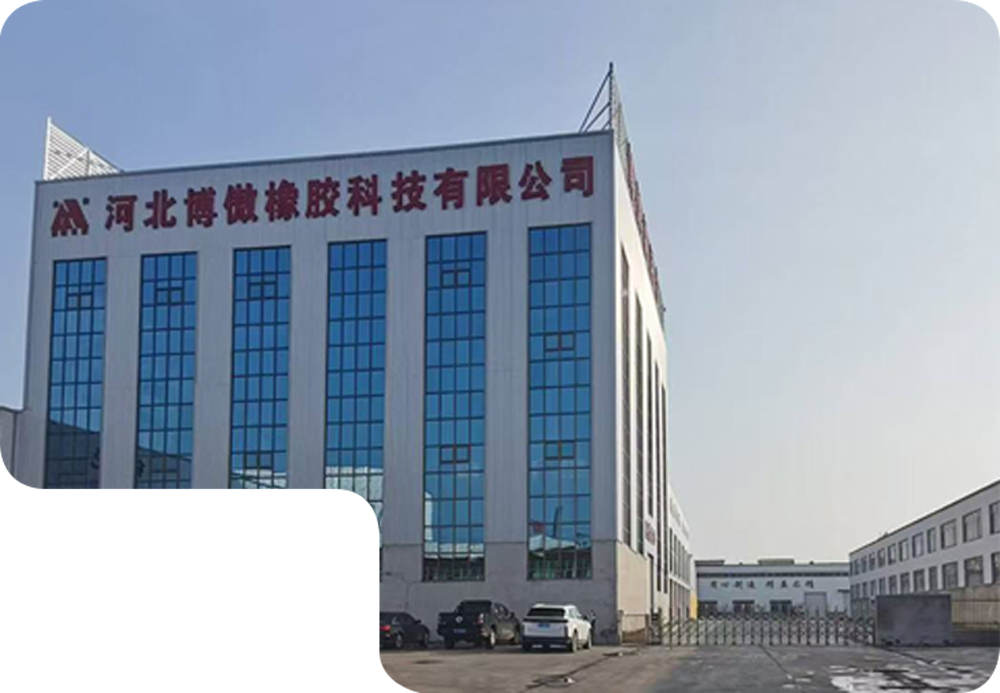
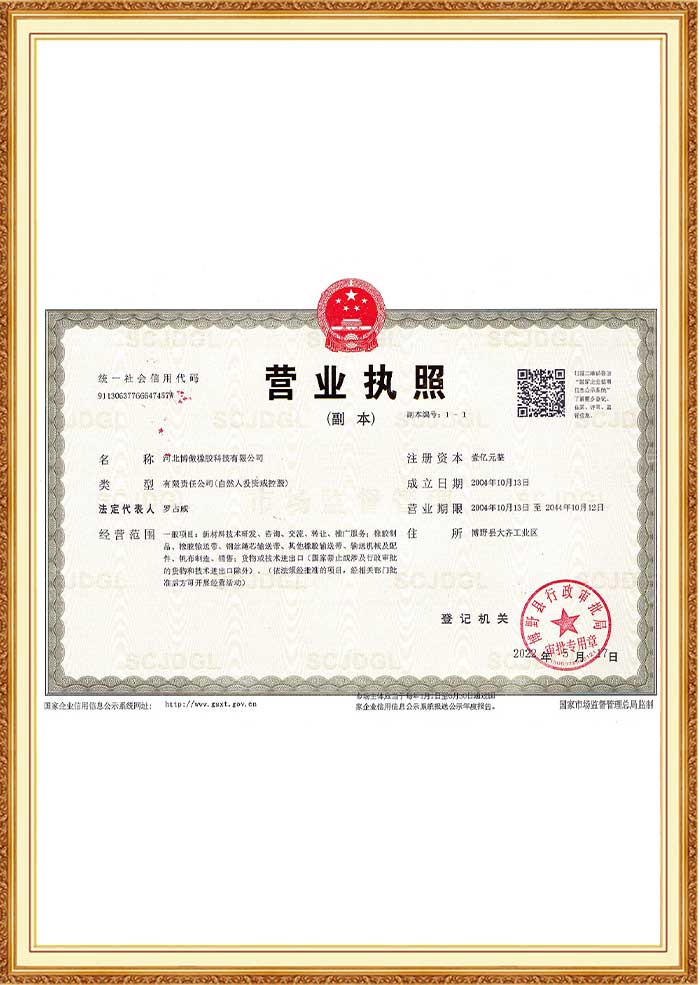
Established in 2004 and spanning a state-of-the-art facility of over 30 acres, Hebei Boao Rubber Technology Co., Ltd. has developed into a premier force in heavy-duty conveyor systems. Based in the renowned Rubber Industrial Park of Boye County, Baoding, Hebei Province, our flagship "Jinao" brand represents two decades of manufacturing leadership, combining research, product design, precise manufacturing, and custom engineering service.
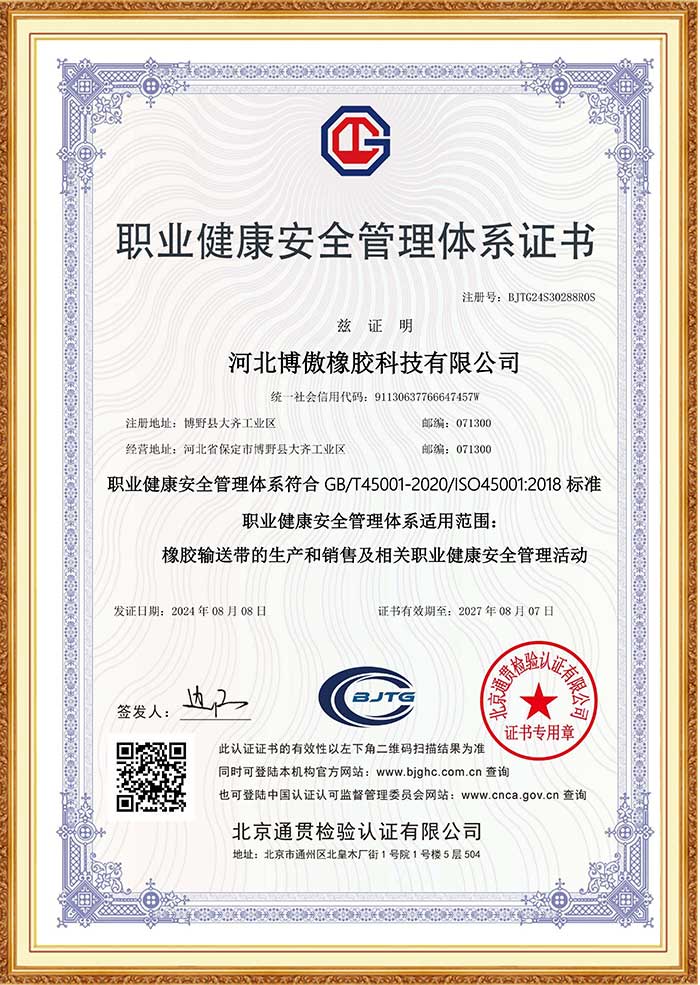
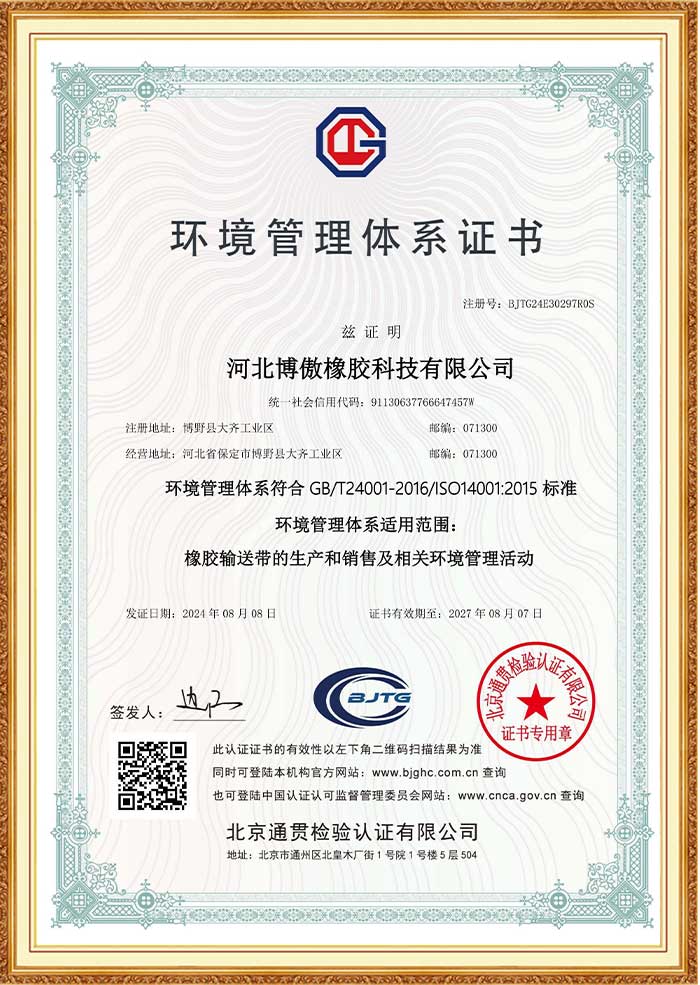
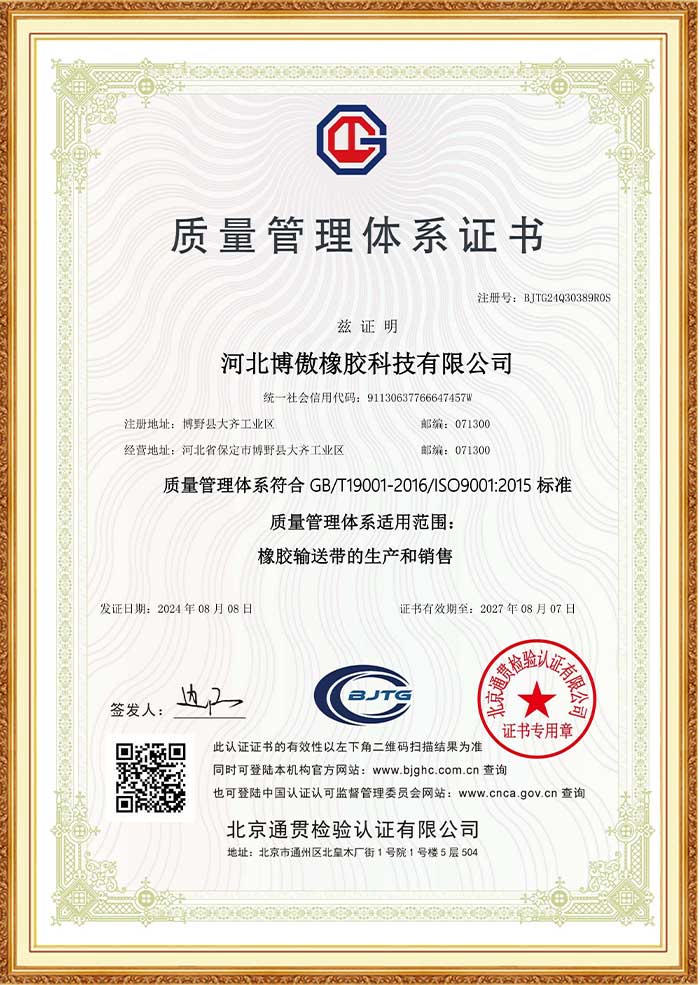
By designing industrial belt structures with high-quality vulcanization and reinforcement frameworks, we have passed the international quality management system certification in one go. Our production footprint features advanced equipment across rolling, forming, vulcanizing, and testing stages. From raw rubber chemical analysis to finished tensile-abrasion testing, we maintain complete control over the supply chain, ensuring unparalleled durability.
Our reputation is built on an unyielding dedication to performance verification. We operate dedicated facilities that ensure every single meter of conveyor belt meets strict structural standards prior to leaving our site.
We feature an independent, fully-equipped chemical analysis room and physical laboratory. Testing ranges from tensile strength, ozone resistance, and elongation at break, to heat aging stability, preventing any non-compliant raw material from entering the production line.
Our quality control protocol utilizes professional inspectors monitoring formulation mixing, textile calandering, vulcanization curing, and final testing. We adhere strictly to standard criteria for DIN, ISO, and AS conveyor standards.
Supported by a comprehensive logistics infrastructure and responsive technical services, our products are exported extensively. Jinao belts power operations in heavy industries, metallurgical plants, coal mines, cement factories, grain terminals, and ports globally.
Understanding the core dynamics of global bulk handling supply chains reveals why Hebei Boye's rubber industrial cluster is unmatched. Sourcing from this region offers significant structural advantages for enterprise procurement managers.
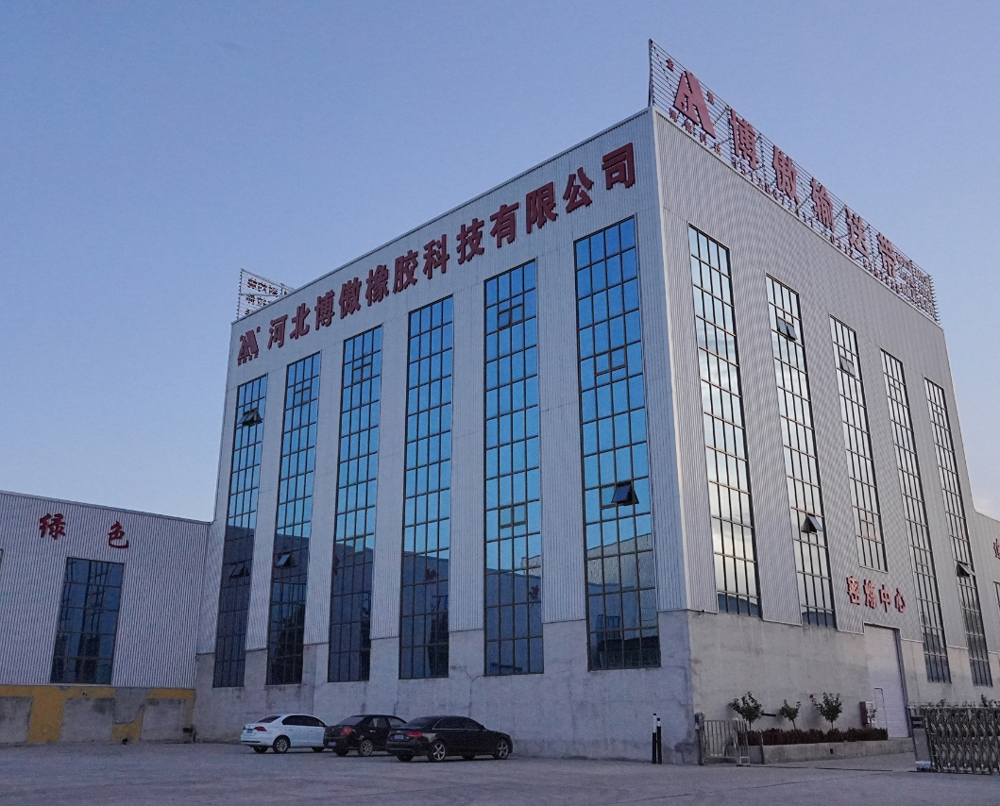
Boye County features a complete raw rubber refining, reinforcement fabric (EP/NN/Steel Cord) weaving, and vulcanizing equipment cluster. This geographical integration eliminates intermediate logistics costs, resulting in competitive pricing without quality compromise.
Equipped with heavy-duty calanders and hydraulic curing presses, Chinese factories produce bespoke patterned surfaces (chevron, crescent, cleated, rough top) quickly. We adapt designs to optimize carrying capacities and incline requirements.
Leading manufacturers like Boao configure formulations to match DIN 22102 (German), AS 1332 (Australian), RMA (American), and ISO standards. This ensures high performance in extreme applications, including cold resistance down to -50°C and heat resistance up to 200°C.
Choosing the right pattern for inclined conveyor systems is a matter of precise engineering. The material type, particle size, moisture level, and incline angle all dictate the pattern profile needed to optimize performance.
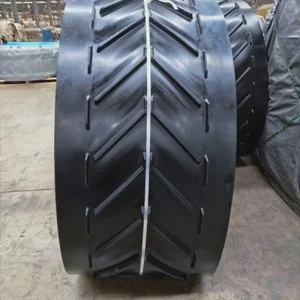
Engineered with V-shaped ridges, these patterns are ideal for wet, loose, or granular materials like coal, iron ore, and sand. They prevent backward flow and slippage, enabling efficient transport at steep angles of up to 40 degrees.
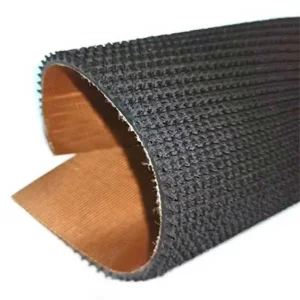
Featuring repeating dimples, pockets, and ribbed protrusions, this design is ideal for agriculture and packaging. By distributing pressure evenly, it prevents delicate crops or packaged goods from sliding, sustaining material throughput.
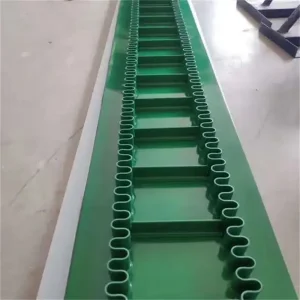
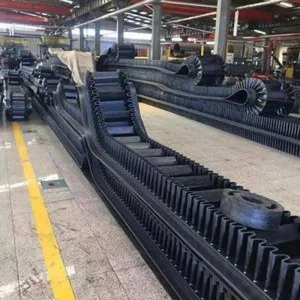
Utilized for vertical and high-incline material transport, this system integrates flexible, wavy sidewalls and transverse cleats. It encapsulates bulk material in pockets, enabling vertical transport at angles up to 90 degrees with zero spillage.
Modern conveyor systems are evolving to integrate smart monitoring and sustainability. We continuously update our manufacturing processes to supply advanced, long-term options for demanding global markets.
We are incorporating RFID tags and smart sensor arrays directly into the belt's textile carcass. These embedded sensors provide real-time tracking of belt wear and rip propagation, allowing operators to schedule maintenance before costly breakdowns occur.
Our research and development team is focused on lower rolling resistance (LRR) compounds. By reducing friction between the conveyor belt and idler rollers, LRR compounds can lower system energy consumption by up to 15%, reducing operational carbon footprints.
Addressing safety requirements for underground mining and grain terminals, our flame retardant (FR) formulations comply with EN 12882 and MSHA regulations. They prevent fire propagation along the conveyor line while eliminating toxic gas release.
A conveyor belt is only as good as the system supporting it. We manufacture matching, high-durability hardware components to ensure tracking alignment and extend the life of your patterned belt.
In addition to manufacturing premium rubber conveyor belts, Hebei Boao Rubber Technology Co., Ltd. produces a full suite of conveyor accessories. Achieving proper belt tracking and mitigating impact forces requires a fully compatible mechanical system.
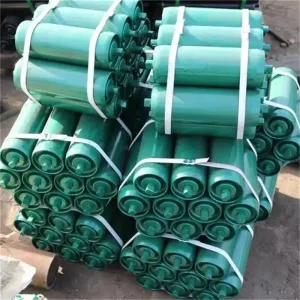
Our manufacturing capabilities cover a wide range of hardware components, ensuring that your high-performance belt is supported by robust, precisely engineered rollers and brackets.
Providing high coefficients of friction in wet or muddy conditions, ceramic lagging prevents belt slippage and reduces tension stress.
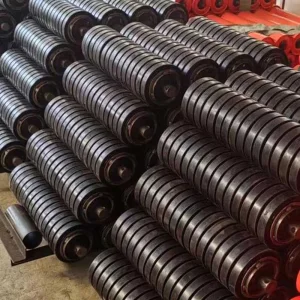
Positioned at material feed zones, these rollers absorb heavy impacts from falling materials to protect the belt's core from punctures.
Automatically adjusting and pivoting to correct belt drift, these brackets ensure the conveyor remains centered and prevent edge damage.
Custom designed for trough shape systems, suspended rollers ease maintenance access and minimize material accumulation on the return side.
We go beyond manufacturing by offering comprehensive technical service programs to help clients extend the service life of their conveyor assets.
Scheduled inspection cycles, wear-pattern profiling, and systematic belt replacement schedules designed to prevent unplanned downtime during critical production seasons.
Professional vulcanization materials and technical procedures for hot and cold splicing, ensuring that joint strength matches original belt specifications.
Custom logistics and warehousing solutions to maintain ready-to-ship stock of critical belt sizes, enabling rapid deployment when replacements are needed.
Training programs to help site operators inspect belt profiles, check idler alignment, and spot signs of premature wear before they cause failures.
Our "Jinao" brand products are tested and validated in demanding environments worldwide, from heavy metallurgical plants to major bulk handling hubs.
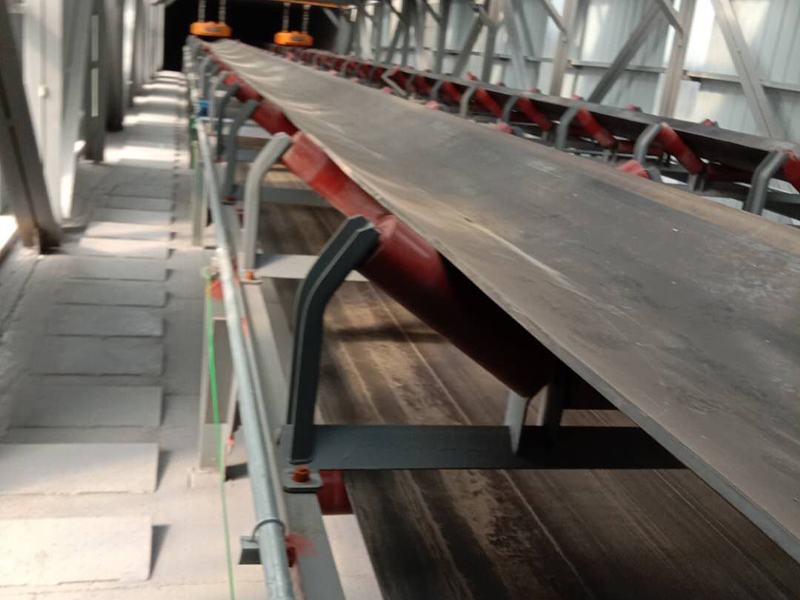
Taihang Steel
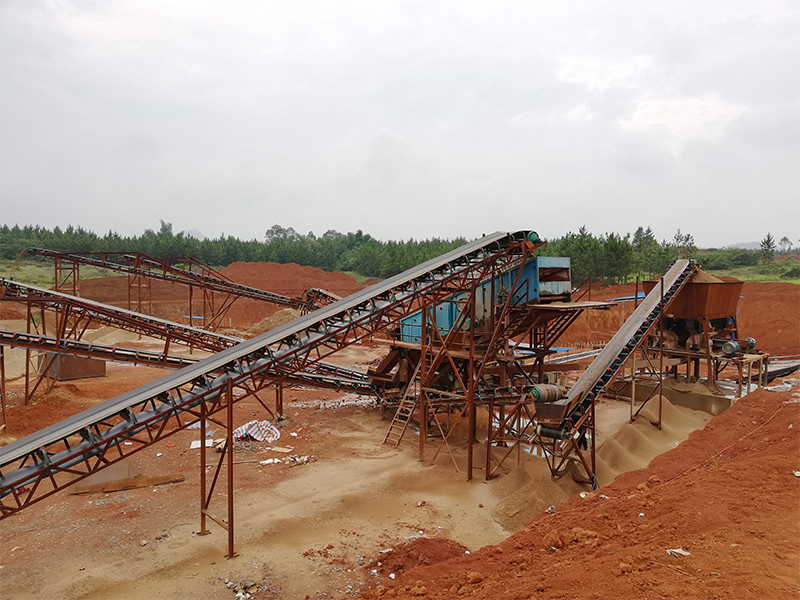
Tsingshan Group
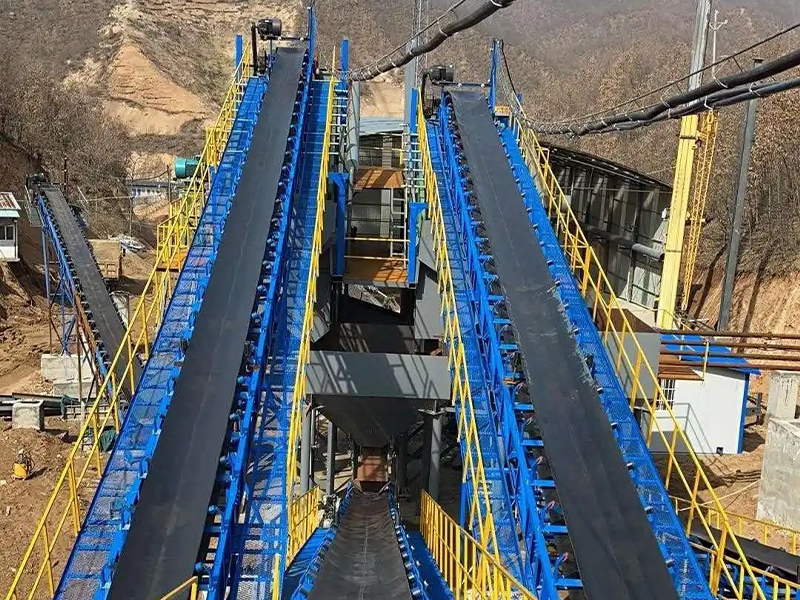
Zijin Mining
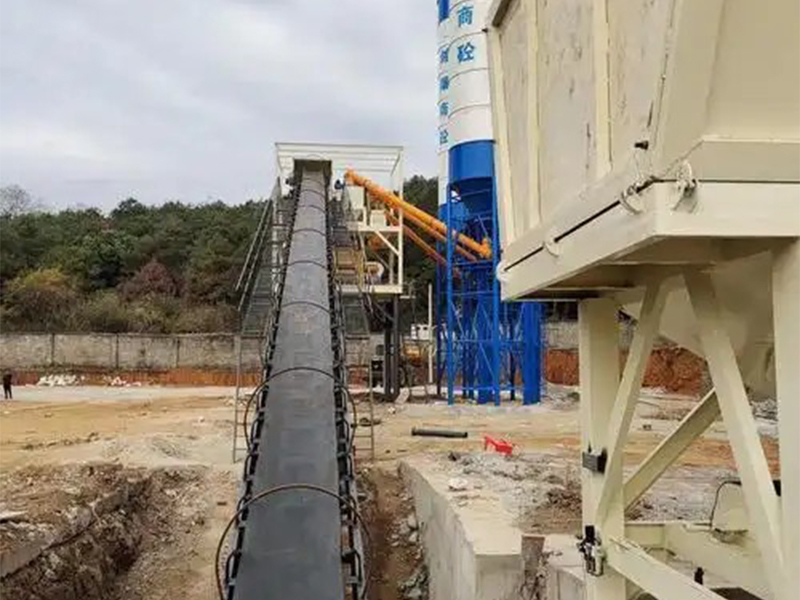
China Railway Mixing Plant
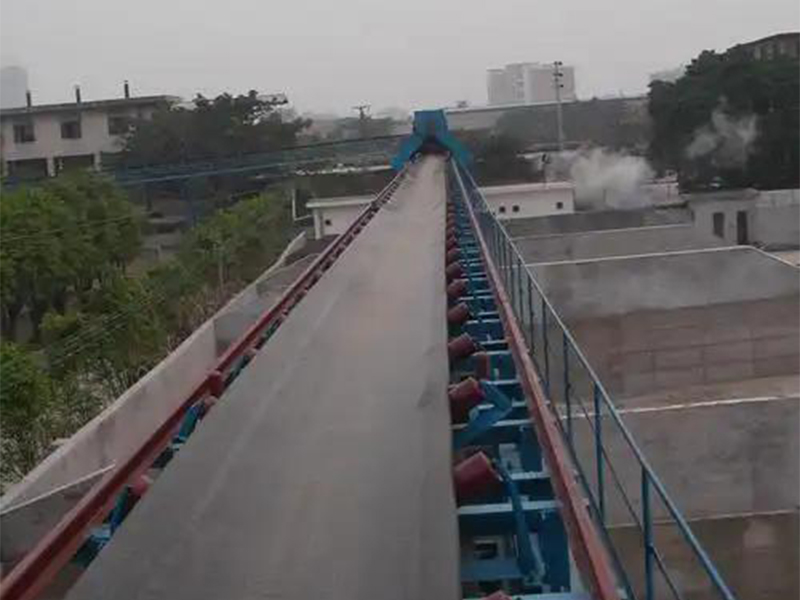
Conch Cement
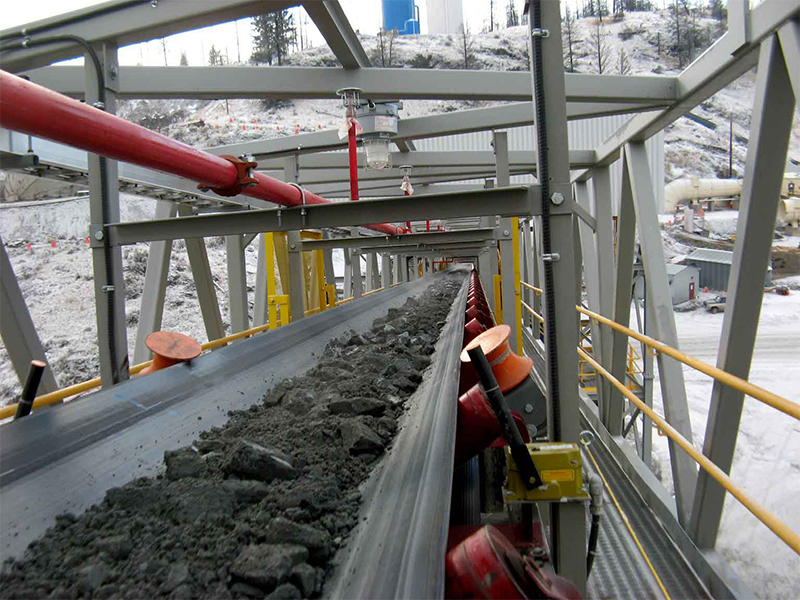
Datong Coal Group
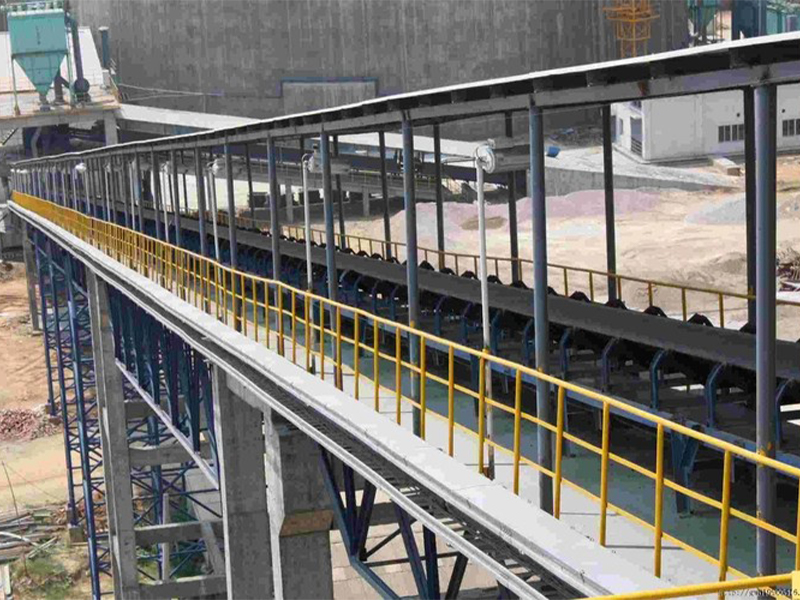
Jidong Cement Group
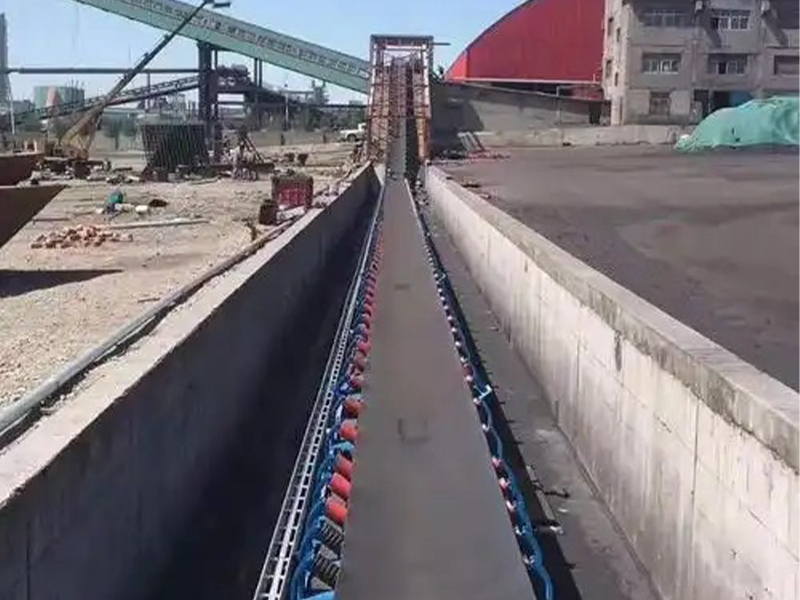
Jinmei Group Coal Line
Puyang Steel Group
Read detailed technical insights covering installation parameters, pattern designs, compound choices, and procurement logistics for industrial conveyor systems.
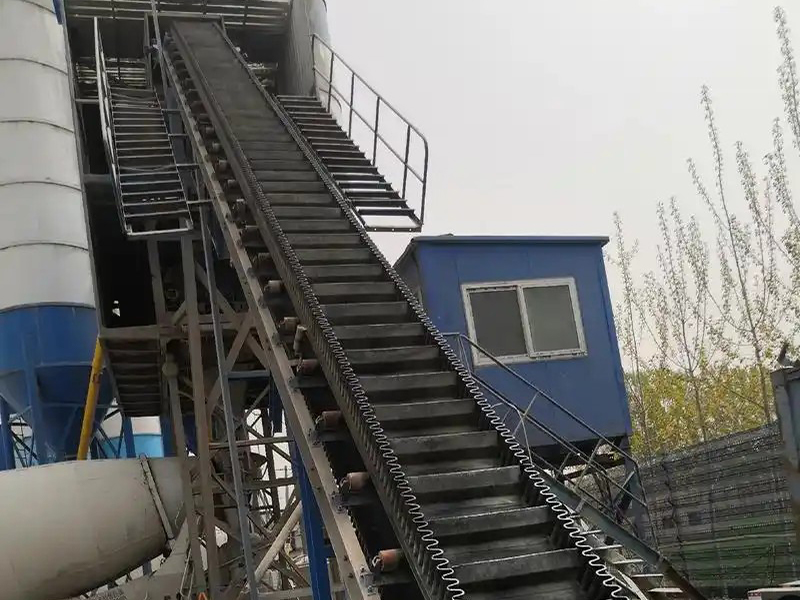
Generally, standard flat rubber belts can efficiently convey bulk materials at angles up to 15 to 18 degrees. Once the inclination angle exceeds 18 degrees, materials begin to slip and slide backward. In contrast, patterned conveyor belts (such as Herringbone or Chevron) can easily transport materials up to angles of 35 to 40 degrees, and specialized wavy-edge corrugated sidewall belts can reach angles up to 90 degrees.
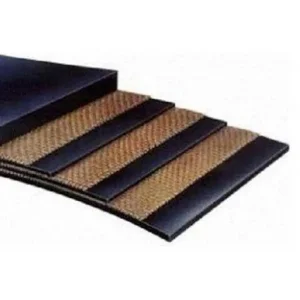
EP (Polyester-Nylon) fabrics offer a low-stretch profile, high modulus, and excellent heat dimensional stability, making them the preferred choice for long-distance, high-tension lines. NN (Nylon-Nylon) fabrics provide superior elasticity, high impact resistance, and excellent flexibility, which makes them ideal for short-to-medium distance systems handling large bulk materials and subjected to constant impact.
We perform comprehensive physical tests including: tensile strength and elongation testing of raw and vulcanized rubber (following ISO 37), abrasion resistance testing (following DIN 53516 / ISO 4649), interlayer adhesion testing (following ISO 252), ozone/weathering aging tests, and flame retardancy index checks. This rigorous process ensures no sub-standard materials ever leave our factory.
Yes, our engineering team designs custom rubber compounding formulations. We customize covers for high-temperature service (handling materials up to 200°C / 400°F), acid-alkali chemical resistance, oil-alkali environments, and cold resistance down to -50°C. Each compound is engineered using specialized polymers and curing agents to maximize belt life in extreme conditions.
Standard custom belt runs are processed, vulcanized, and rolled within 20 to 30 days. Because we are based inside the Boye County Industrial Hub, we can expedite raw fabric weaving and compounding. For long-term contracting agreements, we offer safety stock warehousing solutions, allowing us to ship pre-vulcanized replacement rolls within 48 hours of an order.
Higher pattern cleats (e.g., 15mm to 32mm) carry larger lump materials at steeper angles, but they require specialized belt cleaners, such as rotary brush cleaners or customized finger scrapers, to prevent material carryback. Low profile patterns (e.g., 5mm to 10mm) are easier to clean using standard non-abrasive polyurethane scrapers, though they are limited to lower incline angles.
Review the remainder of our advanced product line, featuring high-angle solutions, heavy-duty impact rollers, cold and chemical-resistant compounds, and robust supporting assemblies.
 Boao Rubber