Explore our high-performance components manufactured for extreme operating environments, heavy tensile loads, and customized mechanical configurations.
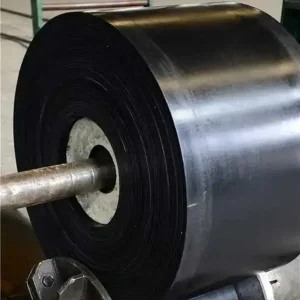
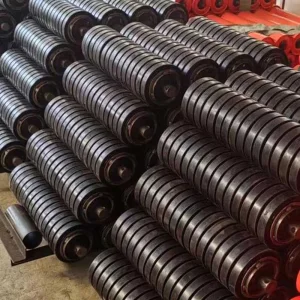
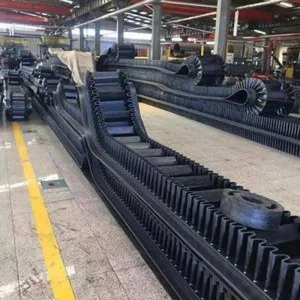
In the modern industrial landscape, flat rubber drive belts have emerged as critical vectors for high-efficiency mechanical power transmission. Unlike V-belts or ribbed profiles that rely on wedging forces within sheave grooves, flat drive belts distribute tensile stress uniformly across a wider, low-profile cross-section. This unique geometry yields substantial mechanical advantages, including minimized heat generation, reduced noise output, and a coefficient of friction engineered for continuous high-speed operations.
From heavy-duty agricultural combines to complex sorting systems in sorting facilities, flat rubber belts provide a buffer against shock loads and structural misalignments. By leveraging advanced vulcanization and composite layering techniques, modern drive systems rely on these elements to reduce drive slippage, conserve energy, and optimize system uptime.
Over 98% Mechanical Efficiency: High flexibility reduces internal bending resistance, lowering power loss over small pulleys.
Superior Vibration Damping: Elastic recovery behaviors isolate torque fluctuations, protecting expensive gearboxes and drive motors.
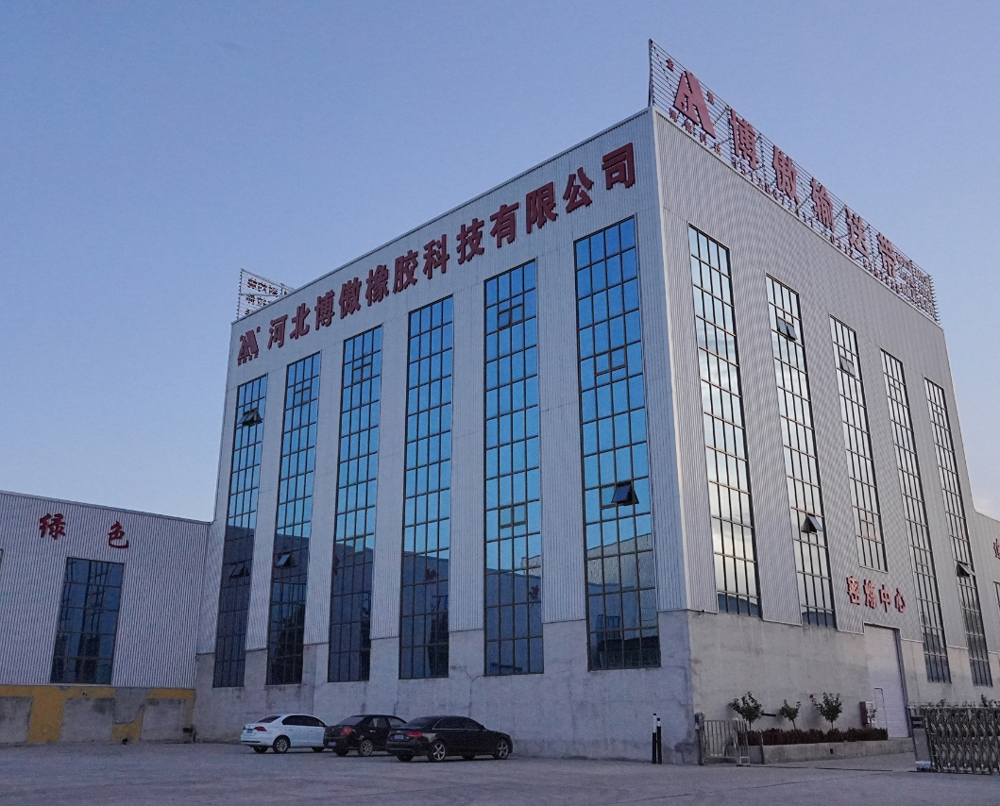
A trusted global supplier anchored by a 22-year legacy of manufacturing excellence under the premium "Jinao" brand.
Founded in 2004, Hebei Boao Rubber Technology Co., Ltd. is strategically located in the Boye County Rubber Industrial Park, Baoding, Hebei Province, China. Over the past 22 years, our facility has grown to span over 30 acres of state-of-the-art manufacturing space. Guided by the vision of providing robust, long-life rubber components for heavy industries, the company integrates product design, experimental research, raw compound mixing, calendering, vulcanization, and global logistics under one cohesive quality management system.
We market our products under the registered "Jinao" brand, a symbol of high-strength compounding and operational longevity in heavy conveying and drive systems. To meet the stringent demands of modern procurement, we have established advanced production lines, featuring heavy duty rolling mills, precision forming stations, large-scale vulcanizing presses, and a comprehensive in-house testing lab tracking materials from crude polymers to final packaged belts.
Engineered rubber belts and industrial conveyor components customized for chemical, temperature, and tensile stress resistance.
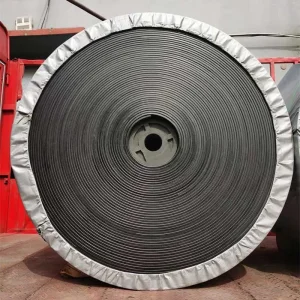
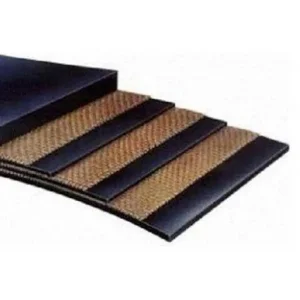
Constructed with EP (polyester-nylon), NN (nylon-nylon), or PP canvas tensile plies. Engineered for high dimensional stability, low elongation under load, and excellent adhesion strength between rubber covers and core fabrics.
Formulated rubber compounds designed to withstand extreme cold (-50°C), elevated heat (up to 300°C), acid-alkali chemical washdowns, and petroleum-based oil immersion without layer delamination.
Heavy-duty steel wire rope core belts designed to deliver high tensile strength over long-distance transport corridors. Excellent resistance to tearing, punctures, and mechanical impact.
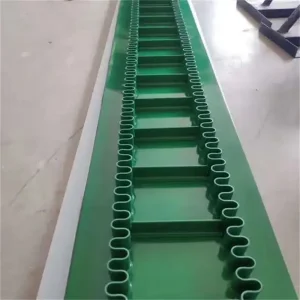
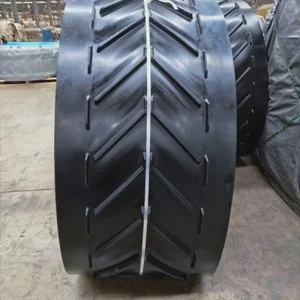
Herringbone, chevron, and wavy edge rubber sidewall profiles. Designed for steep-incline transport systems to prevent bulk materials from sliding back, maximizing volumetric output.
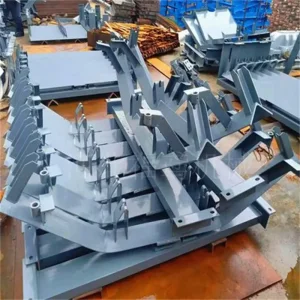
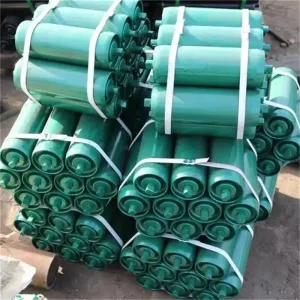
Heavy-duty idlers, ceramic lag pulleys, rubber buffer rollers, self-aligning brackets, tension systems, and customized electrical driving drums to ensure full transmission stability.
Emergency hot splicing, preventive maintenance programs, localized engineering field visits, and safety stock assurance designs to mitigate factory production stops.
Proof of reliability and rugged performance across major metallurgical, energy, and material infrastructure consortia.
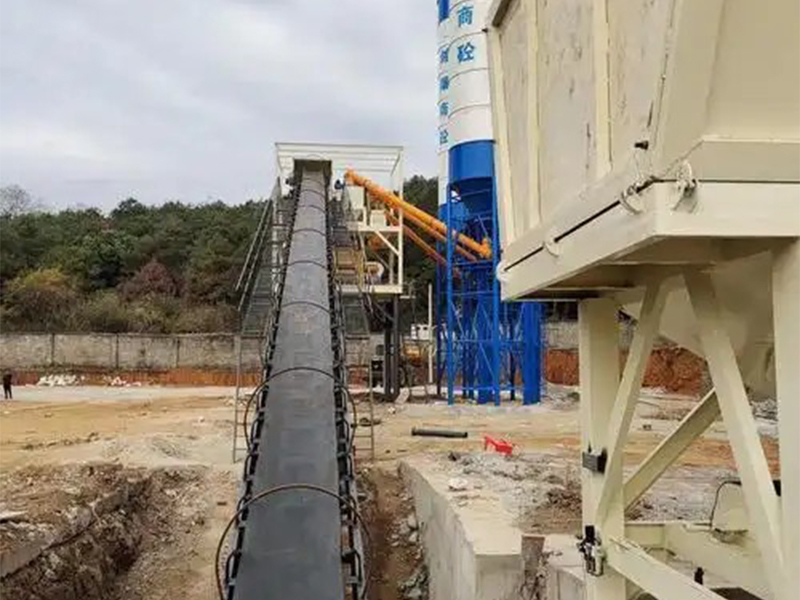
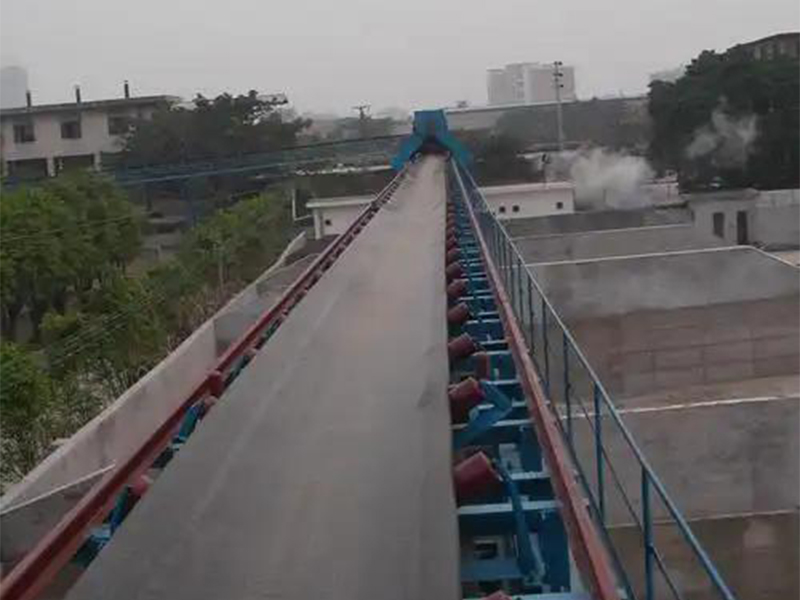
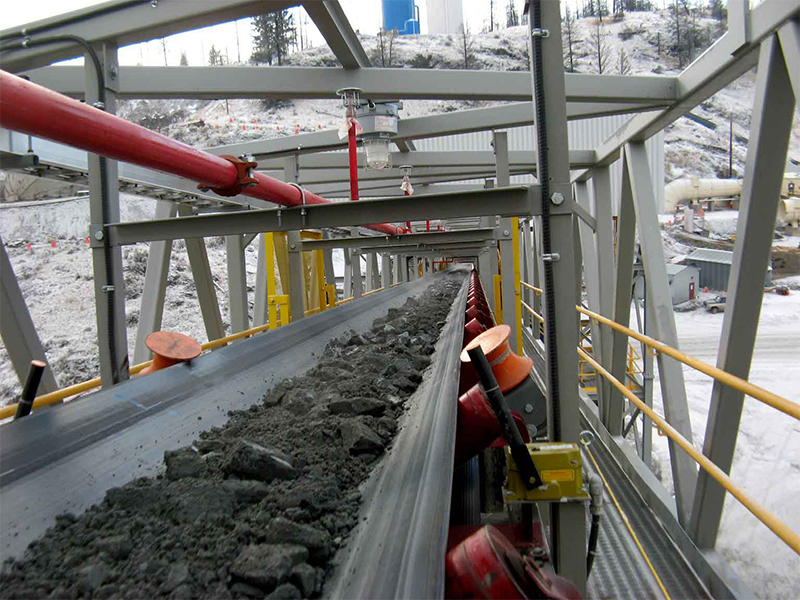
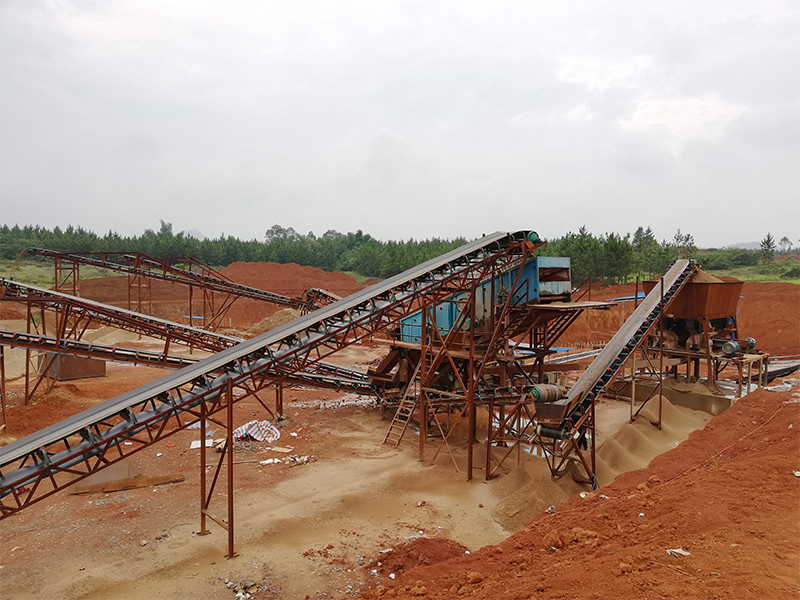
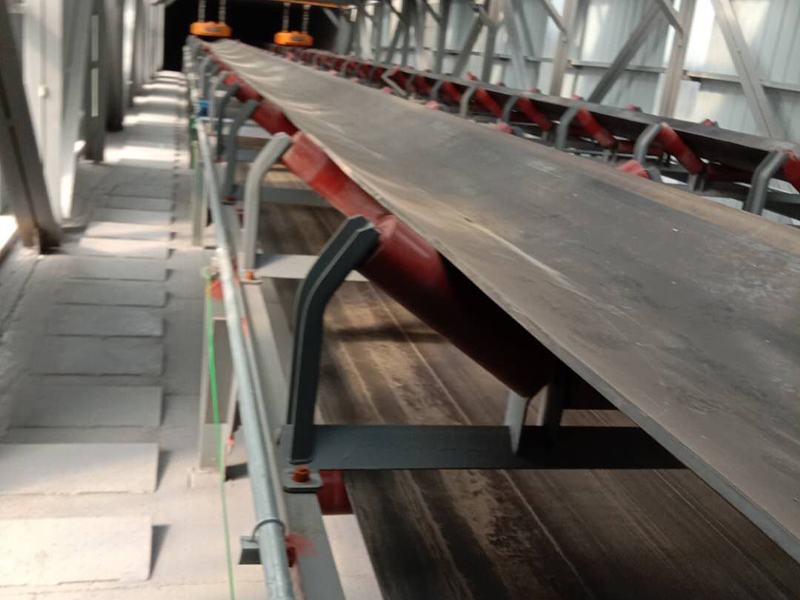
Our heavy industrial rubber belts are utilized by leading global enterprise groups. In steel production lines such as Taihang Steel and Puyang Steel Group, "Jinao" heat-resistant belts handle sintered ores exceeding 200°C. Within mineral extraction sectors like Zijin Mining, Datong Coal Group, and Jinmei Group, our high-impact steel wire and NN reinforced conveyor systems reliably transport raw minerals over miles of varying terrain.
Additionally, in critical infrastructure plants like China Railway Group Mixing Plant and cement processing giants like Conch Cement and Jidong Cement Group, Boao's components deliver the continuous operation needed to maintain high concrete and clinker yields.
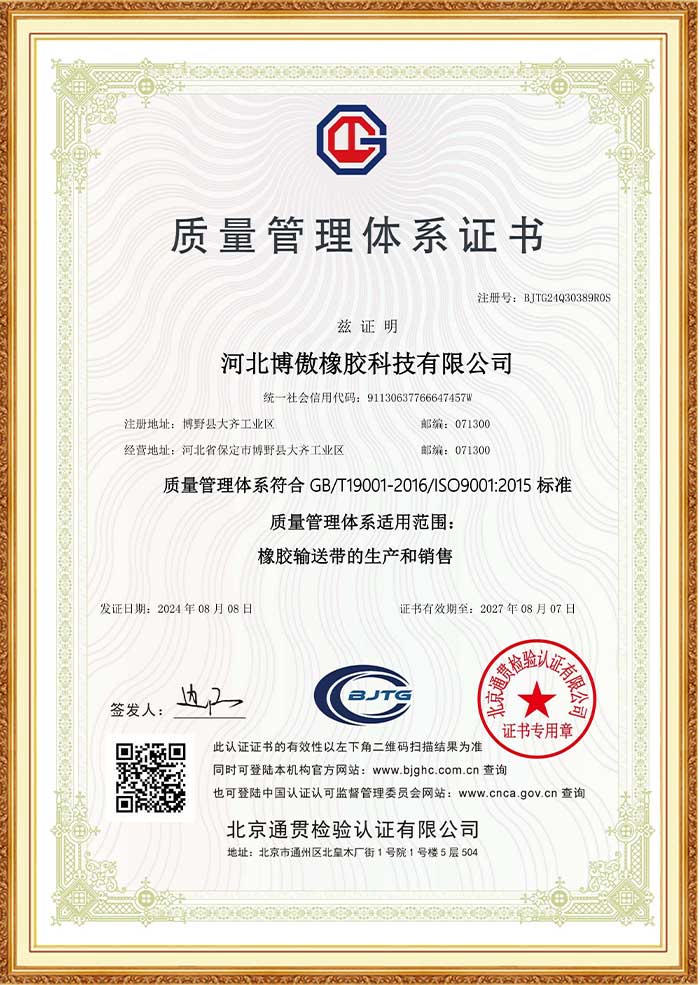
Compliance verified by international standards and institutional certifications to ensure high quality in bulk shipments.
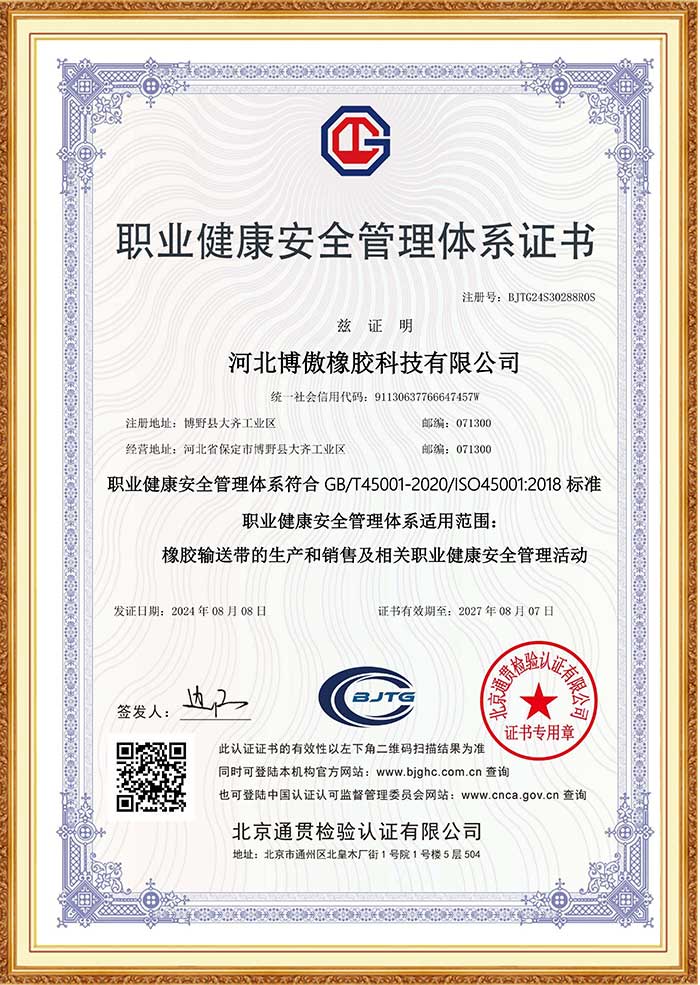
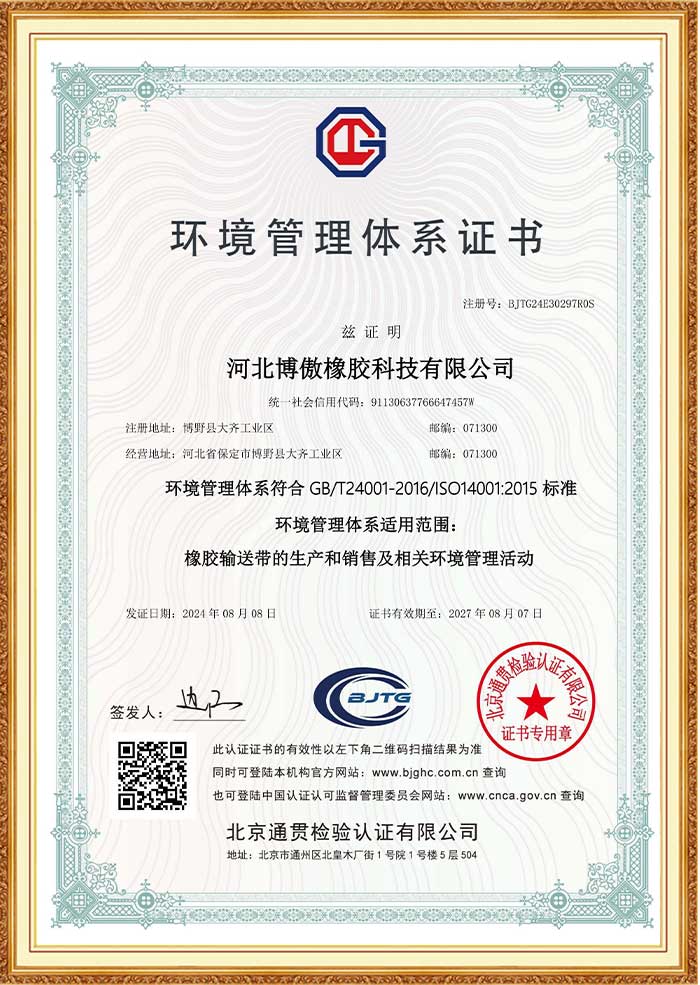
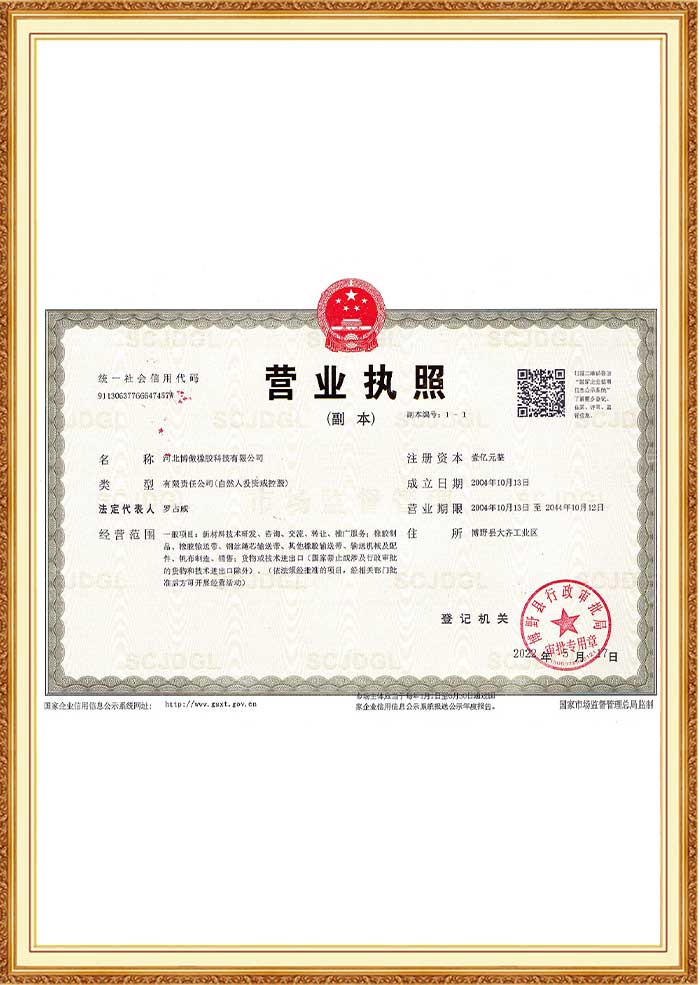
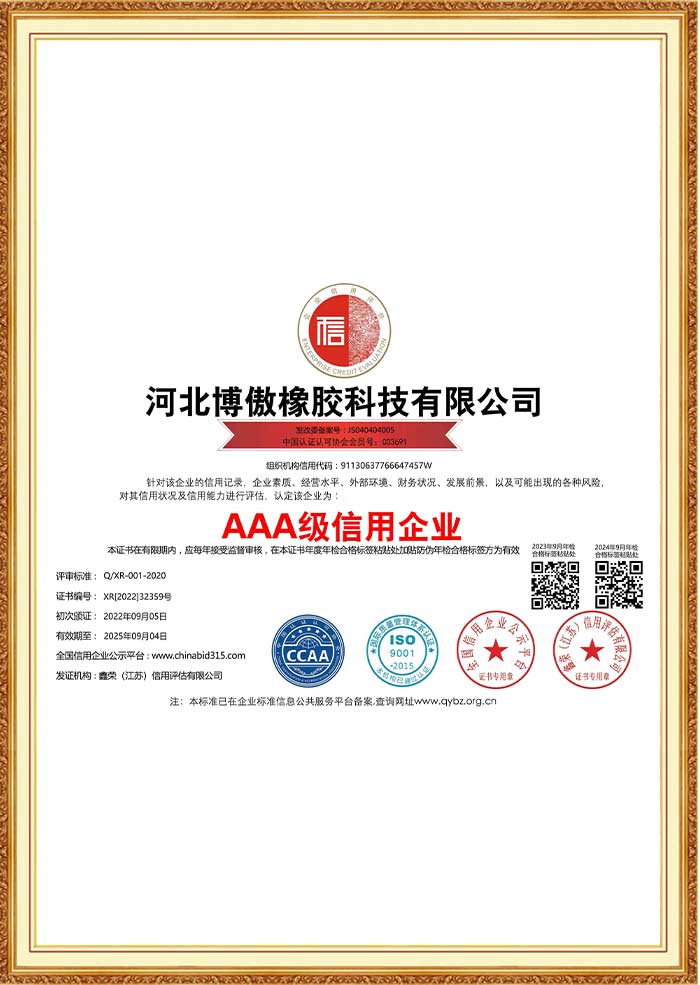
The operating performance of a flat rubber drive belt is determined by its base elastomer compounding. High-stress drive applications generate cyclical shear stresses within the belt body. To prevent premature cracking, we use dynamic cross-linking polymer blends. Specifically:
To limit belt elongation during operation under high tension, high-performance flat rubber drive belts utilize a reinforced internal structure:
Polyester-Nylon (EP) Canvas: Polyester warp fibers provide high tensile strength and low elastic elongation, while nylon weft fibers provide transverse flexibility, impact absorption, and excellent mechanical fastener retention.
Nylon-Nylon (NN) Plies: Provide excellent elasticity and impact resistance, making them suitable for long-distance setups with small pulley diameters that require high flexing capability.
Power transmission in flat belts relies on friction forces between the inner rubber surface and the drive pulley. According to the Belt Friction Equation:
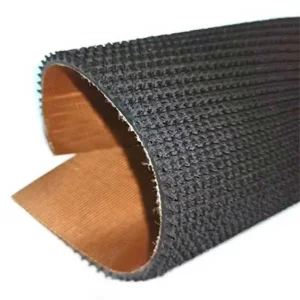
Where T1 represents the tight side tension, T2 is the slack side tension, μ is the coefficient of friction, and θ is the angle of wrap. At Hebei Boao, our compounding processes are calibrated to maintain a stable coefficient of friction (μ ≥ 0.40 to 0.45) across varying humidity levels and speed ranges. Our precision-ground pulleys and texturized belt surfaces help manage micro-slippage, protecting the belt carcass from localized heat generation.
Purchasing industrial flat belts from Hebei Boao offers significant cost, lead time, and customization advantages. Located in the Boye County industrial cluster, our facility has direct access to high-quality synthetic monomers, steel cord suppliers, and processing chemicals.
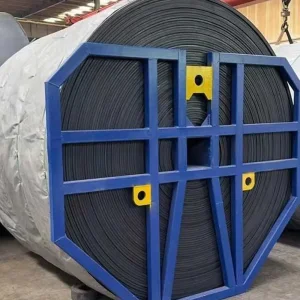
By integrating raw rubber mixing, internal calendering, hydraulic vulcanizing, and testing within a single facility, we reduce logistics costs and maintain close quality control. Our quality team checks every batch of compound for vulcanization characteristics and performs tensile tests on every finished production run, verifying conformity with ISO, DIN, and GB standards.
Our factory ships worldwide, adapting configurations to meet regional standards. In Europe, we configure our conveyor and drive lines to meet DIN 22102 and ISO standards. For underground coal mining operations in North America or Australia, we manufacture specialized flame-retardant and anti-static belts to meet local safety certifications.
By offering localized technical support, custom packaging, and emergency spare stockpiles, we help international distributors and plant operators optimize their supply chains and minimize inventory carry costs.
Skip the hassle of sourcing from multiple suppliers – our factory provides comprehensive packaging and support solutions in one place.
Planned replacement, repair, inspection, preventative maintenance, and emergency splicing of heavy conveyor and drive belts.
Supply of conveyor belts and raw rubber materials, safety stock management, inventory storage, rubber surface repairs, and field inspections.
Designed to improve conveyor operating efficiency, reduce belt wear, and help both parties achieve mutual benefit.
Ensure safe, stable, and cost-effective equipment operation, helping to extend the total lifetime of the conveyor belt system.
Browse our catalog of specialized rubber profiles, impact-resistant idlers, and high-tension reinforcement options.
As global industries prioritize decarbonization and energy optimization, the requirements for industrial power transmission are evolving. Our R&D division at Hebei Boao Rubber Technology Co., Ltd. focuses on three core technological trends:
Our research aims to minimize the energy consumed by the conveyor belt as it compresses over conveyor idlers. By modifying the viscoelastic properties of the backing rubber, our LRR compound reduces energy consumption in long-distance bulk material systems by 10% to 15%.
Future iterations of Jinao brand steel cord and textile belts will offer options for embedded RFID and conductivity loops. These components communicate with optical scanner systems to monitor real-time belt wear and longitudinal tears, providing warning signals to prevent sudden belt failures.
In response to growing mineral exploration in extreme climates, we are testing modified fluoropolymer elastomers designed to resist temperatures above 300°C and maintain elasticity in polar environments down to -60°C.
Expert answers to common engineering, procurement, and installation questions regarding flat drive belts and conveyor systems.
The choice depends on your conveyor system's specific requirements. EP (Polyester Warp/Nylon Weft) belts are preferred for systems that require low elongation under high tension. They require minimal tension stroke adjustments. NN (Nylon Warp/Nylon Weft) belts offer higher elasticity, impact resistance, and flexibility, making them suitable for long-distance setups with small pulley diameters that require high flexing capability.
Standard rubber compounds swell and lose tensile strength when exposed to acidic or alkaline materials. Our acid-alkali resistant belts use inert polymer bases (such as blended EPDM or chloroprene) combined with specialized compounding agents. These materials form a barrier that prevents corrosive chemicals from penetrating and degrading the inner fabric plies, helping to maintain structural integrity.
For standard configurations (such as standard EP/NN widths and thicknesses), production typically takes 10 to 15 days. For custom formulations, such as specific heat-resistant compounds or specialized patterned profiles, our team will configure the rolling and vulcanization parameters. This process generally requires 20 to 30 days, including full QA testing at our Boye County facility.
We use multi-cylinder, high-pressure vulcanizing presses equipped with automated temperature zone controls. This setup ensures that heat is distributed evenly across the entire surface of the belt, preventing localized over-curing or under-curing. This control is critical for maintaining consistent tensile strength and wear properties across the belt's length.
We support both mechanical fasteners and vulcanized splicing. For high-speed drive systems and heavy bulk material handling, we recommend hot vulcanized splicing. We supply matching cover rubber and tie-gum materials to ensure the splice area matches the strength and flexibility of the original belt.
We are committed to providing you with the highest quality products and excellent services. If you have any questions or need assistance with our products, please feel free to contact us and our engineering team will assist you.
Contact Our Engineering Team Now Boao Rubber