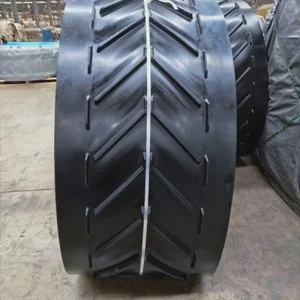
Best EP Rubber Conveyor Belts Supplier & Suppliers

Premium Grade Polyester (EP) Fabric Conveyor Belts engineered for high-impact resistance, severe tensile load, and long-cycle longevity in extreme industrial environments.

22+
Years of OEM Experience
30+
Acres Production Facility
100%
In-House Chemical Testing
ISO
Quality Management Certified

1. Executive Summary & Macro-Industry Solutions

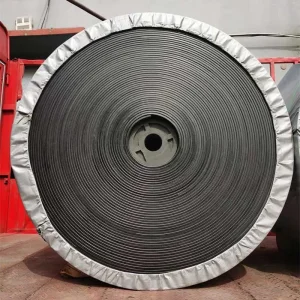
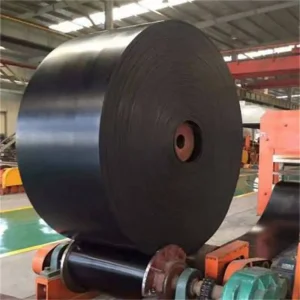
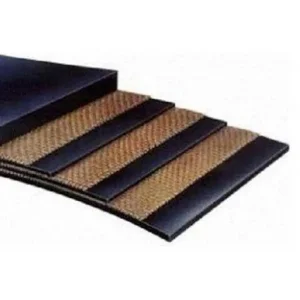
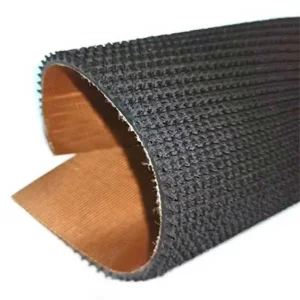
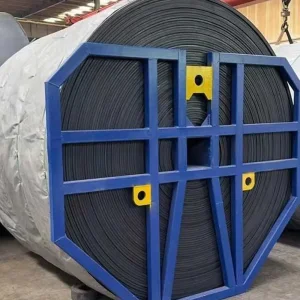
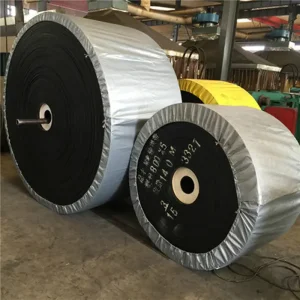
In the modern era of automated, high-yield material handling, the selection of the core carcass element determines the ultimate productivity ceiling of heavy industrial infrastructure. EP (Polyester-Nylon) rubber conveyor belts have emerged as the paramount global standard for high-abrasion, deep-trough bulk material transit systems. Composed of a synthetic fabric woven with a polyester warp (running longitudinally for high tensile strength and minimal elongation) and polyamide/nylon weft (running laterally for excellent troughability and resistance to impact), the EP belt solves the primary structural failures historically associated with natural fiber and traditional cotton carcasses.

"By implementing a high-modulus warp structure, Boao EP Conveyor Belts reduce transient elastic stretch, minimizing takeoff tracking errors and structural sag under full load states."

From deep-earth copper mining operations in South America to high-capacity grain terminals along the Mississippi River, industries face distinct challenges such as mechanical puncture, chemical corrosion, cover-rubber abrasion, and splicing degradation. Our macro-industry solutions utilize proprietary rubber formulations mapped directly to extreme applications:

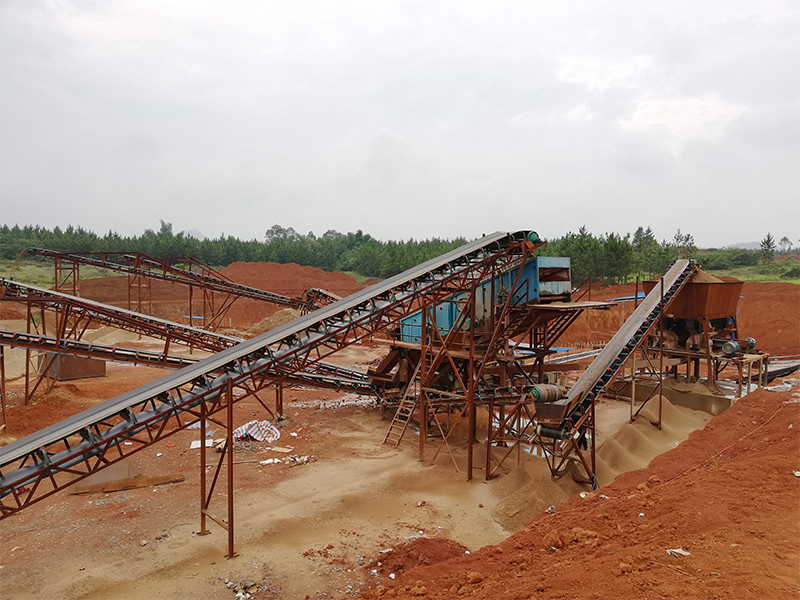
  • Mining & Aggregates: Custom abrasion-resistant compounds (DIN W/X standards) designed to absorb heavy shock loads of up to 500mm run-of-mine ore without ply separation.
  • Metallurgy & Steelworks: Premium EP cover stocks engineered to withstand continuous sinter and coke drop temperatures exceeding 200°C without premature aging.
  • Chemical & Fertilizer Production: Acid/alkali-resistant compounds tailored to prevent elastomer swelling, cracking, and decay under harsh phosphate and sulfate exposures.
  • Port & Maritime Logistics: Specialized salt-spray and moisture-impermeable rubber covers that maintain tracking accuracy under variable marine atmospheric humidity.

2. Technical Spec Sheet & Material Science of EP Carcasses

Understanding the mechanical profile of the polyester fabric is crucial for designing modern conveying pathways. The structural stability of our EP fabric is characterized by its high modulus, which provides low elongation under tension, coupled with exceptional elasticity in the lateral direction.

Each carcass ply undergoes a computerized chemical dipping process using a specialized resorcinol-formaldehyde-latex (RFL) adhesive. This process creates a covalent bond between the polyester fiber bundles and the raw rubber skim coat. The physical indicators below represent the core specifications of the EP series:

  • Tensile Strength Range: From EP-100 (100 N/mm per ply) up to heavy-duty EP-500 (500 N/mm per ply), supporting multi-ply configurations up to 6 plies for custom high-tension lines.
  • Elongation at Reference Load: Retained under 1.5%, which drastically reduces the physical space required for gravity vertical take-up systems and hydraulic tensioners.
  • Adhesion Strength: Skim ply-to-ply adhesion exceeds 6.0 N/mm, and cover-to-ply adhesion exceeds 7.5 N/mm, eliminating the risk of delamination under high-frequency cycling.
  • Cover Grade Options: Certified to comply with DIN 22102 (Z, W, Y, X), AS 1332, and ISO 10247 requirements.

3. Global Commercial & Industrial Status of Heavy Duty Belting

The global demand for bulk cargo logistics has placed high demands on conveyor system uptimes. Traditionally, localized factories relied on local distributors who carried generic specifications, resulting in rapid wear and frequent replacements. Today, direct global sourcing from specialized industrial manufacturers like Hebei Boao Rubber Technology Co., Ltd. allows buyers to bypass intermediaries and procure engineered-to-order conveyor configurations.

Through our direct-supply model, we ensure complete control over the chemical chain, from raw EPDM, SBR, and natural rubber blending to final vulcanization. This integration allows us to supply global markets, including North America, Eastern Europe, South America, and Southeast Asia, with belts tailored to regional regulatory and operational specifications.

4. Localized Support & Compliance Frameworks

When deploying large-scale conveyor systems across different regions, compliance with local safety standards is non-negotiable. Whether operating in the European Union under ATEX/CE guidelines or in South Africa under SANS 1173 standards, our engineering team ensures that every conveyor belt is fully compliant.

Our global support network provides localized engineering guidance on conveyor parameters such as transition distances, drive pulley diameters, and belt troughability angles (up to 45 degrees). We also conduct mechanical stress analysis to help determine the correct grade of rubber compound for cold storage, chemical processing, or underground mining.

5. Company Profile: Hebei Boao Rubber Technology Co., Ltd.

Established in 2004 and spanning over 30 acres in the Boye County Rubber Industrial Park, Baoding, Hebei Province, Hebei Boao Rubber Technology Co., Ltd. is a leading manufacturer specializing in heavy-duty conveyor systems. Under our premium "Jinao" brand, we integrate advanced research and development with automated manufacturing and comprehensive technical support.
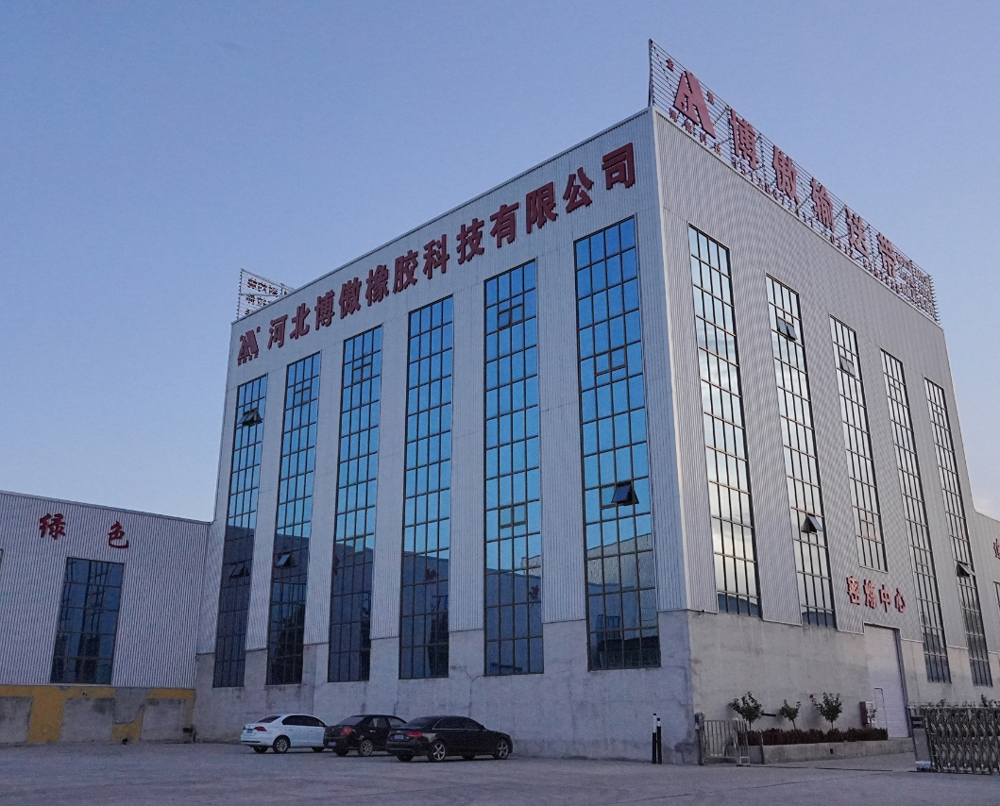
Boao Manufacturing Center

Scientific R&D and QA Testing Center

Our facility features an independent chemical analysis laboratory and a physics testing room, enabling us to monitor every stage of production from raw material inspection to final product dispatch. Equipped with computerized vulcanometers, tensile testers, DIN abrasion testing units, and flame-retardant test cabinets, we guarantee that all products leaving our facility meet global standards. We operate on a zero-tolerance policy for substandard materials, ensuring that only certified high-performance products reach our customers.

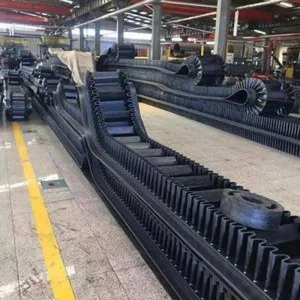
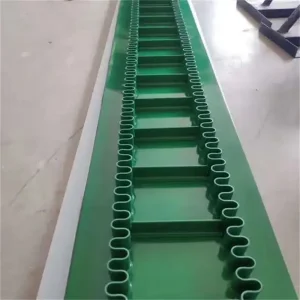
Our comprehensive manufacturing capabilities range from raw compound mixing to computerized rolling, precise ply building, and high-pressure vulcanization. This allows us to supply a wide array of specialized conveyor systems, including Nylon (NN) belts, Polyester (EP) belts, Heat-Resistant belts, Chevron/Patterned belts, High-Angle Corrugated Sidewall belts, and Steel Cord reinforced lines.
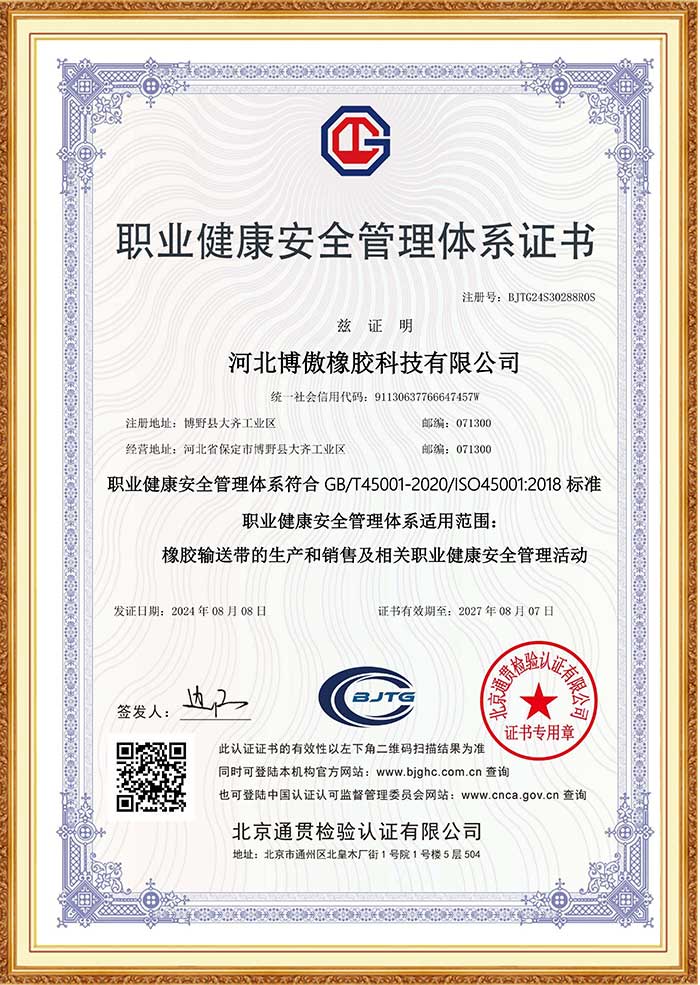
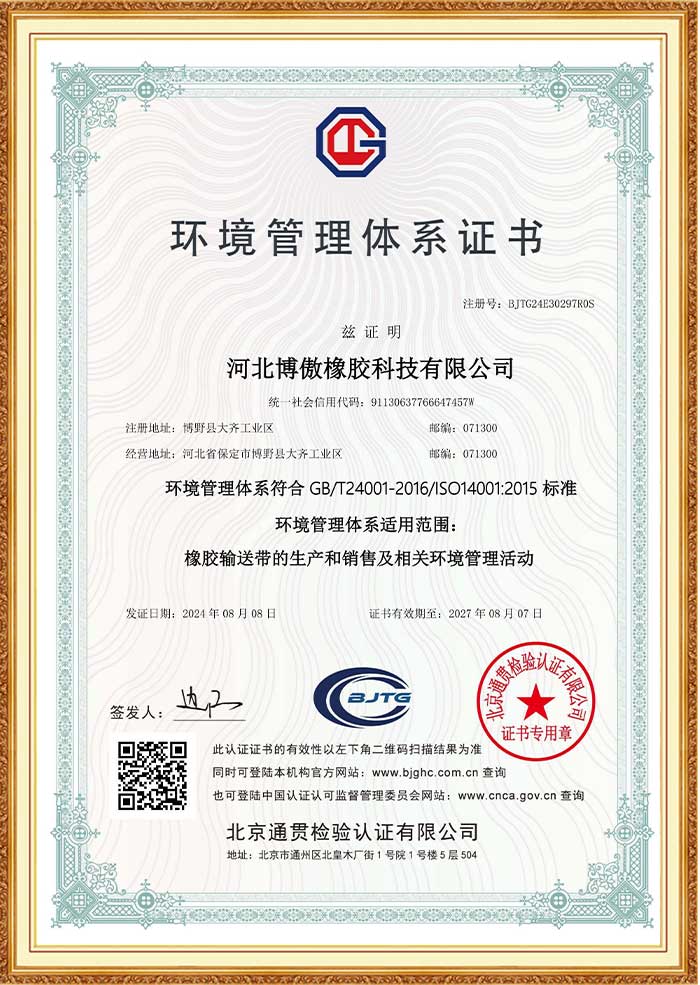
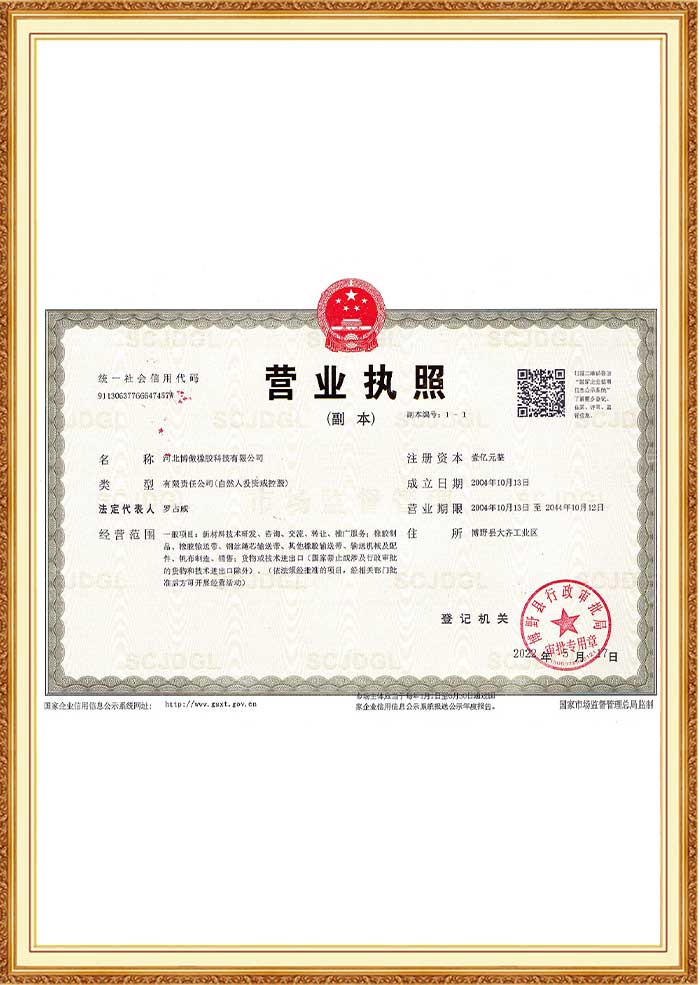
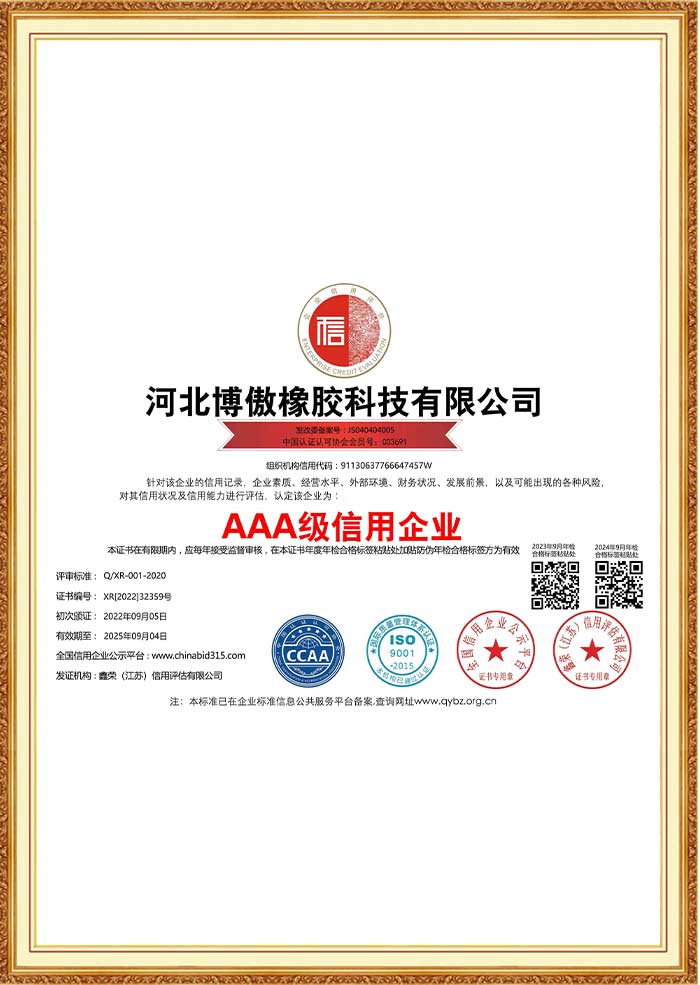
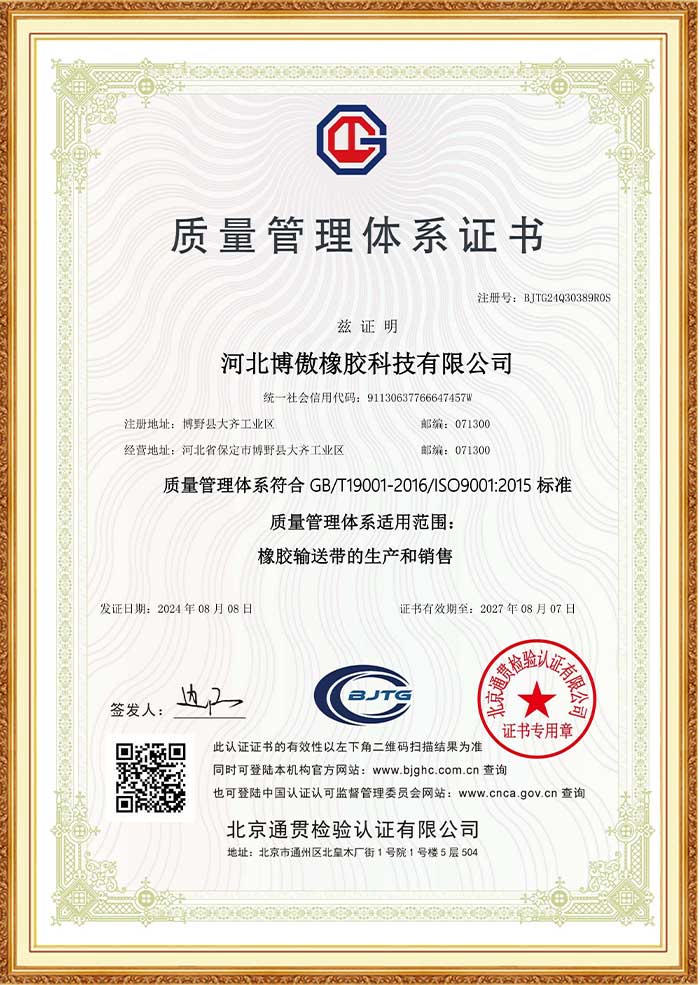
Our Global Certifications

ISO Quality Management System Document
ISO 9001 Certificate
Product Quality Verification
Environment Certification
OHSAS Health Safety Standard Document

6. Localized Application Scenarios & Collaboration Cases

With years of experience in heavy-duty material transport, Boao's Jinao brand has become a trusted partner for major industrial enterprises and global supply chains.
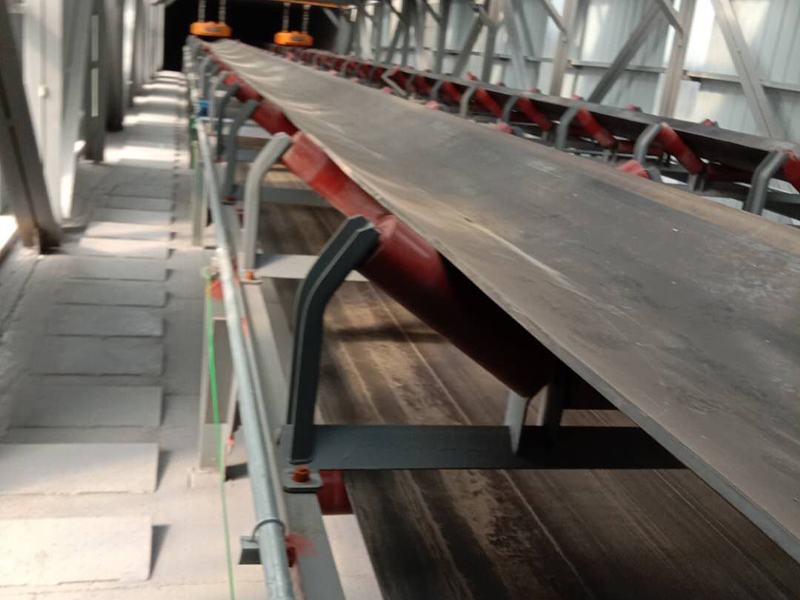
Taihang Steel

Taihang Steel Group

Tsingshan Group

Tsingshan Group

Zijin Mining

Zijin Mining Industry

China Railway Group

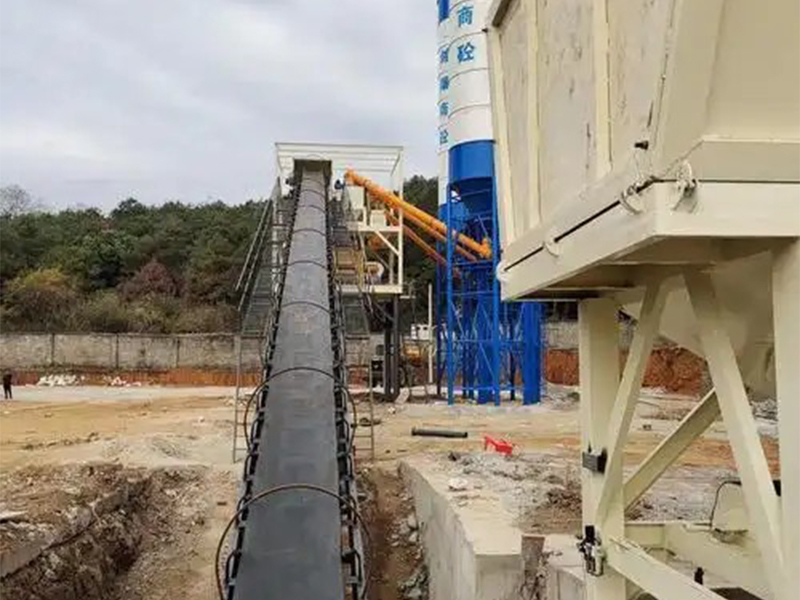
China Railway Mixing Plant

Conch Cement
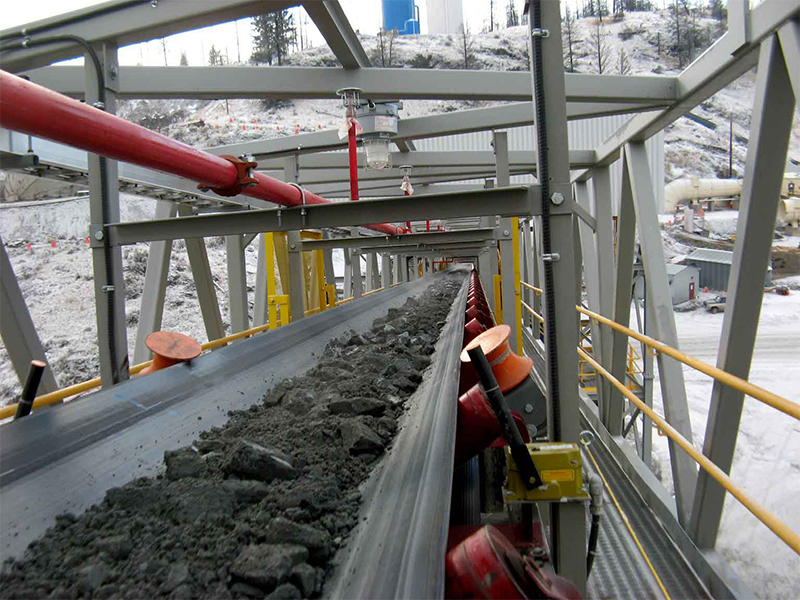
Conch Cement

Datong Coal Group

Datong Coal Group

7. Technical Service Roadmap & Future Outlook

Operating modern conveyor systems requires ongoing maintenance, regular monitoring, and optimization of belt lifetimes. Our Technical Service Plan is structured to eliminate operational risks through:

  • Preventative Splicing Analysis: Calculation of proper step-splicing profiles for EP carcasses, ensuring that finger-splice zones achieve 95%+ of the base belt strength.
  • Custom Compound Upgrades: Formulation adjustments to resist specialized chemicals, such as oil, heat, and flame, matching specific plant conditions.
  • Daily Maintenance Programs: Providing plant engineers with training on conveyor tracking alignment, belt tension optimization, and pulley lagging choices.
"Looking forward, we are investing in smart technology. Future Jinao conveyor lines will feature integrated RFID tracking and embedded fiber-optic sensor arrays. This allows real-time monitoring of carcass wear, splice status, and early damage indicators, reducing unplanned downtime to near zero."

Technical Whitepaper

Series Code: EP Polyester Series

Document ID: WP-EP-2026-BOAO

Compliance: ISO 9001:2015, DIN 22102, AS 1332

Author: Hebei Boao Rubber R&D Division


Why Direct Factory Sourcing Matters:

By bypassing trading intermediaries, industrial operations receive fully tracked production runs, fresh elastomer batches (eliminating storage degradation issues), and custom compound options optimized for specific mechanical loads.

Industrial Q&A: Selecting EP Rubber Conveyor Belts

Technical answers to key engineering and procurement queries regarding EP carcass systems.

Q1: What are the main differences between EP and NN (Nylon) conveyor belts?
EP (Polyester-Nylon) belts feature a polyester warp (longitudinal) and a nylon weft (transverse). This combination ensures high tensile strength with low structural elongation, minimizing the length required for tension take-ups. NN (Nylon-Nylon) belts utilize nylon in both directions, offering higher elasticity, excellent impact resistance, and flexibility, which is ideal for short-distance, high-impact conveying systems.
Q2: How do you choose the right rubber cover grade (DIN X, Y, W, Z)?
Selecting the cover grade depends on the abrasiveness, size, and drop heights of the materials:
  • DIN X: Offers excellent resistance to cutting and gouging from large, sharp materials like granite, metal ore, and heavy limestone.
  • DIN Y: Ideal for general-purpose conveying of coal, sand, gravel, and cement clinker, offering a balance of tensile strength and wear life.
  • DIN W: Specially formulated for handling highly abrasive, fine particles such as quartz sand, sintered ore, and coke.
Q3: How does chemical exposure affect EP conveyor belts, and how do we prevent damage?
Acidic or alkaline materials can penetrate basic rubber covers, leading to swelling, rubber degradation, and carcass damage. For applications involving chemical fertilizers, copper concentrates, or marine operations, we apply customized acid-alkali resistant polymers. These compounds create a molecular barrier that shields both the cover rubber and the inner fabric layers from corrosive compounds.
Q4: What is the maximum temperature range for heat-resistant EP belts?
Standard EP rubber belts operate reliably in temperatures up to 80°C. For handling hot cement clinker, slag, or foundry materials, we supply specialized heat-resistant belts. These utilize EPDM and chlorobutadiene rubber covers, capable of withstanding constant material temperatures up to 200°C, and peak exposure temperatures of 250°C.