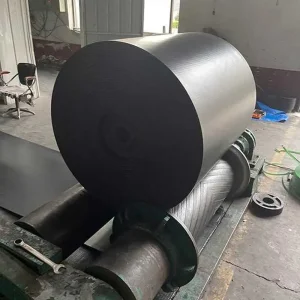
China Idler Conveyor Roller Supplier & Factories

Premium Grade Belt Conveying Infrastructure, Specialized Engineering Components & Advanced Global Bulk Material Handling Systems

22+ Years

Of Rigorous Manufacturing Experience & Innovation (Since 2004)

Boao Experience Banner

Corporate Profile & Production Capabilities

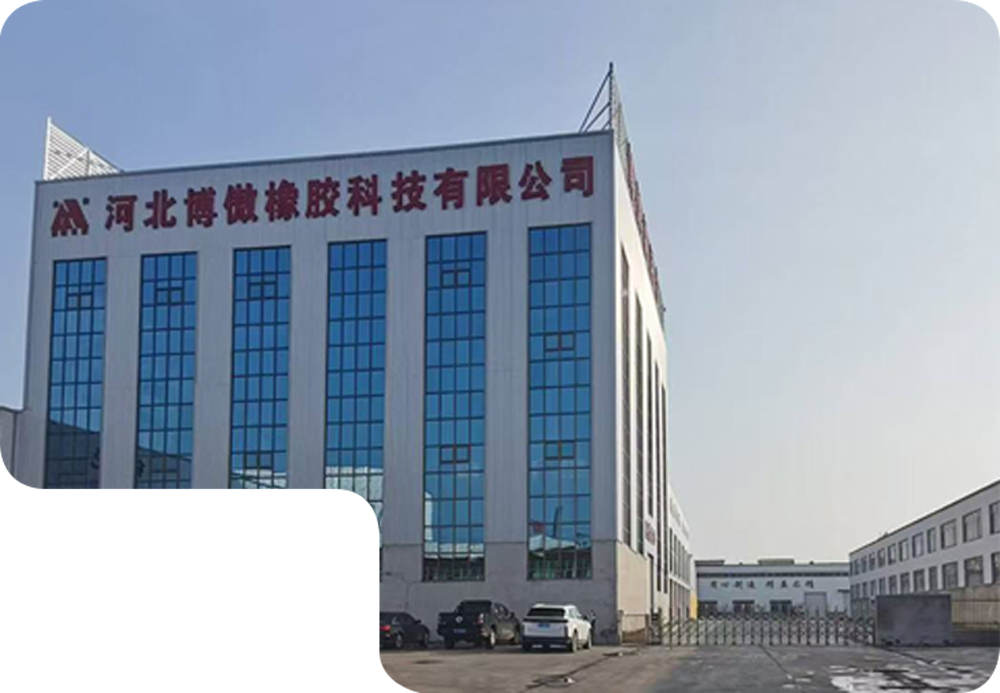
Hebei Boao Rubber Technology Co., Ltd. represents the peak of bulk materials handling systems, located in the prestigious Boye Rubber Industrial Park, Baoding, Hebei, China.

Established in 2004 and extending across a high-efficiency 30-acre state-of-the-art facility, we operate with a singular mission: delivering robust structural integrity and optimization to industrial conveyancing. Under our globally registered premium trademark "Jinao", we design, engineer, and fabricate elite-tier conveyor belts, idler rollers, and critical supporting accessories.

Our infrastructure maintains advanced automated production lines covering the full processing lifecycle. From raw compound rolling and precision thermal forming to heavy-duty vulcanization and mechanical performance evaluation, Boao guarantees total manufacturing control.
Inside Our Heavy Manufacturing Infrastructure

Production Facility 1 Production Facility 2 Production Facility 3 Production Facility 4 Production Facility 5 Production Facility 6 Production Facility 7 Production Facility 8 Production Facility 9 Production Facility 10

The Critical Science of Idler Conveyor Rollers in Heavy Logistics

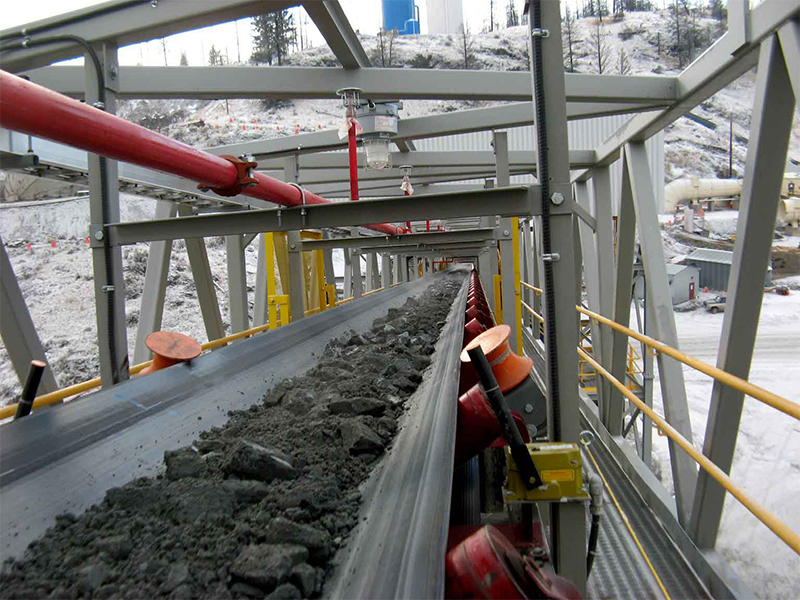
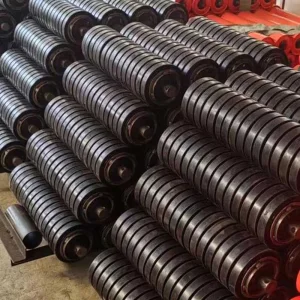
In modern industrial operations, conveyor systems function as the fundamental circulatory pathway for material transport. The structural reliability of these systems depends on the performance of a key component: the idler conveyor roller. Although minor in scale relative to the massive framework of multi-kilometer conveyor networks, idlers carry the physical weight of continuous heavy materials, optimize localized belt tension, absorb heavy structural impacts, and dictate the mechanical efficiency of the system.

From a functional perspective, conveyor rollers are designed to manage rolling resistance. A low-quality idler generates elevated friction coefficients, forcing the drive pulley to consume more energy, which accelerates belt wear and leads to unscheduled operational downtime.

At Hebei Boao Rubber Technology Co., Ltd., we combine material science with mechanical design. Our rollers utilize deep-groove ball bearings, multi-labyrinth non-contact seals, and high-precision steel tubing to deliver low run-out values and minimize noise during operation.

Global Procurement Specifications & Technical Standards

Industrial procurement teams must source conveyor components that comply with strict international standards to ensure compatibility and structural safety. Our engineering department manufactures rollers and supporting frames that align with major global frameworks:

  • CEMA (Conveyor Equipment Manufacturers Association): Standardized classes (B, C, D, E, and F) detailing load capacity, bearing sizes, and shaft diameters.
  • DIN (Deutsches Institut für Normung): Standardized configurations ensuring compliance with European heavy mining and industrial equipment dimensions.
  • ISO 5048 / ISO 1537: Global standards outlining the calculation of power requirements and mechanical tolerances for bulk belt conveyor components.

Our E-E-A-T Quality Pillars

Advanced Quality Assurance

We maintain an independent chemical analysis laboratory and physical testing facility to monitor every production stage. Raw materials must pass rigorous testing before entering our production line.

Comprehensive Quality Control

Equipped with specialized testing instruments, our quality control team continuously monitors dimensional accuracy, dynamic balance, water resistance, and dust-tight performance.

Global Reach & Experience

Backed by robust engineering support, Boao products are deployed globally across metallurgy, steel plants, coal mines, power generation facilities, and international ports.

Core Industrial Product Offerings

"Jinao" Conveyor Belt Portfolio

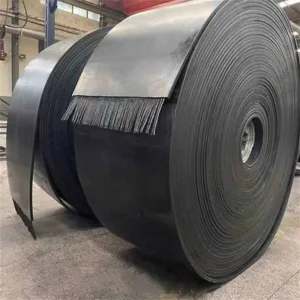
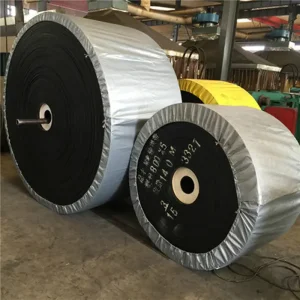
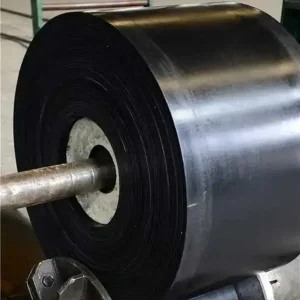
We supply a diverse range of high-durability rubber conveyor belts designed to withstand extreme industrial conditions:

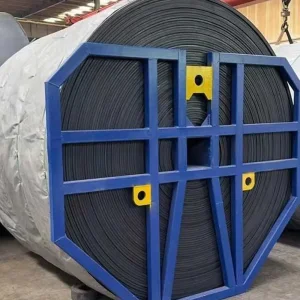
  • Steel Wire Rope Core Conveyor Belts: Engineered with internal steel cords to deliver high tensile strength, minimal elongation, and long-term durability for long-distance industrial conveying.
  • Heat-Resistant Belts: Specially formulated compound matrices that resist surface cracking and structural degradation when handling materials up to 250°C.
  • Chemical-Resistant Belts: Synthetic rubbers designed to withstand oil, acid, and alkali exposure, protecting the belt core from chemical degradation.
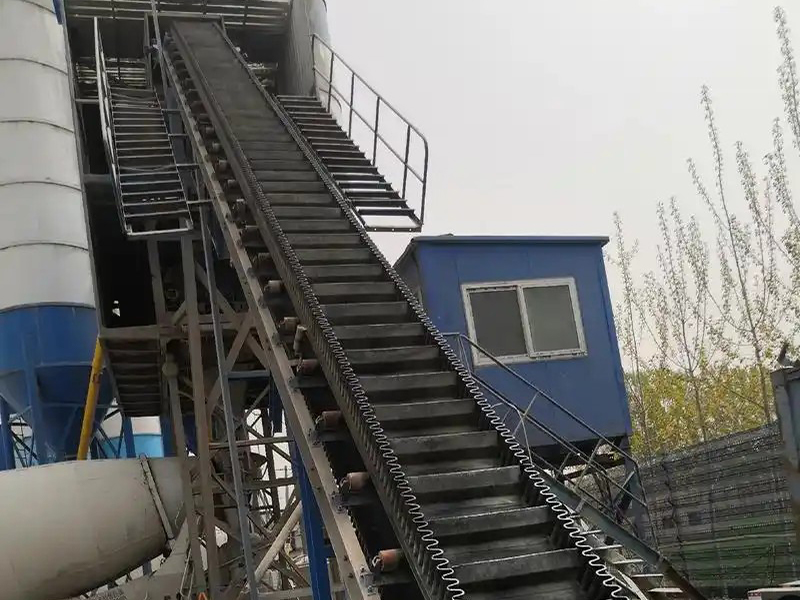
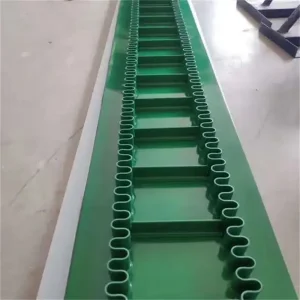
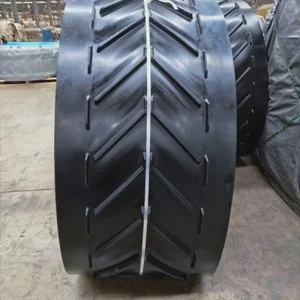
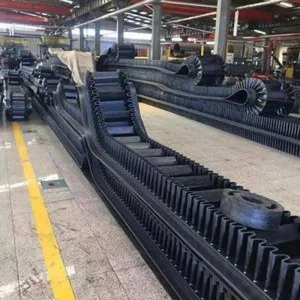
  • Specialty Profiles: High-inclination wavy edge (sidewall) belts and patterned profiles (including chevron designs) to prevent material rollback on steep inclines.

Conveyor Support & Component Portfolio

In addition to high-durability belts, Boao manufactures a full line of heavy-duty conveyor support components:
  • Troughing & Suspended Rollers: Designed to form the belt into a trough shape, optimizing cross-sectional area and minimizing material spillage.
  • Impact & Rubber Buffer Idlers: Outfitted with high-elasticity rubber rings to absorb energy at feed points, protecting the conveyor belt from damage.
  • Self-Aligning & Training Idlers: Pivot-mounted frames that dynamically correct belt tracking issues to prevent edge damage and material loss.
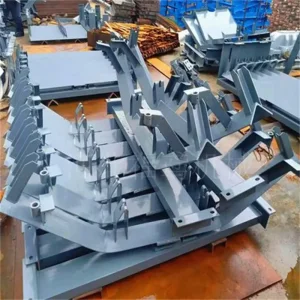
  • Brackets & Structural Frames: High-strength steel frames, including standard widths from 1500mm to 1600mm, designed for quick installation and simple maintenance.

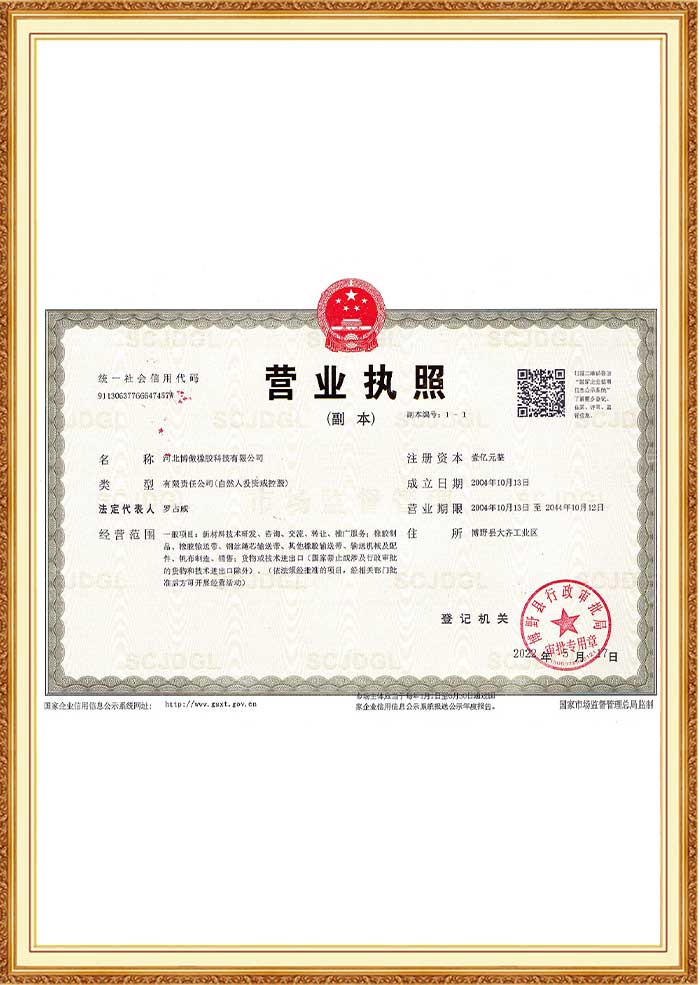
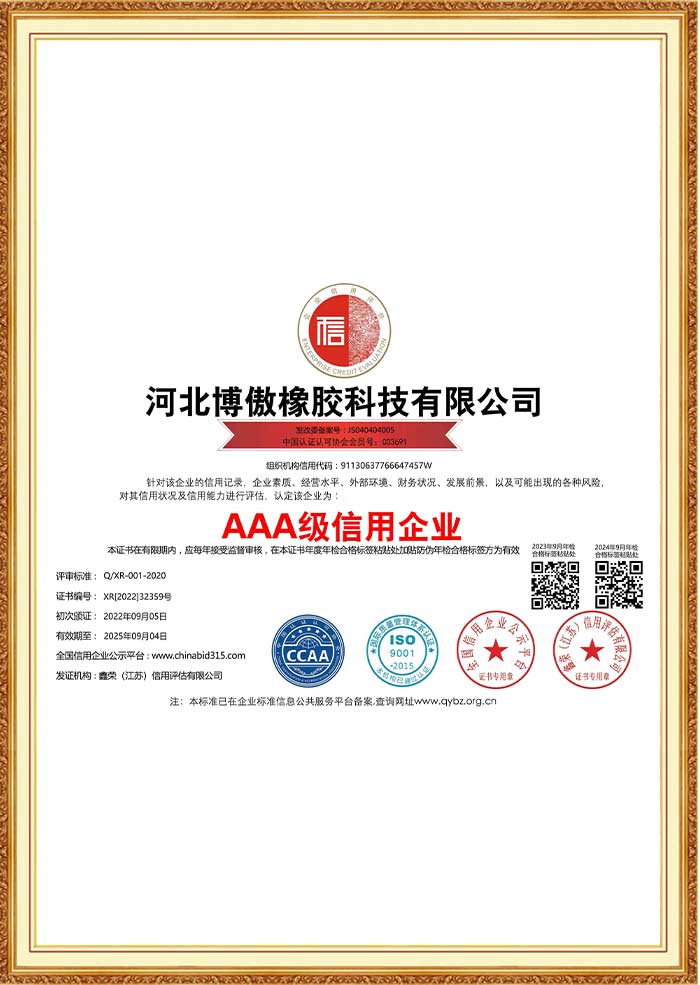
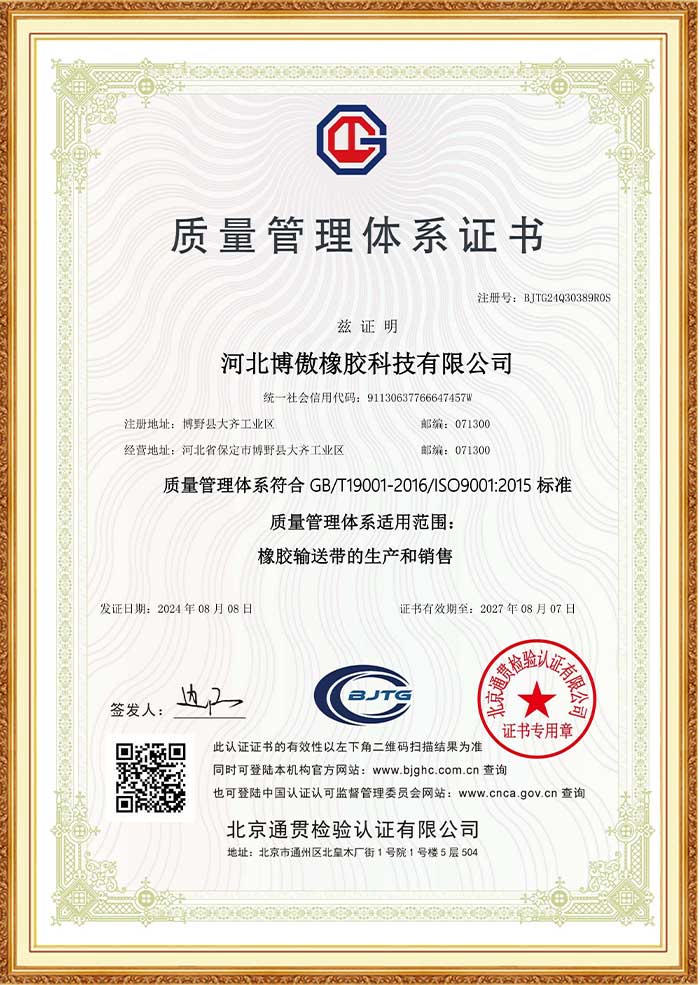
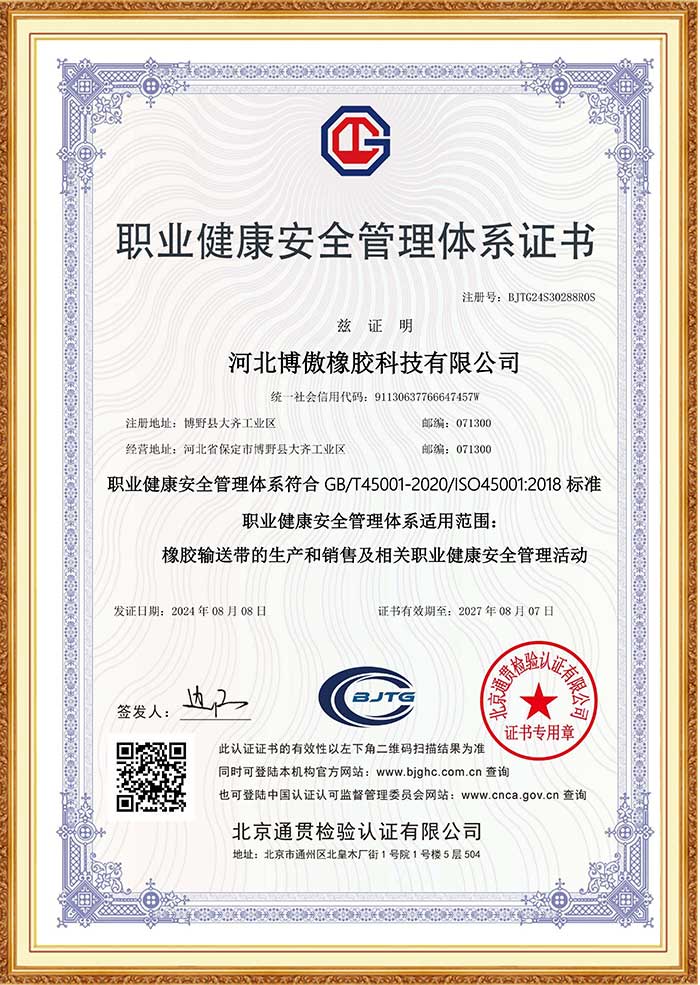
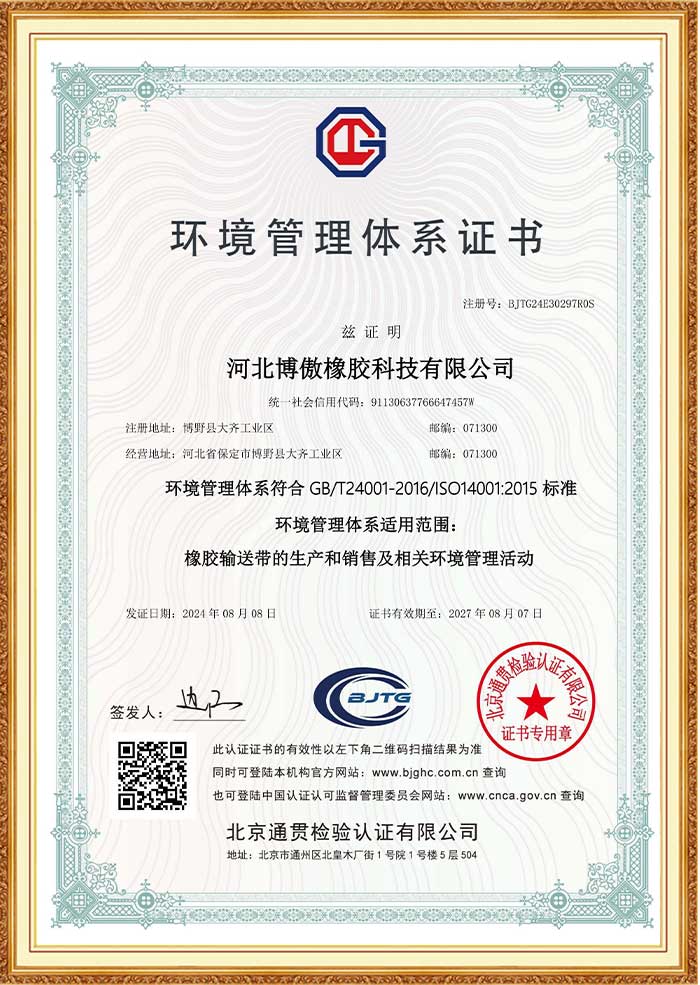
Our Quality & Management Certificates

Quality Certificate 1
Quality Certificate 2
Quality Certificate 3
Quality Certificate 4
Quality Certificate 5

Technical Service & Lifecycle Management

Service Overview

We provide comprehensive lifecycle support for bulk conveyor systems, including planned component replacements, repairs, structural inspections, and emergency technical services.

Scope of Services

Our service packages cover the supply of premium rubber compounds, inventory management programs to ensure critical spare parts availability, belt splicing, and routine maintenance of structural frames.

Performance Standards

We focus on improving overall belt conveyor system efficiency, reducing energy consumption, extending belt service life, and minimizing unplanned maintenance shutdowns.

Strategic Support

We develop custom technical plans to ensure reliable, safe, and cost-effective equipment operation, helping operators maximize the return on their capital investments.
Industrial Collaboration Cases

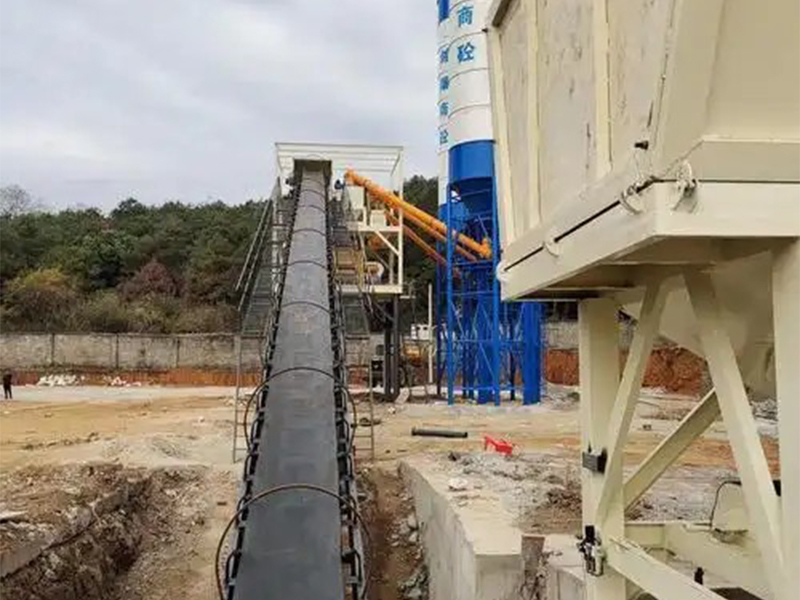
China Railway Group Mixing Plant

China Railway Group Mixing Plant

Conch Cement

Conch Cement

Datong Coal Group

Datong Coal Group

Tsingshan Group

Tsingshan Group

Jidong Cement Group

Jidong Cement Group

Jinmei Group Coal Conveying Line

Jinmei Group Coal Conveying Line

Taihang Steel

Taihang Steel

Puyang Steel Group

Puyang Steel Group

Material Science & Manufacturing Processes

The operating life of an idler conveyor roller is determined by its design details. Standard manufacturing can result in micro-defects that, under high-load conditions, cause premature bearing failure or shell wear. At Boao, we address these challenges through targeted engineering improvements:

1. Double & Triple Labyrinth Sealing Technology

Bearings are the most vulnerable component of any conveyor roller. If fine dust particles or moisture bypass the outer seals, they degrade the lubricating grease, leading to friction and eventual bearing lockup.

To prevent this, we design our rollers with dynamic, multi-stage labyrinth seals. These non-contact seals create a tortuous path filled with lithium-based grease, forming a barrier that repels water and dust while keeping rolling resistance low.

2. Precision Steel Tube Processing

Excessive radial run-out (eccentric rotation) causes high-frequency vibration during operation, which accelerates belt wear and reduces bearing life.

Our manufacturing process uses high-precision, high-frequency welded carbon steel tubes. The ends are bored simultaneously on automated lathes to ensure precise concentricity between the tube body and the bearing housing. This minimizes vibration and helps control noise levels in indoor or underground installations.

3. High-Quality Bearing Integration

We equip our rollers with deep-groove ball bearings featuring large internal clearances (C3 or C4). This clearance accommodates minor shaft deflections under heavy loads and tolerates thermal expansion during continuous operation in high-temperature environments.
Technical Q&A - Conveyor Roller & Belt Engineering

Q1: What are the primary causes of idler conveyor roller failure, and how can they be mitigated?
Most failures result from bearing contamination or shell wear. Dust and water entering the bearing chamber degrade the grease, causing friction and lockup. Mitigate this by using dynamic multi-stage labyrinth seals, high-quality lithium grease, and choosing rollers with thick, wear-resistant shells suitable for the abrasive characteristics of the handled material.
Q2: How do CEMA standards affect global procurement and operational compatibility?
CEMA standards classify rollers (B through F) based on load rating and shaft diameter. Buying rollers that strictly comply with these standards ensures that replacement parts fit existing frame structures without requiring modifications. It also guarantees that the load capacity matches the system's design requirements.
Q3: Why are rubber buffer idlers installed at conveyor transfer points?
At material feed and transfer points, falling bulk materials exert high impact energy. Standard steel rollers cannot absorb this energy, which can damage the belt core. Rubber buffer idlers use high-elasticity rubber rings to absorb and distribute these impact forces, protecting the belt from punctures, cuts, and premature wear.
Q4: What role do self-aligning idlers play in conveyor system maintenance?
Belt mis-tracking can cause material spillage, structural interference, and severe damage to the belt edges. Self-aligning (or training) idlers dynamically pivot in response to belt drift, guiding the belt back to its center path. This helps prevent edge wear and reduces the need for manual tracking adjustments.
Q5: How does the friction coefficient of a roller shell affect overall energy consumption?
The friction between the rotating roller shell and the conveyor belt accounts for a significant portion of a system's running resistance. High-friction, poorly lubricated, or misaligned rollers force the drive motor to draw more electrical power. Using high-precision rollers with low rotational resistance reduces system drag and lowers energy costs.