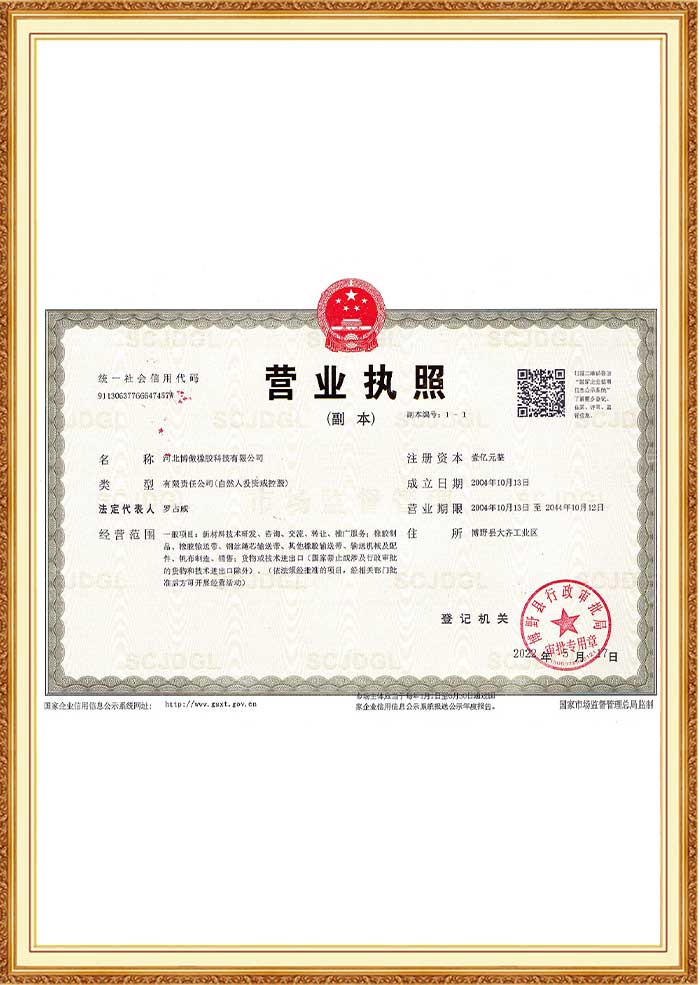
Established in 2004, Hebei Boao Rubber Technology Co., Ltd. is located in the heart of the Boye County Rubber Industrial Park, Baoding City, Hebei Province. Over the last 22 years, Boao has grown from a specialized domestic workshop to a leading global manufacturer integrating advanced product research, design, custom manufacturing, and global industrial support services.
Operating under the internationally recognized "Jinao" brand, the company maintains advanced manufacturing and laboratory infrastructure spanning more than 30 acres. Our modern facility houses state-of-the-art production lines for compound mixing, calendering, fabric building, high-pressure vulcanization, and systematic quality testing, guaranteeing that all rubber belt products satisfy standard requirements for international mining, energy, and port applications.
"In the bulk material handling industry, reliability is not an option—it is a baseline necessity. Our mission is to engineer high-integrity conveyor systems that reduce downtime, withstand harsh environmental stresses, and optimize our customers' total cost of ownership."
Modern heavy industries—ranging from underground coal mining and iron ore sinter plants to deepwater cargo ports and high-capacity chemical refineries—rely heavily on mechanical conveyor networks. A rubber conveyor belt is no longer just a passive transport medium; it is a highly engineered structural component designed to withstand enormous tensile forces, resist chemical oxidation, and survive high-energy impacts.
Over the past two decades, rubber belting technology has pivoted towards customized synthetic polymers and advanced reinforcement cores. By replacing standard cotton duck fabrics with high-modulus polyester (EP) and polyamide (NN) weaves, as well as ultra-high-tensile steel wire ropes, modern conveyor belts can run over longer center-to-center distances, handle steeper inclines, and operate with significantly reduced elongation rates.
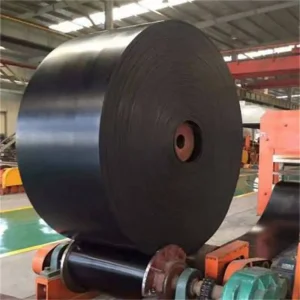
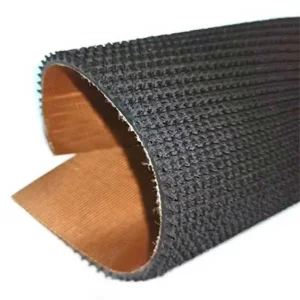
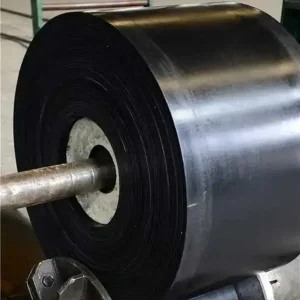
A premium conveyor belt is composed of three primary functional elements: the top cover rubber, the reinforcing carcass, and the bottom cover rubber.
China has become the global center for conveyor belt manufacturing, driven by extensive raw material access, mature engineering talent, and a highly integrated industrial ecosystem. As a leading manufacturer in Hebei's prominent Boye County Rubber Industrial District, Boao Rubber Technology offers significant structural advantages to global industrial buyers:
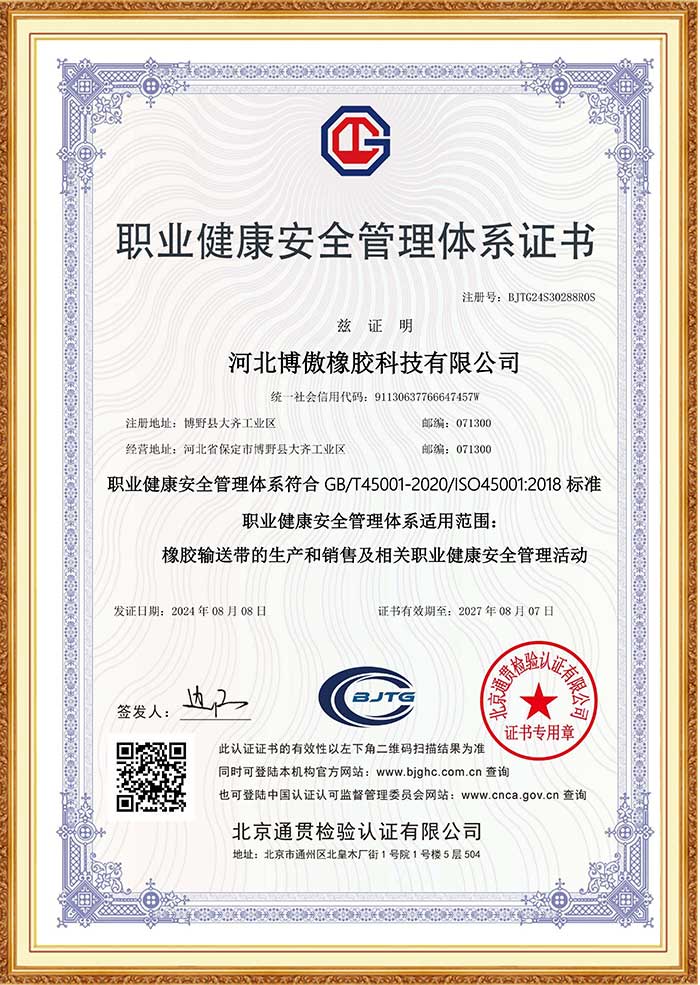
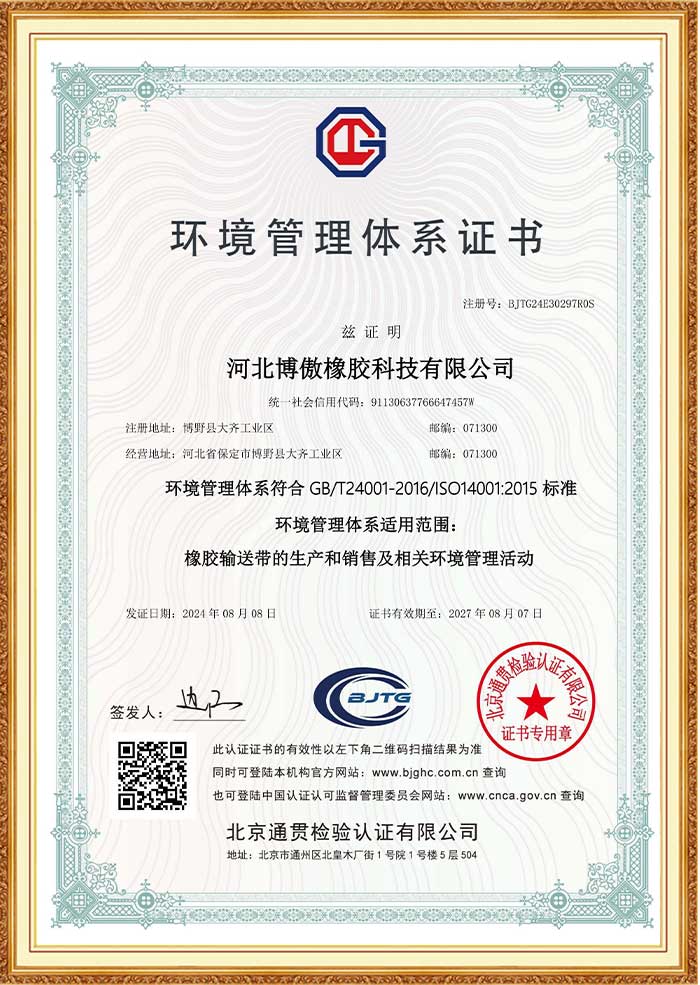
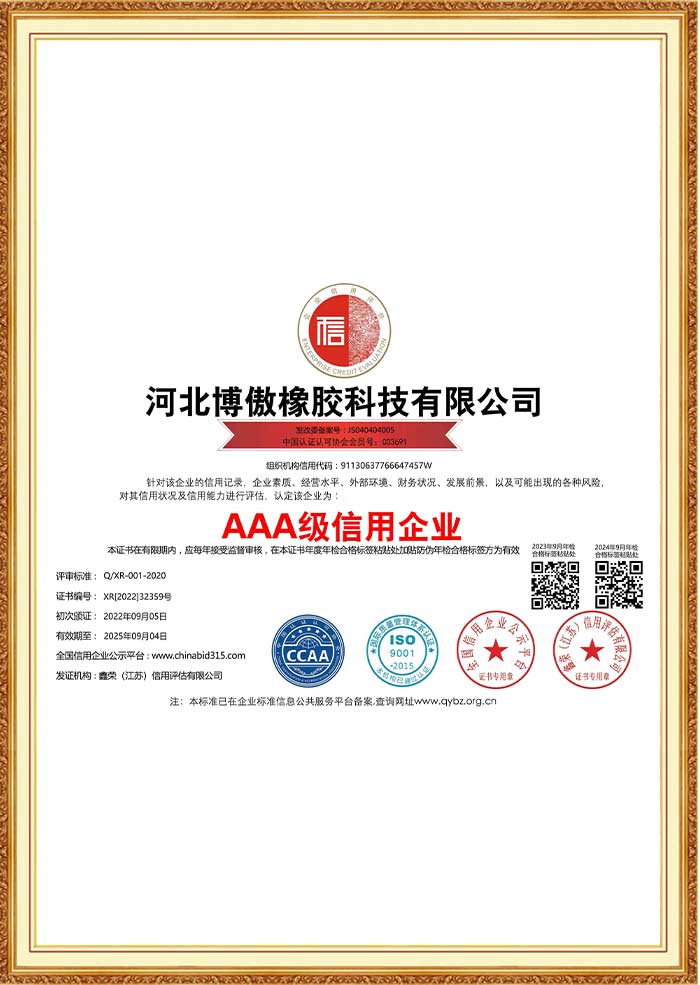
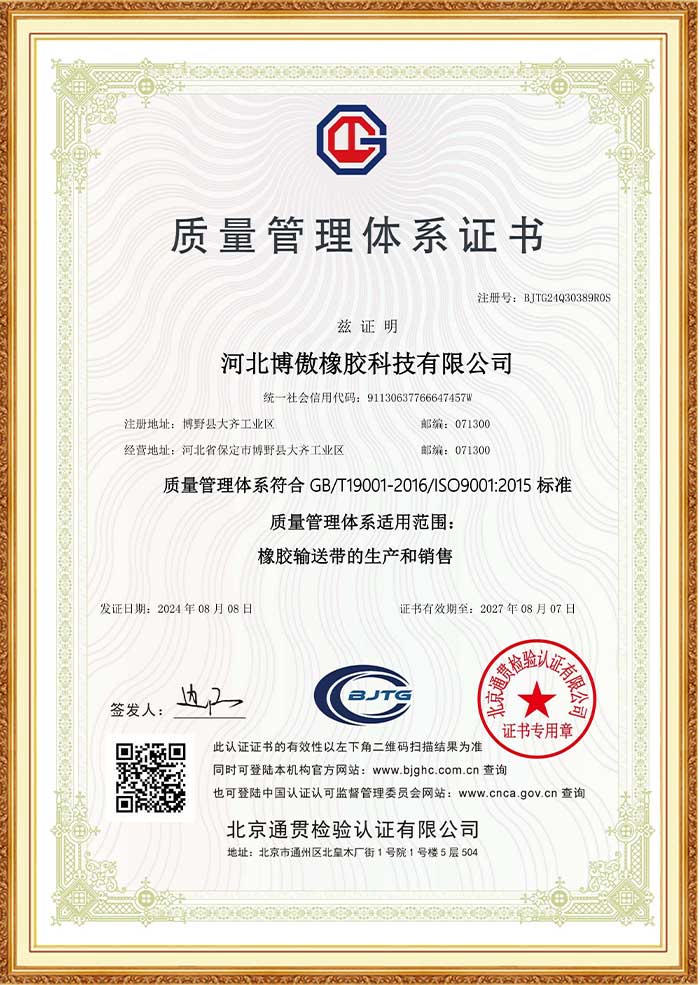
Quality assurance is the foundation of the Boao philosophy. Our facility operates an independent chemical analysis laboratory and a physics testing room, verifying all products against strict international parameters prior to dispatch. We enforce a zero-tolerance policy for substandard materials.
Boao conveyor components are engineered to deliver reliable performance in highly demanding industrial scenarios:
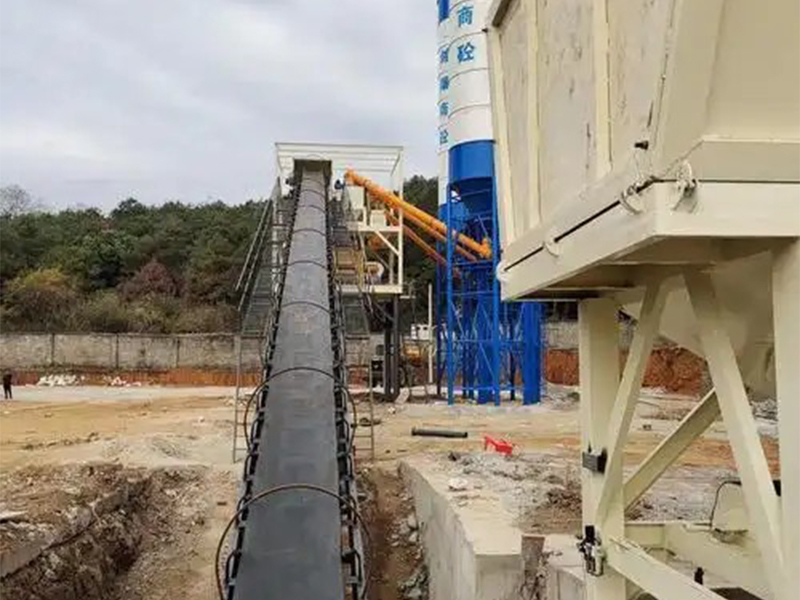
Continuous raw material aggregate feed conveyors with optimized troughing characteristics.
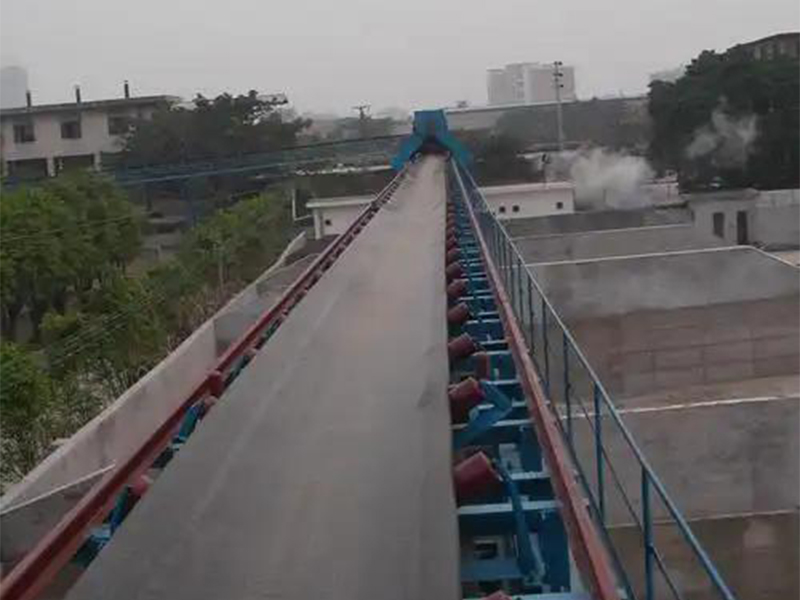
Long-distance quarry systems moving raw limestone under challenging environmental conditions.
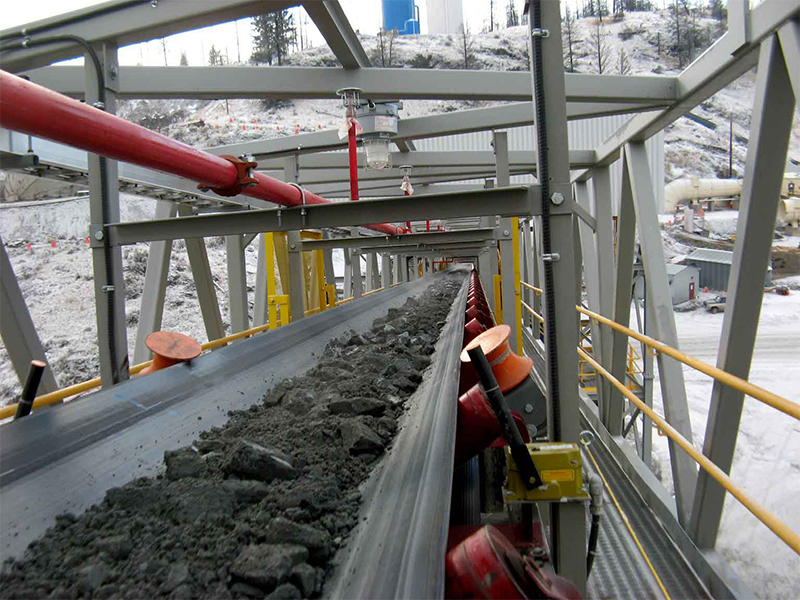
Flame-retardant safety belt systems designed to meet deep underground mining standards.
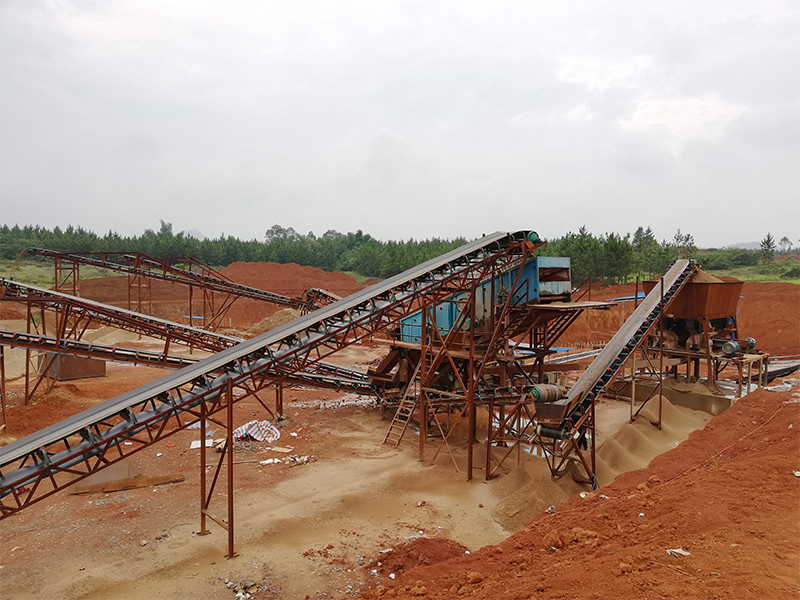
Heavy ore logistics solutions matching high output processing plant expectations.
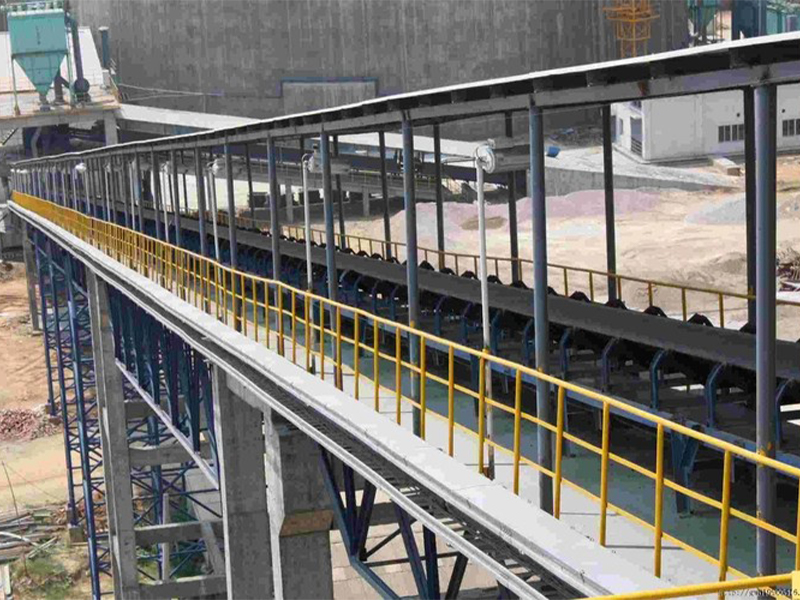
High-efficiency clinker transport lines utilizing our heat-resistant technology.
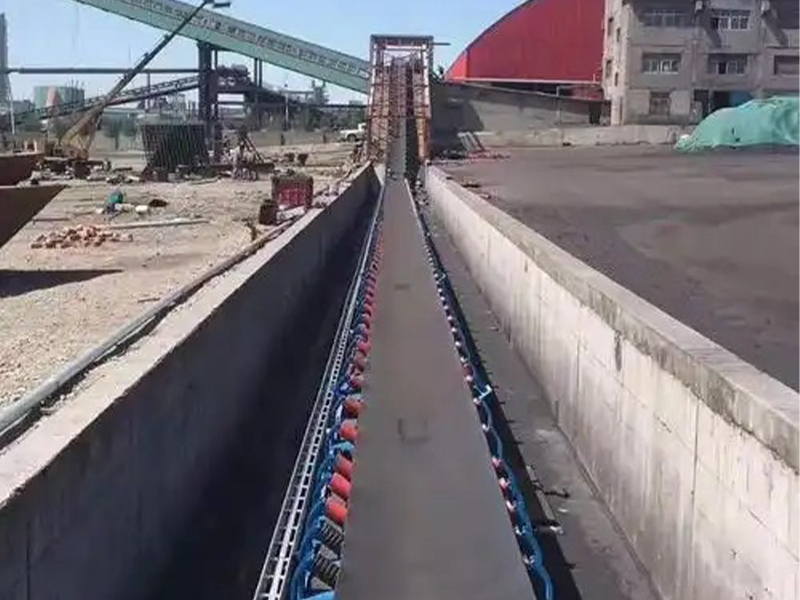
Robust overland conveyor installation with high resistance to tearing.
At Boao, we understand that selecting the right conveyor belt is only the first step. Maximizing service life requires proactive maintenance, careful commissioning, and high-quality splicing techniques. A single tracking error or poorly executed vulcanized splice can cause catastrophic structural failures, leading to costly downtime.
B2B industrial procurement managers operate under tight logistics and regulatory constraints. Sourcing conveyor equipment globally requires navigating complex trade and compliance landscapes. Boao addresses these challenges directly:
Here are answers to the most common questions raised by engineering directors and procurement departments sourcing heavy-duty industrial conveyor systems:
The decision is based on transport distance, tension requirements, and operational impact. Polyester-Polyamide (EP) fabrics feature a polyester warp (longitudinal) and polyamide weft (transverse). This combination offers low elongation and excellent troughability, making it the preferred choice for long-distance conveyor runs. Nylon-Nylon (NN) fabrics use polyamide in both directions, providing higher elasticity, superior impact resistance, and improved flex fatigue resistance. NN is best suited for heavy impact loads, short centers, or systems with smaller drive pulleys.
Standard SBR or natural rubber compounds degrade and crack rapidly at high temperatures. For applications involving sinter, hot clinker, or coke above 200°C (up to peaks of 300°C), we employ custom-formulated EPDM (Ethylene Propylene Diene Monomer) matrices. EPDM offers excellent resistance to thermal degradation, ozone cracking, and chemical weathering, ensuring long-term carcass protection.
Steel cord belt life depends on the adhesion strength between the rubber and the galvanized steel wire ropes. We use open-twist galvanized steel cords that allow the rubber compound to penetrate completely between the individual wire filaments. Additionally, we apply advanced chemical bonding agents during our high-pressure vulcanization cycle, yielding pull-out values that meet or exceed ISO 15236 requirements.
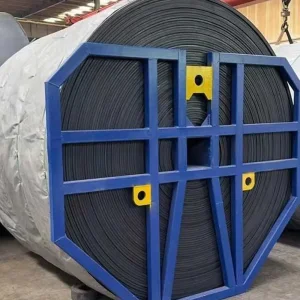
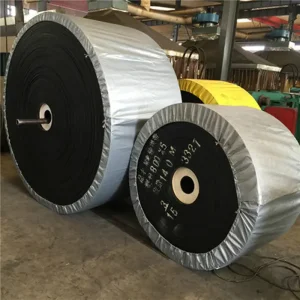
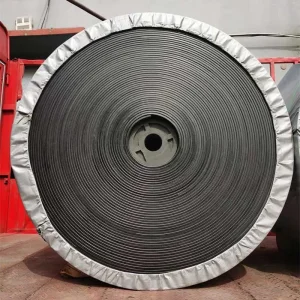
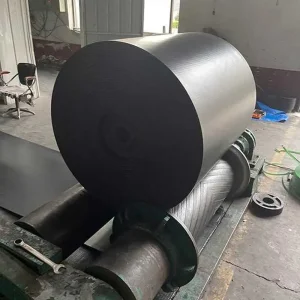
Under ideal storage conditions, premium rubber conveyor belts maintain their physical properties for 3 to 5 years. Belts should be stored upright on their transport reels in a cool, dry, and dark warehouse. Exposure to direct sunlight, high humidity, ozone sources (like high-voltage equipment), and oil spills must be avoided to prevent surface oxidation and micro-cracking.
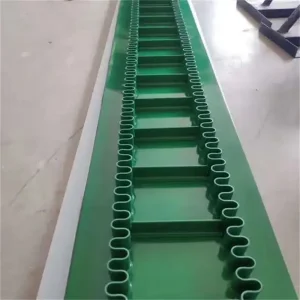
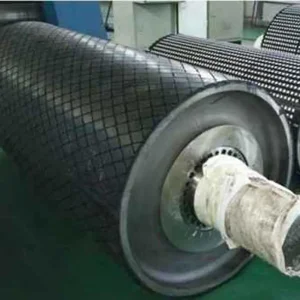
Standard flat conveyor belts are generally limited to transport angles of 15° to 18°. Beyond this, materials tend to slip or roll back. Our Chevron, Magic Carpet, and Concave-Convex patterned belts feature molded cleats (ranging from 5mm to 32mm in height) integrated directly into the cover rubber. This allows the system to transport bulk materials efficiently on steep inclines up to 40°.
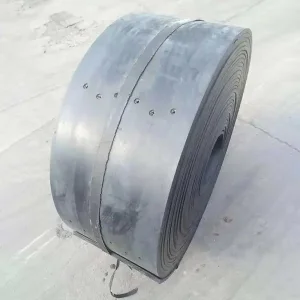
Connect with Boao's technical engineers for a customized belt selection analysis. We offer comprehensive design assessments, technical drawings, and prompt pricing estimates for your project.
Inquire Now / Get Tech Support Boao Rubber