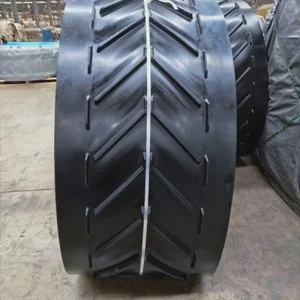
China Suppliers Factory Rubber Lifting Conveyor Belt for Bucket Elevators and Material Transport

,

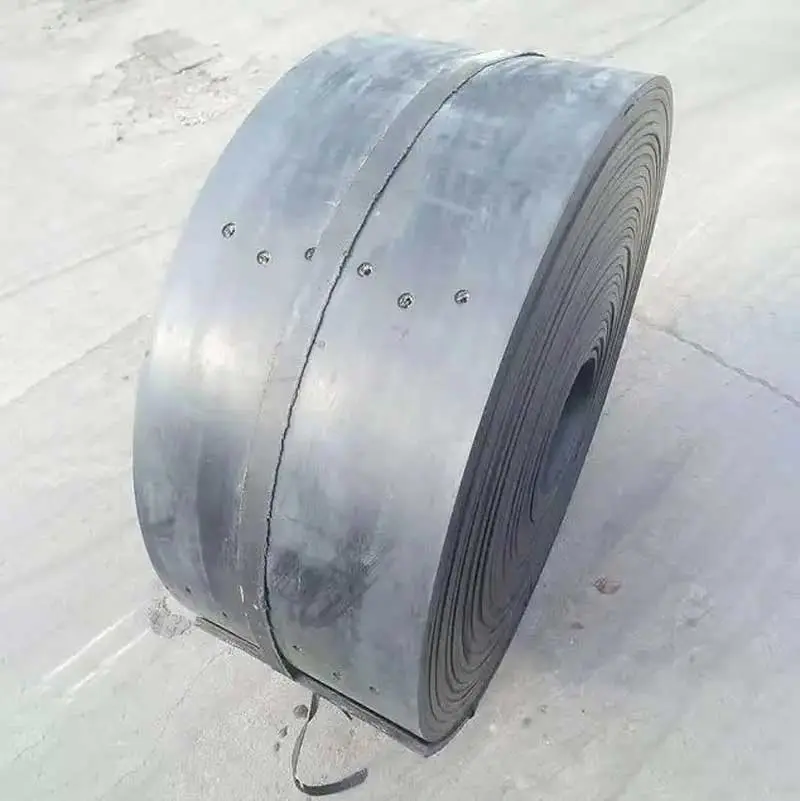
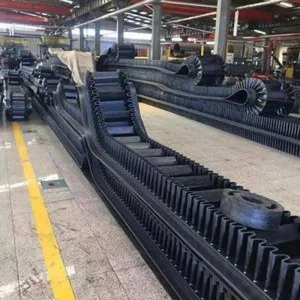
The rubber lifting belt is a high-quality industrial rubber product manufactured in China. As a key component in various industries, this conveyor belt is designed for the installation of hoppers and serves as an essential traction element in bucket elevators, effectively lifting and transporting materials. Our factory produces two primary types based on the core structure: fabric core and steel wire rope core. Additionally, we offer various wear resistance classifications—strong wear (D-type), moderate wear (L-type), and heat-resistant (T-type) for those handling high-temperature materials. Trust our experienced suppliers for durable and reliable rubber lifting belts tailored to meet your operational needs.

,

Product Description

Product Introduction
Fabric Core Lifting Belt — Strength (N/mm)

100, 125, 160, 200, 250, 315, 400, 500, and above

Fabric Core Lifting Belt — Width (mm)

150, 200, 300, 400, 500, 600, 650, 700, 800, 1000, 1200, 1400, 1600

Steel Wire Rope Core Lifting Belt — Strength (N/mm)

St630, St800, St1000, St1250, St1600, St2000, St2500

Steel Wire Rope Core Lifting Belt — Width (mm)

200, 250, 300, 350, 400, 450, 550, 600, 680, 800, 850, 1000, 1050, 1200, 1300, 1400
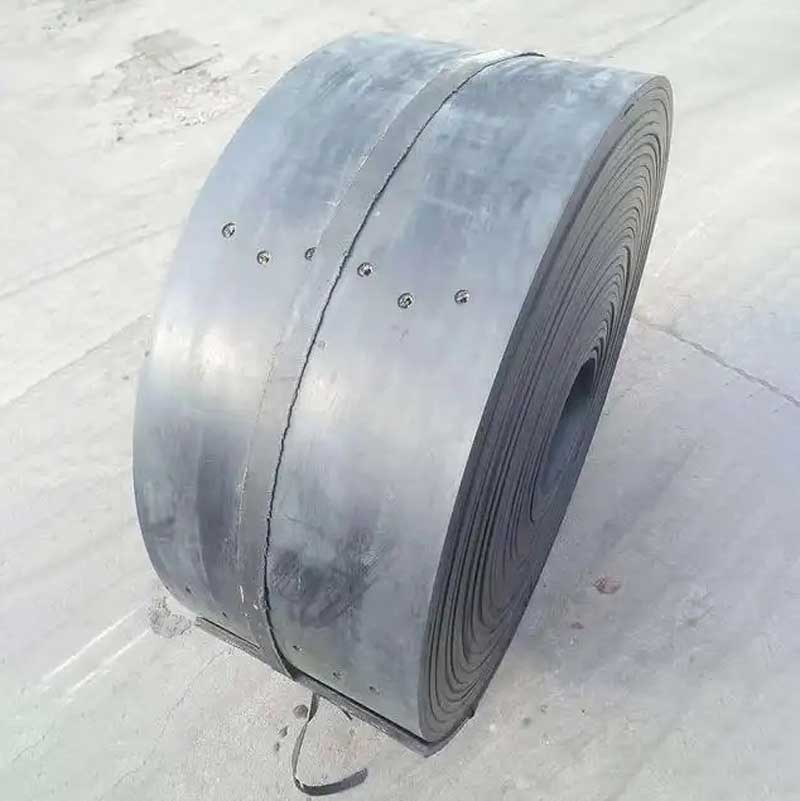
Marking Example 1 — Fabric Core
1000 B 9508 4.5T × 3.0 1000 NN5 — Bucket type lifting belt with a strength specification of 1000 N/mm. Produced in August 1995. Upper cover layer: 4.5 mm + reinforcement layer; Lower cover layer: 3 mm. Belt width: 1000 mm. Core material: Nylon canvas, 5 layers total.
Marking Example 2 — Steel Wire Rope Core
St1000 B 9508 5T × 5T 1200 Φ3.5 — Steel wire rope core bucket type lifting belt with a strength specification of 1000 N/mm. Produced in August 1995. Upper and lower cover layers + reinforcement layer: 5 mm each. Belt width: 1200 mm. Steel wire rope diameter: 3.5 mm. Compliant with chemical industry standard HG/T 2577-1994 "Rubber Lifting Belt".
This standard was revised in 2005 and is currently awaiting approval. The revised standard has been renamed as "Rubber or Plastic", and the strength and width specifications for both fabric core and steel wire rope core lifting belts are aligned with general-purpose conveyor belt standards. The covering layer performance is classified into three types:
🌿
L-Type
General environmental conditions
🌡️
T3-Type
Heat resistance up to 150 °C
🔥
T4-Type
Heat resistance up to 175 °C
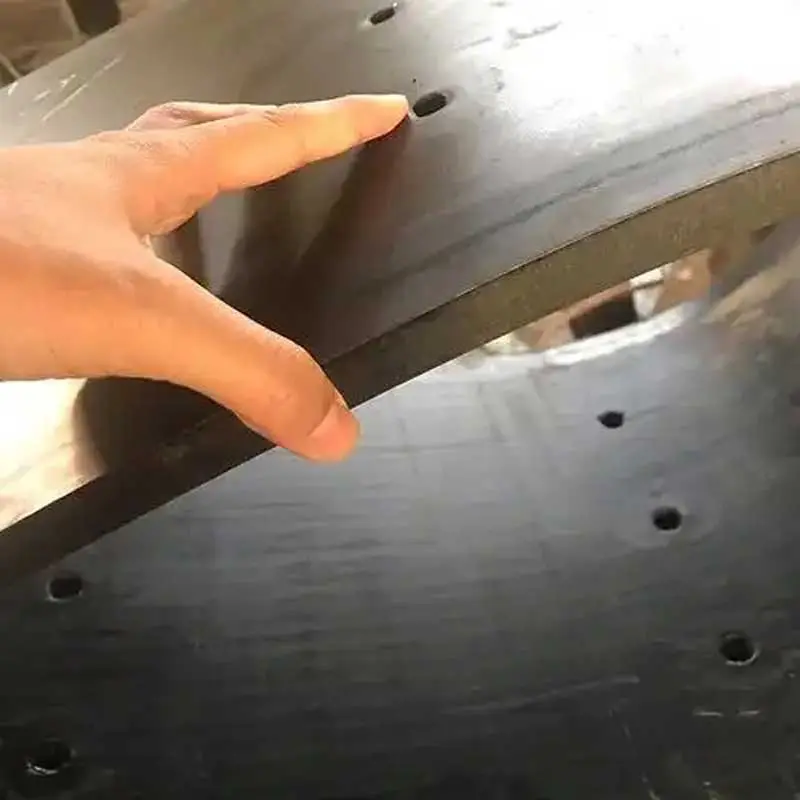
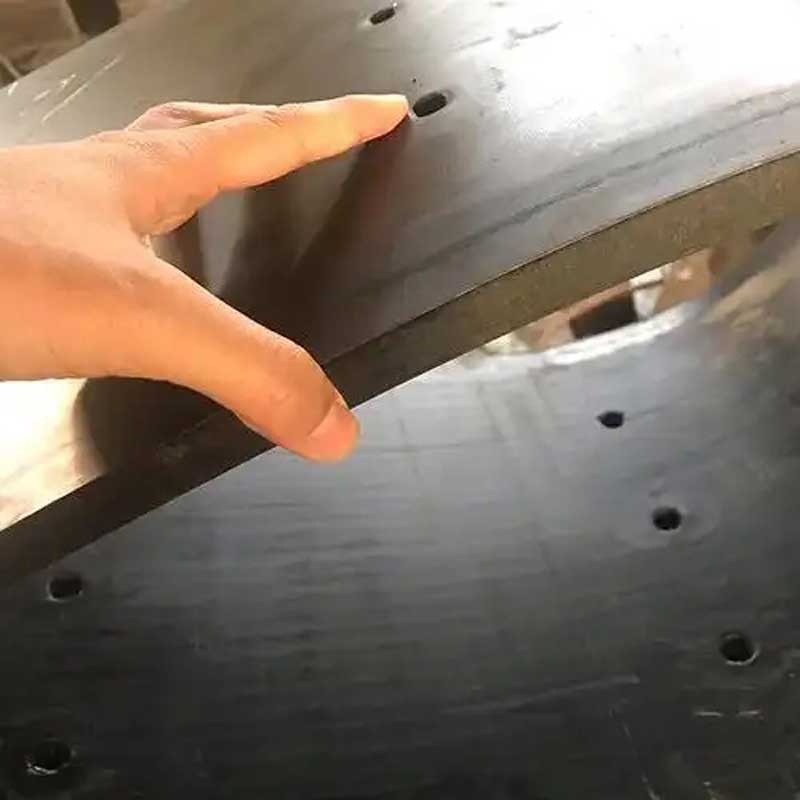
The revised standard also specifies requirements for the punching and drilling of lifting belts.
Rubber Lifting Belt 01
Rubber Lifting Belt 02

Expand
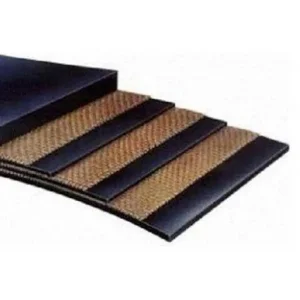
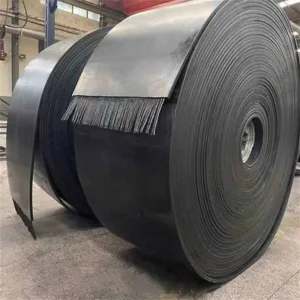
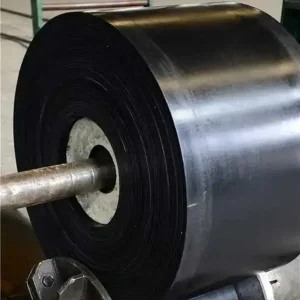
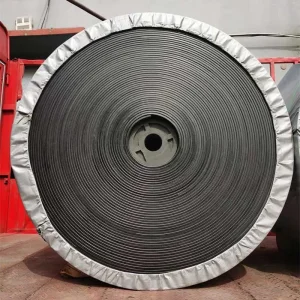
The rubber lifting belt is made up of multiple layers of adhesive fabric, and the core of the belt is generally covered with adhesive. It can be categorized in several ways:
By Usage Temperature

Heat-resistant lifting belts & Ordinary lifting belts

By Core Material

Full cotton, Polyester-cotton interwoven, Nylon, and EP lifting belts

By Wear Resistance (Cover Adhesive)

D-Type: Strong wear | L-Type: Moderate wear | T-Type: Heat-resistant

Main Width Specifications (mm)

150, 200, 250, 300, 350, 400, 500, and more


Frequently Asked Questions
Q1 What are the main strength specifications available for fabric core lifting belts?
Fabric core lifting belts are available in the following strength specifications (N/mm): 100, 125, 160, 200, 250, 315, 400, 500, and above. Width specifications (mm) range from 150 up to 1600, covering a wide variety of industrial applications.
Q2 What does the marking "St1000 B 9508 5T × 5T 1200 Φ3.5" mean on a lifting belt?
This marking indicates a steel wire rope core bucket type lifting belt. "St1000" refers to a strength of 1000 N/mm. "B 9508" means it was produced in August 1995. "5T × 5T" indicates 5 mm thickness for both upper and lower cover layers including the reinforcement layer. "1200" is the belt width in mm, and "Φ3.5" is the steel wire rope diameter of 3.5 mm.
Q3 What are the three covering layer performance types defined in the revised standard?
The revised standard classifies the covering layer performance into three types: L-Type for general environmental conditions, T3-Type for heat resistance not exceeding 150 °C, and T4-Type for heat resistance up to 175 °C. These classifications help users select the appropriate belt for their specific operating environment.
Q4 How are rubber lifting belts categorized by core material?
Rubber lifting belts can be categorized by core material into four types: full cotton, polyester-cotton interwoven, nylon, and EP (polyester-nylon) lifting belts. The choice of core material affects the belt's tensile strength, flexibility, and suitability for specific load conditions.
Q5 What wear resistance grades are available for rubber lifting belt cover adhesives?
The cover adhesive of rubber lifting belts is graded by wear resistance as follows: D-Type for strong wear resistance (heavy abrasion loads), L-Type for moderate wear resistance (general use), and T-Type for heat-resistant applications. Selecting the correct grade ensures longer belt life and better performance.
Q6 Which industry standard governs rubber lifting belts, and has it been updated?
Rubber lifting belts originally complied with the chemical industry standard HG/T 2577-1994 "Rubber Lifting Belt". This standard was revised in 2005 and renamed "Rubber or Plastic Lifting Belt". The updated version aligns strength and width specifications with those of general-purpose fabric core and steel wire rope core conveyor belts, and also adds requirements for punching and drilling of lifting belts.

Related Products