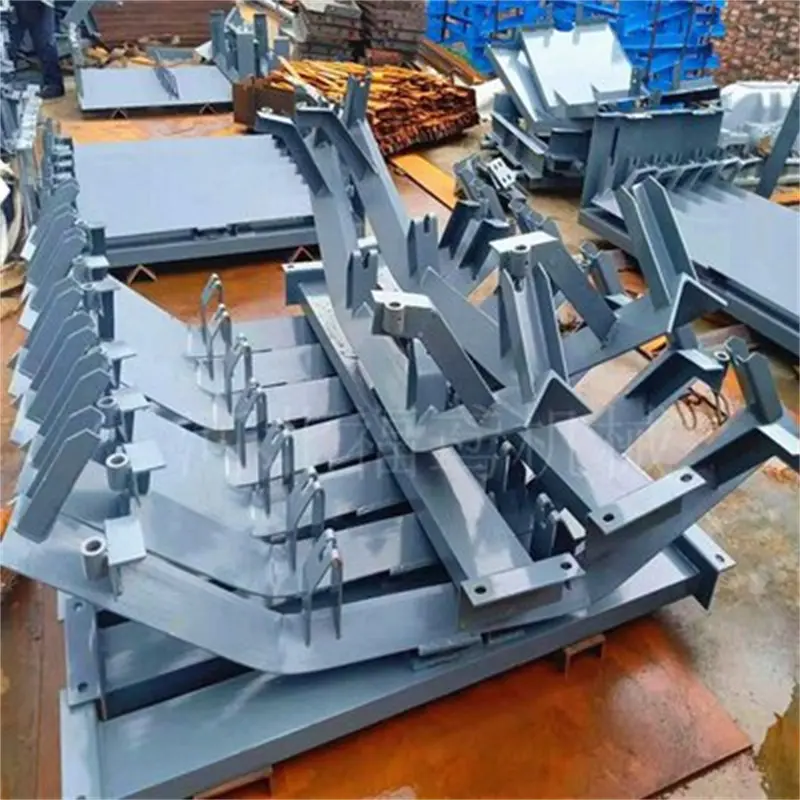
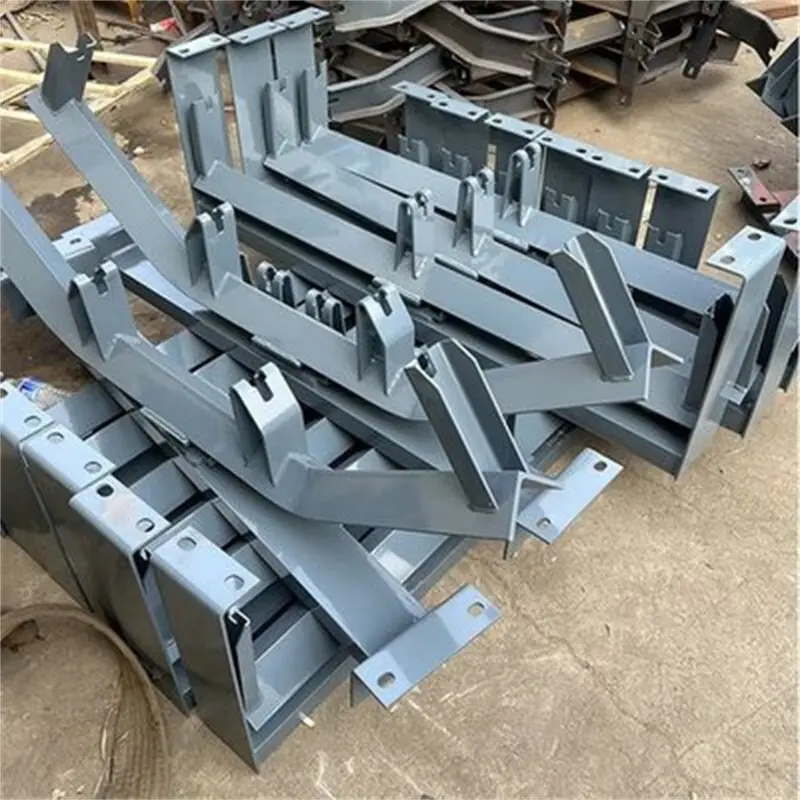
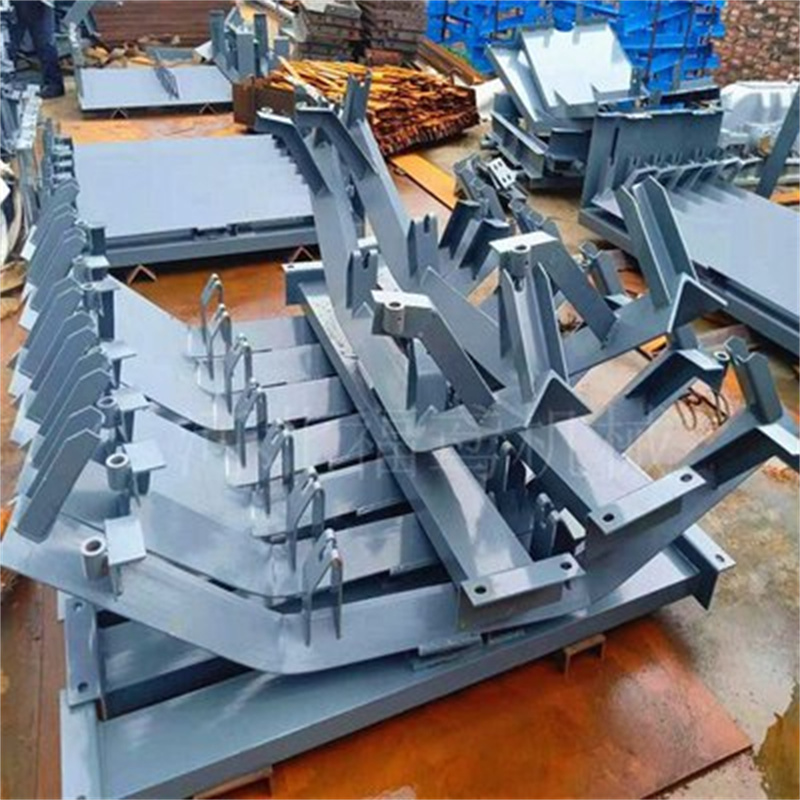
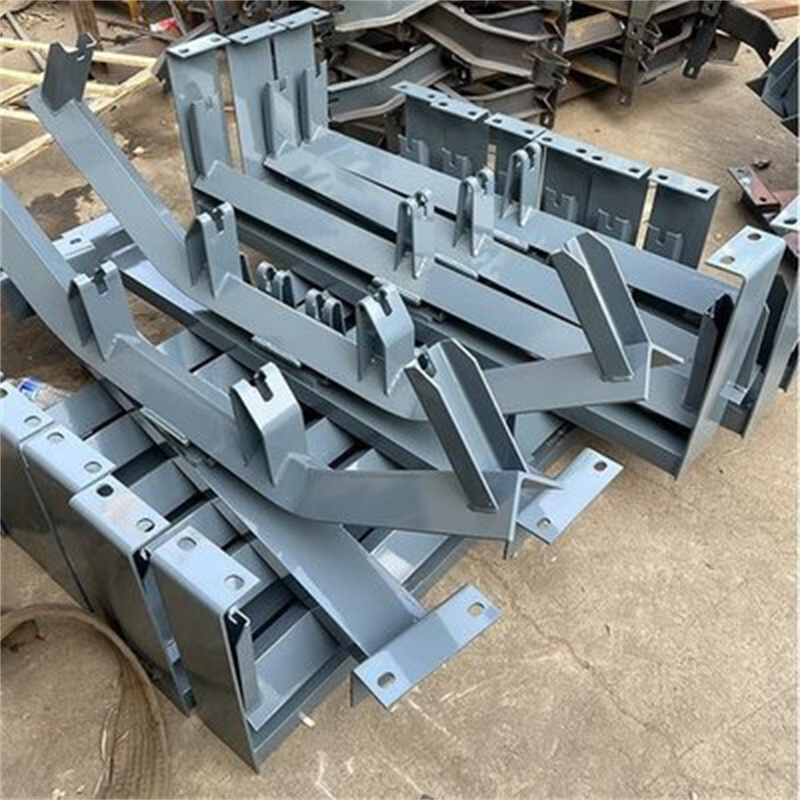
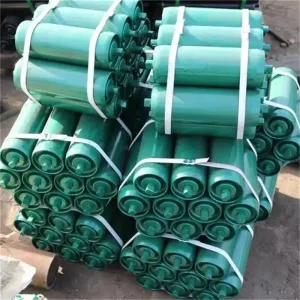
China Conveyor Belt Idler Roller Brackets - High-Quality China Suppliers and Factory for Custom Widths and Sizes Manufacturers, Factories

,

Standard Dimensions for Brackets Based on Bandwidth:

,

Explore our high-quality brackets categorized by bandwidth for various applications. As a leading China supplier with a state-of-the-art factory, we offer:

,
    ,
  • 1500mm Bandwidth Series: Features a bracket width of 550-580mm and an adjustable leg height ranging from 200-800mm.
  • ,
  • 650mm Bandwidth Series: Offers a bracket width between 700-730mm.
  • ,
  • 800mm Bandwidth Series: Provides a bracket width of 850-880mm.
  • ,
  • 1000mm Bandwidth Series: Contains a bracket width ranging from 1050-1100mm.
  • ,
  • Widening Design: Available for larger specifications, including 1200mm, 1400mm, and 1600mm series.
  • ,
,

Choose our brackets for their superior design and functionality, backed by our expertise as a trusted China supplier dedicated to quality manufacturing.

,

Product Description

Structural Parameter Standards
  • The installation angle of the groove type roller group is usually 30° or 35°.
  • The center distance of the flat roller group is generally 1200–1500 mm.
  • Special spacing requirements apply for buffer roller groups.
  • bracket01
  • bracket02
Material and Process Requirements
  • Q235B steel welded parts are the mainstream choice.
  • Use C-shaped steel or H-shaped steel as the supporting beam material.
  • Surface treatment required: hot-dip galvanizing or spray coating for rust prevention.
📋
International Standard References:
ISO 1537:2018 "Continuous Mechanical Handling Equipment" | DIN 22112 "Belt Conveyor" Standard System
⚠️
These dimensions are for reference only. Specific dimensions may vary depending on different manufacturers and product models. It is recommended to consult a professional belt conveyor manufacturer or supplier to ensure the appropriate size of roller bracket is selected.
Conveyor Supports — Detailed Overview
Conveyor supports are a crucial component of conveyor systems, used to support and secure the various parts of the conveyor, ensuring stable operation.
FUNCTION
Supports all conveyor parts for stable operation; height-adjustable to create horizontal or inclined conveying surfaces. Load-bearing capacity must exceed the combined weight of conveyor components and conveyed items to ensure safe operation.
MATERIALS
Common materials include steel, aluminum alloy, wood, and plastic.
Steel: High-strength, impact-resistant — heavy industrial use.
Aluminum alloy: Lightweight, corrosion-resistant — food & pharma.
Wood: Low-cost, easy to process — light loads or temporary systems.
Plastic: Water & chemical resistant — special environments.
STRUCTURAL FORMS
C-shaped steel: Open structure, easy to install and adjust.
Square/rectangular tubing: Closed structure, strong torsional resistance — long-span support.
Truss structures: Distributes loads, reduces resonance during long-distance conveying.
TYPES
By mobility:
Fixed supports: Bolted to the ground — stable, permanent use.
Mobile supports: Equipped with casters — easy movement for temporary/repositioned applications.

By application:
Standard supports: General support purposes.
Driven supports: Added structure at drive end for drive section stability.
KEY PARAMETERS
Key parameters include the support's span, height, and load-bearing capacity. The support span is determined by the load and must be designed based on specific load requirements and material allowable stress parameters to ensure sufficient strength and stability of the support structure.
Frequently Asked Questions (FAQ)
Q What is the standard installation angle for groove type roller groups?
The standard installation angle for groove type roller groups is typically 30° or 35°. The specific angle depends on the material being conveyed and the design requirements of the conveyor system. A 35° angle is often preferred for materials prone to spillage or for higher-capacity applications.
Q What materials are commonly used for conveyor support structures?
Conveyor supports are commonly manufactured from steel, aluminum alloy, wood, and plastic. Steel is the most widely used for heavy-duty industrial environments due to its high strength and impact resistance. Aluminum alloy is preferred in food processing and pharmaceutical industries for its lightweight and corrosion-resistant properties.
Q What surface treatment is required for conveyor support steel components?
Steel conveyor support components must undergo rust prevention treatment. The two most common methods are hot-dip galvanizing and spray coating (powder coating or paint). Hot-dip galvanizing provides long-term corrosion protection and is preferred for outdoor or harsh industrial environments. Q235B steel is the mainstream base material for welded components.
Q What is the difference between fixed and mobile conveyor supports?
Fixed supports are permanently bolted to the floor or foundation, providing maximum stability for continuous, long-term conveyor operations. Mobile supports are fitted with casters, allowing the conveyor system to be relocated easily. Mobile supports are ideal for temporary production lines or applications requiring frequent repositioning.
Q Which international standards apply to conveyor roller bracket design?
Key international standards for conveyor roller bracket design include ISO 1537:2018 "Continuous Mechanical Handling Equipment" and the DIN 22112 "Belt Conveyor" standard system. These standards govern structural parameters, load-bearing specifications, and installation guidelines to ensure safety and performance consistency across manufacturers.
Q How should I choose the right size roller bracket for my conveyor system?
Selecting the correct roller bracket size requires consideration of multiple factors, including the conveyor span, load-bearing capacity, belt width, and the type of material conveyed. Since dimensions can vary significantly between manufacturers and product models, it is strongly recommended to consult a professional belt conveyor manufacturer or supplier. Providing them with your specific application requirements will help ensure an appropriate and safe bracket selection.

Related Products