China Top 10 High Strength Conveyor Belt Suppliers?

Time:2026-09-30 Author:Amelia
0%

Choosing a High-Strength Conveyor Belt supplier is a practical decision, not just a price comparison. In mines, ports, and cement plants, belts carry heavy loads across long routes, often through dust, heat, and abrasive material. A weak splice or poorly matched belt can bring a line to a standstill. Small details matter.

The International Energy Agency’s Global Critical Minerals Outlook 2024 reports that lithium demand rose by 30% in 2023, while demand for nickel, cobalt, graphite, and rare earths grew by 8% to 15%. These figures point to expanding material flows and sustained pressure on mining and processing infrastructure. They do not, by themselves, predict conveyor-belt sales. That distinction matters. R. Todd Swinderman, a recognized bulk-materials-handling specialist, has emphasized that conveyor reliability depends on the whole system—not only the belt. His perspective is a useful reminder to examine loading conditions, alignment, splices, and maintenance support alongside tensile strength.

This overview of China’s top 10 high-strength conveyor belt suppliers is intended to help buyers make that assessment. It considers product range, technical documentation, manufacturing capability, and service responsiveness. Ask for test records. Check splice guidance. Confirm whether the supplier can support your operating conditions, not just supply a catalogue specification. A ranking can still miss important differences between projects. Treat it as a starting point, and verify each claim with the supplier before making a purchase.
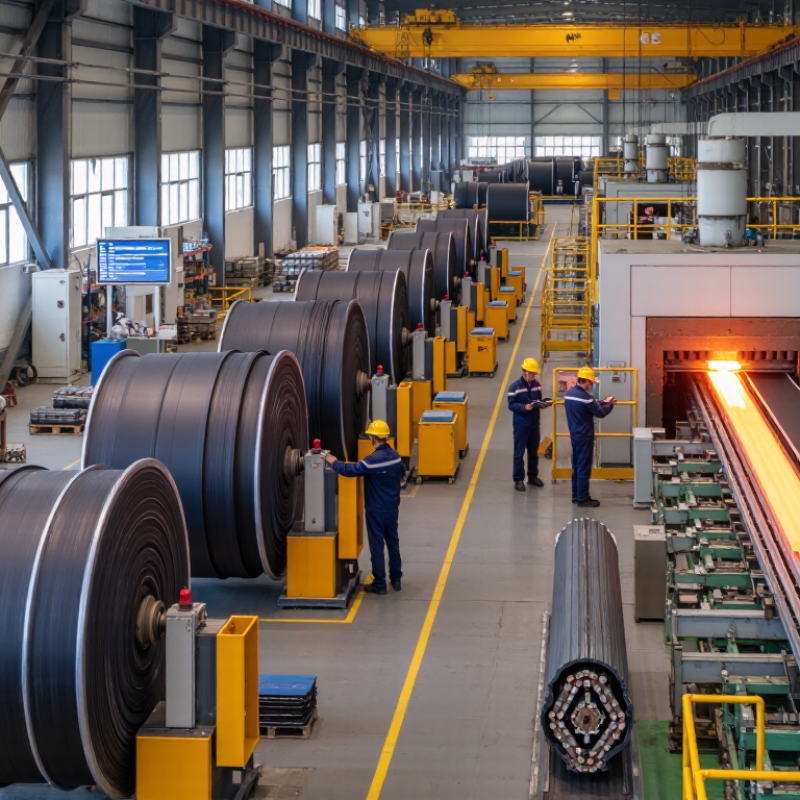
China Top 10 High Strength Conveyor Belt Suppliers?

Defining High-Strength Conveyor Belts: ISO 15236 and Steel-Cord Ratings in N/mm

High-strength steel-cord conveyor belts are classified by rated tensile strength, expressed in N/mm. Under ISO 15236-1:2016, common nominal ratings include 1,000, 1,250, 1,600, 2,000, 2,500, 3,150, and 4,000 N/mm. The value describes the belt’s rated longitudinal strength per millimetre of width; it is not a direct measure of carrying capacity. A 2,000 N/mm belt, for example, does not automatically move more material than a lower-rated belt. Conveyor speed, loading, belt width, and operating conditions also matter.

Look beyond the headline rating. ISO 15236-1 specifies construction and performance requirements for steel-cord belts, while splice design and testing are addressed separately in ISO 15236-4. A belt’s installed performance depends on cord spacing, rubber cover, adhesion, and splice quality. On a long haulage line, a poorly made joint can become the weak point, even when the belt’s rating looks impressive on paper. Check test certificates against the stated N/mm class, and confirm that the splice specification matches the belt. I would still want operating and splice data before comparing suppliers; a rating alone leaves important questions unanswered.

How to Assess 10 Chinese Suppliers: Capacity, Certifications, and Test Data

China Top 10 High Strength Conveyor Belt Suppliers?

Comparing ten Chinese suppliers requires evidence, not factory-floor photographs. Ask for annual output by belt type, monthly capacity, and recent delivery records. A large headline figure can hide a bottleneck in curing presses or steel-cord splicing. Request a production schedule for your specified width, strength class, and order volume. Then compare it with actual lead times.

Check certificates against their scope and expiry dates. ISO 14890 covers rubber- or plastics-covered conveyor belts for general use; it does not certify every product a factory makes. For test data, request dated reports identifying the belt construction, sample location, and test method. ISO 283 addresses tensile strength and elongation, while ISO 505 measures abrasion resistance. Compare results for the same belt grade and method. Different methods, different conclusions.

Look for traceability from batch number to test specimen. Ask whether testing is in-house or performed by an independent laboratory, and verify calibration records for tensile machines. A neat PDF is not proof. Request raw results and a sample report. One weakness in this review process: paperwork can still miss inconsistent production between batches. A pre-shipment inspection and retained sample help, but add cost and time. Use standards as a common language, not as a substitute for checking the actual belt you will receive.

China’s Top 10 High-Strength Conveyor Belt Suppliers: Products and Markets

China’s high-strength conveyor belt suppliers serve mining, ports, steel plants, cement works, and bulk-material terminals. A useful top-ten comparison should focus on capability, not just catalog size. Look for manufacturers that can explain belt construction, tensile ratings, cover compounds, and quality checks in plain terms. Product ranges commonly include steel-cord belts for long, heavy-duty routes and fabric-reinforced belts for shorter conveying lines. Details vary by supplier.

Market needs shape the products. Mines often require high tensile strength and abrasion resistance, while cement plants may prioritize heat-resistant covers. Ports need belts suited to continuous loading, changing weather, and abrasive cargo. Small details matter: belt width, pulley diameter, splice method, and operating temperature can affect service life. A listed specification is not a field result.

Domestic projects and export orders both influence supplier offerings, but buyers should verify experience in the intended application. Ask for relevant test reports, material traceability, installation guidance, and practical support for splicing and maintenance. A catalog can look complete; site conditions often expose gaps. Supplier comparisons are rarely perfectly tidy, and claims still need checking against operating data.

Comparing Belt Specifications: Tensile Rating, Width, Cover Grade, and Abrasion

China Top 10 High Strength Conveyor Belt Suppliers?
Comparing Belt Specifications: Tensile Rating, Width, Cover Grade, and Abrasion

Selecting a high-strength conveyor belt starts with its tensile rating, usually stated as breaking strength per unit width. Compare it with operating tension, splice efficiency, and starting loads—not just the headline number. A belt facing sudden starts may need more reserve than one carrying a steady, light load. Check width against chute openings, pulley face, and material flow. A narrow belt can spill material; an oversized one may track poorly.

Cover grade matters when handling sharp rock, damp fines, or oily material. Abrasion test results help compare samples, but they cannot predict service life exactly. Check cover thickness and carcass construction, too. A few coarse rocks can wear a cover differently from a large volume of fine sand. Specification sheets look precise. Field conditions are messier.

Tips: Ask for test methods, splice details, and an operating range. Compare equivalent specifications. If possible, inspect a belt after several months for edge wear, cracks, and cover loss. Field evidence may challenge your original choice—and that can be useful.

High-Strength Conveyor Belt Ratings: A Specification Comparison

Standard nominal tensile-strength classes provide a consistent basis for comparing belt specifications. The values shown are industry rating classes, not supplier-specific product data or a ranking.

How to read: Tensile rating is expressed in N/mm. Belt width is selected to suit conveyor capacity and system design; cover grade and abrasion resistance should be compared against the relevant test standard and conveying conditions.

Verifying Supplier Claims: ISO 14890, ISO 283, and Splice-Test Records

China Top 10 High Strength Conveyor Belt Suppliers?

A supplier’s claim means little without traceable test evidence. ISO 14890 confirms key requirements for textile conveyor belts used in general surface applications. It does not prove every high-strength performance claim. Check the certificate scope, belt construction, cover grades, and test dates. The supplied belt should match the tested specification.

ISO 283 tensile tests deserve careful review. Ask for sample identification, reinforcement type, test direction, laboratory details, and measured results. A single impressive number can mislead. Compare results with the declared belt class and technical datasheet. Splice-test records are equally important. Request curing conditions, splice dimensions, adhesive details, operator qualifications, and failure observations. Static strength alone may not represent field performance. Dynamic fatigue testing provides stronger evidence when available.

Tips: Visit the production site if possible. Match belt markings with the test report. Check whether samples came from regular production, not a special batch. Ask for several recent records, not one perfect file. Keep photographs of sample labels and splice preparation. Small details matter.

In practice, document control is often the weak point. Records may be complete, but sample traceability can remain unclear. That should trigger another question, not immediate rejection. Independent laboratory verification can reduce uncertainty before shipment. Still, even third-party reports need scope checking. A careful buyer verifies the evidence, the process, and the physical belt together.

FAQS

What does a steel-cord conveyor belt rating in N/mm mean?

It indicates rated longitudinal strength per millimetre of belt width. It does not directly show carrying capacity.

Does a 2,000 N/mm belt always carry more material?

No. Speed, width, loading, and operating conditions also affect material flow. The bigger number is not everything.

Which nominal ratings are commonly used under ISO 15236-1:2016?

Common ratings include 1,000, 1,250, 1,600, 2,000, 2,500, 3,150, and 4,000 N/mm.

What should be checked besides tensile strength?

Check cord spacing, rubber covers, adhesion, carcass construction, and splice quality. Small details matter.

Why is splice quality important?

A weak splice can limit an otherwise strong belt. Check that splice tests match the belt specification.

How should belt width be selected?

Compare width with chute openings, pulley faces, and material flow. A narrow belt may spill rock. An oversized belt may track poorly.

How do cover grade and abrasion affect belt selection?

Sharp rock, damp fines, and oily material require different cover properties. Cover thickness matters too.

Can abrasion test results predict exact service life?

Not exactly. Fine sand and coarse rocks can wear covers differently. Field conditions are less tidy.

What information should be requested before comparing belts?

Ask for test methods, operating ranges, splice details, and certificates. A rating alone leaves important questions unanswered.

How can field inspections improve belt selection?

Inspect belts after several months for edge wear, cracks, and cover loss. Your original choice may need reconsideration.

Conclusion

This article provides a practical guide to evaluating China’s leading high-strength conveyor belt suppliers without relying on brand promotion. It begins by explaining what defines a High-Strength Conveyor Belt, including ISO 15236 requirements, steel-cord construction, and tensile ratings expressed in N/mm. It then presents a structured method for comparing suppliers based on production capacity, quality certifications, laboratory facilities, export experience, and documented test data.

The comparison focuses on essential specifications such as tensile strength, belt width, cover grade, abrasion resistance, and application suitability. It also explains how buyers can verify technical claims through ISO 14890 and ISO 283 compliance, inspection reports, and splice-test records. By combining specification analysis with evidence-based supplier assessment, the article helps users identify reliable manufacturing partners for demanding mining, bulk material handling, port, and industrial conveying applications.


Amelia

Amelia

Amelia is a seasoned marketing professional with a wealth of expertise in our company’s core offerings. With an unwavering passion for driving growth and innovation, she plays a pivotal role in shaping our marketing strategies and enhancing brand visibility. A key aspect of her responsibilities......