Selecting a conveyor belt manufacturer involves more than comparing prices. Buyers must match belt construction to the material, load, operating speed, and conditions at the site. Ep Conveyor Belts use polyester warp and nylon weft fabric, offering flexibility and tensile strength for many conveying applications. Yet specifications vary between suppliers. Details matter.
This guide introduces ten Chinese manufacturers for buyers to evaluate, rather than presenting a universal ranking. A belt that performs well on a short indoor line may not suit a long conveyor exposed to moisture, abrasion, or temperature changes. Compare belt width, ply construction, cover grade, tensile strength, and jointing options against your actual operating requirements. Ask for current product data sheets and relevant test reports, and confirm how the supplier manages inspection, packaging, and delivery. These checks help turn a catalogue shortlist into a practical purchasing decision.
Factory claims deserve careful review. Request clear answers about production capacity, quality-control procedures, export experience, and after-sales support. Where possible, examine sample records or arrange a technical discussion with the manufacturer. Not every buyer needs the same belt, and a low quotation can leave important details unresolved. This overview offers a starting point, not a substitute for verifying specifications directly. A little uncertainty is useful here: operating conditions are often less tidy than a product table suggests.
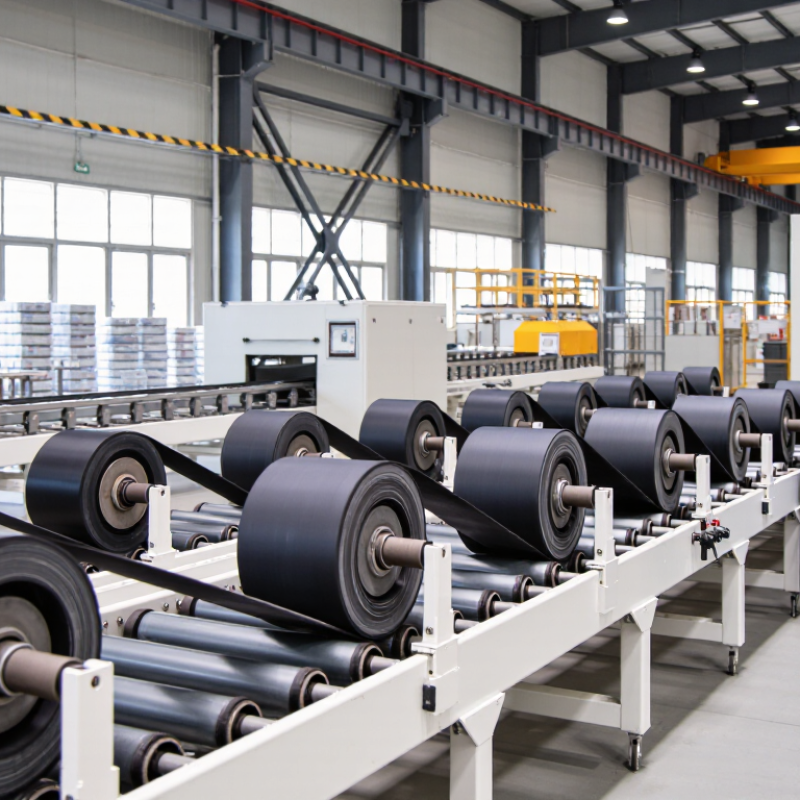
EP conveyor belts use polyester in the warp and polyamide in the weft. This fabric structure offers low elongation lengthwise and flexibility across the belt. In practical terms, a loaded belt can hold its length while bending around pulleys. That matters in mines, quarries, cement plants, and ports, where routes may span long distances or include transfer points. The belt is not indestructible. Sharp rock, trapped fines, and poor tracking can still damage its cover and edges.
The scale of mineral handling helps explain this demand. The U.S. Geological Survey’s Mineral Commodity Summaries 2024 reports global copper mine production of about 22 million metric tons in 2023. Ore must move between extraction, crushing, and processing, often in continuous flows. EP belts are commonly selected for moderate-to-long conveying runs where strength, flexibility, and controlled stretch matter. Buyers should check belt width, cover grade, operating temperature, and required tensile rating against actual site conditions. Dusty transfer points need particular attention. Small leaks of material can become persistent wear. It is easy to overlook that. A belt specification alone cannot compensate for misaligned idlers or uneven loading. CEMA’s Belt Conveyors for Bulk Materials provides established engineering guidance for conveyor design and component selection, but field inspection remains essential.
Buyer-focused guide to EP belt specifications and applications. Supplier names and brand rankings are intentionally omitted.
| No. | Buyer Evaluation Dimension | What to Check | Industrial Relevance |
|---|---|---|---|
| 1 | EP carcass construction | EP refers to a fabric carcass with polyester in the warp and polyamide (commonly nylon) in the weft. Confirm the construction and number of plies in the offered belt. | The carcass provides tensile strength and flexibility for general bulk-material conveying. |
| 2 | Rated tensile strength | Specify the required belt rating, commonly expressed in N/mm, and verify it against the applicable product standard and technical data sheet. | The rating must suit the conveyor design, load, belt length, and operating conditions. |
| 3 | Belt width and length | Match the conveyor’s approved belt dimensions and confirm manufacturing tolerances, splice arrangement, and delivery length. | Correct dimensions support tracking, installation, and compatibility with existing equipment. |
| 4 | Cover grade and thickness | Specify top and bottom cover thicknesses and the required cover properties, such as abrasion or oil resistance, based on the conveyed material. | Mining, quarrying, cement, and recycling operations can expose covers to abrasive or otherwise demanding service conditions. |
| 5 | Abrasion resistance | Request the test method, grade, and test results stated in the supplier’s documentation; compare products using the same standard. | Relevant when conveying abrasive bulk materials such as crushed rock, ore, and clinker. |
| 6 | Heat resistance | For hot materials, confirm the belt’s stated temperature limits and the test or classification basis. Consider both material temperature and exposure duration. | Useful in cement, foundry, and other processes where hot material may contact the belt. |
| 7 | Oil and chemical exposure | Identify the specific oils or chemicals involved and request confirmation that the proposed cover compound is suitable for that exposure. | Important in fertilizer, grain-processing, recycling, and manufacturing environments where contamination may occur. |
| 8 | Flame and static requirements | Where required by the site or regulations, specify the relevant flame-resistance and electrical-resistance standards and request test documentation. | May be necessary in underground, enclosed, or potentially hazardous operating environments. |
| 9 | Quality documentation | Review product specifications, inspection records, test reports, traceability information, and the stated production and acceptance standards. | Documentation helps buyers compare offers and verify that delivered belts match the agreed specification. |
| 10 | Joining and after-sales support | Confirm compatible splicing instructions, installation guidance, warranty terms, lead time, and availability of technical support. | Appropriate joining and support can help reduce installation problems and unplanned downtime. |
Note: Select an EP conveyor belt using the conveyor design, conveyed material, operating environment, and applicable standards. Confirm all performance claims and test results directly with the supplier.
Request batch-linked reports for tensile strength, elongation, adhesion, and cover thickness. Check the sample ID and test method. Paperwork alone is not proof.
Check polyester warp, polyamide weft, fabric specifications, ply count, and a sample cross-section. Match these details against the technical sheet and purchase requirements.
Ask which test standards and editions were used. Confirm that an independent laboratory can reproduce key results. Small details matter.
Look for even rubber coating, clean belt edges, consistent thickness, and readable identification marks. Ask how incoming fabric and finished rolls are inspected.
No. An audit shows production practices, but it cannot replace batch-level test data. A short visit also cannot reveal months of abrasive wear.
Match belt width, ply count, cover grade, thickness, and temperature resistance to the application. A quarry and a cement plant may need different rubber compounds.
Test the belt under its expected load. Record tracking, splice condition, and wear over time. I might still miss something, so document the limits too.
Ask about engineering support, sample approval, lead times, packing, warranty handling, and replacement procedures. Check real project evidence, not just promises.
Not by price alone. Compare quality records, service, and unresolved concerns. A low quote can look appealing; I would still ask why.
This guide introduces Ep Conveyor Belts, explaining their polyester-nylon fabric structure, key performance characteristics, and common applications in mining, ports, cement production, power generation, and bulk material handling. It also outlines the main factors buyers should consider when evaluating manufacturers in China, including production capability, material quality, belt construction, tensile strength, abrasion resistance, testing procedures, customization options, and compliance with applicable industry standards.
A practical comparison framework is provided to help buyers assess manufacturers by product range, quality control, technical support, delivery reliability, communication, and after-sales service. The guide concludes with sourcing recommendations, such as defining operating conditions, selecting the appropriate belt specifications, requesting samples and technical documents, reviewing inspection arrangements, confirming lead times, and evaluating total purchase value rather than price alone. These steps can help international buyers choose a dependable supplier and obtain Ep Conveyor Belts that provide stable performance, long service life, and suitability for their specific conveying requirements.

 Boao Rubber