Choosing China’s best Cold-Resistant Conveyor Belts suppliers requires more than comparing prices or catalog photographs. Low temperatures can harden rubber, reduce flexibility, and weaken splice performance. A belt that appears strong in a warm warehouse may crack beside a frozen stockpile. That difference matters.
Dr. R. Todd Swinderman, a recognized conveyor-technology specialist, has stated, “Conveyor performance depends on the entire system, not the belt alone.” His observation is especially relevant to cold-weather applications. Belt covers, carcass design, pulley diameter, loading impact, and installation quality must work together. Reliable Chinese suppliers should explain their compound formulation, operating temperature range, abrasion resistance, and test procedures. They should also provide traceable technical documents. Claims without test evidence deserve caution.
Look for manufacturers with documented production experience, controlled rubber mixing, and consistent inspection records. ISO 9001 certification can support credibility, but it does not replace product-specific testing. Ask whether belts have been tested in simulated low-temperature chambers. Request details about elongation, tensile strength, adhesion, and splice behavior after exposure. Small details reveal competence. Factory audits can reveal more than polished websites.
The “best” supplier is not always the cheapest. Nor is the largest automatically the safest choice. A thoughtful evaluation should compare service response, customization ability, delivery consistency, and field references. Some specifications may still be incomplete. That is worth admitting. Cold-resistant performance depends on climate, material, speed, and conveyor design. This guide examines those factors and introduces dependable Chinese suppliers for demanding cold-weather operations.
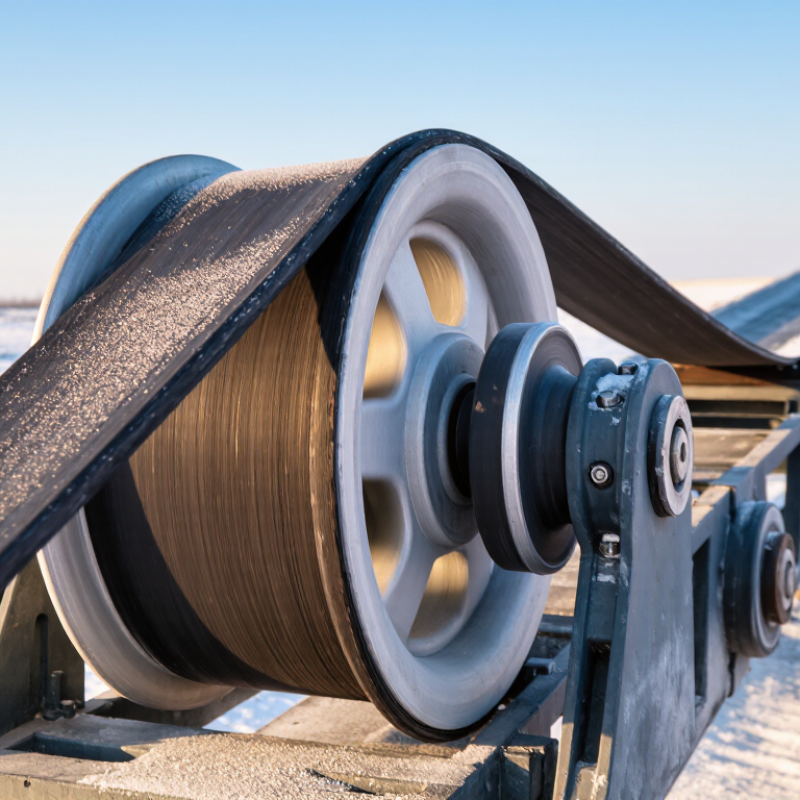
Cold Resistant Conveyor Belts: Definition and Key Performance Features
Cold resistant conveyor belts are designed to transport materials in low-temperature environments without becoming brittle or losing flexibility. They commonly serve frozen warehouses, outdoor mines, ports, and winter processing facilities. Their rubber compounds remain workable when ordinary belts harden and crack.
Temperature ratings matter. Some belts handle moderate cold, while specialized grades perform below -40°C. Buyers should match the rating with actual conditions, not average weather data. A belt may face sudden temperature drops, frozen material, and icy transfer points during one shift.
Key performance features include strong low-temperature flexibility, reliable tensile strength, and resistance to impact, abrasion, and cracking. Good adhesion between rubber and fabric layers helps prevent separation during repeated bending. The cover should also resist cuts from frozen lumps and sharp edges. At installation, checking pulley diameter is essential. A pulley that is too small can stress a stiff belt and damage its splice.
From practical inspection experience, storage conditions are often overlooked. Belts should stay dry, protected from sunlight, and away from heat sources before installation. No belt is completely cold-proof. Long exposure, excessive tension, or poor alignment can still cause failure. A dependable supplier should provide test data, temperature limits, splice guidance, and consistent quality records. Some specifications look impressive on paper, but field performance deserves equal attention.
Materials and construction determine whether a conveyor belt survives freezing service. Natural rubber and polybutadiene often improve flexibility at low temperatures. Carefully selected plasticizers reduce brittleness. However, excessive plasticizer can weaken abrasion resistance.
A cold-resistant belt usually combines a flexible rubber cover, textile carcass, skim layers, and sealed edges. EP or NN fabric supports repeated bending around pulleys. Steel-cord construction suits long distances, but its rubber bonding must remain flexible. Many suppliers specify operating ranges from -40°C to -60°C. Actual performance depends on load, speed, moisture, and stopping frequency. It is easy to trust a temperature label too quickly. Laboratory ratings are not field results. ASTM D2137 low-temperature brittleness testing and ISO-based belt testing can support verification. CEMA’s belt conveyor guidance also stresses evaluating impact, belt tension, pulley diameter, and splice design. Grand View Research estimated the global conveyor belt market at about USD 4.45 billion in 2023, showing strong demand for application-specific construction.
Tips: Request test data for the exact compound, not only the finished belt. Check elongation after cold exposure. Inspect splice flexibility inside a freezer chamber. A belt may look sound outside while cracking near the splice. Keep spare rollers warm before installation. This detail is often missed. Recheck hardness and adhesion after seasonal use, because field conditions can expose weaknesses that laboratory testing does not.
Evaluating China’s cold resistant conveyor belt suppliers requires more than comparing prices. Start with the belt’s tested temperature range, usually shown in Celsius, and request reports for tensile strength, abrasion, adhesion, and low-temperature flexibility. ISO 14890 defines key conveyor belt requirements, while ISO 283 supports tensile-strength testing. A serious supplier should provide traceable results, test dates, and sample identification.
Rubber compound quality matters in northern mines, ports, and refrigerated warehouses. The International Rubber Study Group’s World Rubber Industry Outlook places global rubber demand at roughly 31 million tonnes in 2024, showing how material costs can affect quotations. Compare each offer with natural-rubber price data from the World Bank Commodity Markets Outlook. Extremely low prices deserve questions. Maybe the compound is not optimized for cold service.
Ask for cold-bending and cracking results, not only a catalogue temperature. In practical checks, bend a sample after conditioning it below the promised minimum temperature. Look for surface whitening, edge cracks, or stiff movement. Splice performance also needs attention. A belt can survive cold weather but fail at the joint.
Factory evaluation should include mixing records, curing controls, cover thickness measurements, and production inspection procedures. Request a trial roll when possible. I would not rely on photographs alone. One overlooked issue is storage: moisture, sunlight, and long warehouse periods can change performance before installation. Supplier communication matters too, although technical evidence matters more. A clear warranty should identify test conditions, operating limits, and inspection responsibilities.
Common cold-resistant conveyor belt specification bands are often identified as C1, C2, and C3, with approximate minimum operating temperatures of −45°C, −50°C, and −60°C respectively. When evaluating suppliers, request low-temperature flexibility test reports, rubber compound specifications, splice performance data, batch traceability, and third-party quality certificates. A lower rated temperature indicates stronger resistance to cold operating conditions, but the final selection should match the actual material, speed, load, and ambient temperature.
Reference points: commonly used cold-resistant conveyor belt specification bands; confirm the applicable standard and test method with the supplier before purchasing.
Cold-resistant conveyor belts require more than a low-temperature label. Suppliers should document compliance with ISO 14890 for conveyor belt construction and ISO 812 for low-temperature brittleness testing. These standards help buyers compare tensile strength, elongation, cover thickness, and cracking resistance under controlled conditions.
Testing should begin with conditioned samples. ISO 812 commonly cools rubber specimens at approximately 1°C per minute before bending them at a specified temperature. A failed specimen may show a surface crack invisible during normal operation. ASTM D2136 offers another recognized method for evaluating rubber brittleness at low temperatures. Test records should include temperature, cooling rate, sample direction, and fracture results. Small details matter.
Production control also needs traceability. Each belt roll should link to compound batches, curing time, belt thickness, and splice inspection records. The World Steel Association reported global crude steel production of about 1.89 billion tonnes in 2023, illustrating the demanding scale of bulk-material handling. Yet laboratory performance does not always predict field behavior. Moisture, sharp loading, tension changes, and repeated freezing can accelerate damage. Suppliers should therefore combine laboratory data with site trials, visual inspections, and periodic hardness checks. A perfect report can still miss a real operating problem.
Cold-resistant conveyor belts are essential in frozen mines, ports, food plants, and outdoor stockyards. The scale is substantial: World Steel Association data reports 1,888.2 million tonnes of crude steel production in 2023. The IEA’s Coal 2024 report also indicates that global coal demand remains near record levels. These materials often move across exposed conveyors, where brittle rubber can crack during start-up.
Selection should begin with the actual operating temperature, not an advertised grade. Request test results for low-temperature flexibility, tensile strength, abrasion, and splice adhesion. ASTM D2137 and ISO 812 provide useful references for rubber brittleness testing. Check the lowest start-up temperature, belt speed, trough angle, and material impact energy. A belt rated for −40°C may still fail if moisture freezes inside a damaged cover. That detail is easy to miss.
Maintenance requires short inspection intervals. Look for edge splitting, glazed covers, frozen carryback, and stiff splice zones. Keep scrapers correctly aligned, but avoid excessive pressure. Store replacement rolls indoors, away from sunlight and heaters. Suppliers should provide traceable batch records, technical data sheets, and installation guidance. Field measurements matter more than brochures. A perfect specification is rare. Temperature sensors near loading points can reveal conditions that weather reports overlook. Some facilities also reduce starting torque, allowing rubber to warm gradually before full loading. However, this practice needs site validation, because slower starts can increase material buildup and belt slippage.
Practical comparison of cold-environment conveyor belt options. Temperature figures are typical guidance ranges rather than universal limits; the belt manufacturer’s technical datasheet, splice specification, load conditions, and food-contact requirements should always be verified before purchase.
| Application | Typical Cold Condition | Suitable Belt Construction | Key Selection Criteria | Recommended Cold-Resistance Features | Typical Belt Speed | Maintenance Priorities |
|---|---|---|---|---|---|---|
| Frozen food processing and packaging | Product and air temperatures commonly between −25°C and 0°C; frequent washdown and condensation. | Food-grade PVC, PU, or thermoplastic modular belt with sealed or corrosion-resistant components. | Food-contact compliance, release properties, cleanability, chemical resistance, minimum pulley diameter, and reliable tracking. | Flexible at low temperature Low moisture absorption Oil and fat resistance | Approximately 0.1–1.0 m/s, depending on product handling and line design. | Remove ice and food residue; inspect belt edges, hinges, sprockets, scrapers, and splice condition after sanitation. |
| Cold-storage warehouse conveying | Usually −30°C to 0°C, with repeated transitions between chilled rooms and ambient areas. | Cold-resistant PVC, PU, or rubber belt selected for the lowest operating temperature and transfer-zone conditions. | Flexibility during start-up, belt elongation, pulley diameter, loading impact, and resistance to condensation-related slip. | Low-temperature flexibility Stable tracking Abrasion resistance | Approximately 0.3–2.0 m/s for cartons, totes, and palletized loads. | Check for hardened surfaces, frozen buildup, misalignment, abnormal noise, and drive-start torque before each shift. |
| Ice, seafood, and wet-product handling | Approximately −20°C to 5°C; high water exposure, salt, fish oils, and abrasive ice particles may be present. | Oil-resistant rubber, PU, or hygienic modular belt with stainless or corrosion-resistant accessories. | Resistance to water, oils, salt, abrasion, cleaning chemicals, and repeated temperature cycling. | Oil resistant Abrasion resistant Corrosion-resistant hardware | Approximately 0.1–0.8 m/s where product orientation and inspection are required. | Rinse and sanitize according to the belt specification; dry standing water and check fasteners, cleats, and belt splice. |
| Outdoor aggregate and mining transfer | Ambient temperatures may fall below −30°C; heavy impact, dust, snow, and large temperature fluctuations are common. | Cold-resistant multi-ply or steel-cord rubber belt with appropriate impact, abrasion, and cover grades. | Minimum ambient temperature, impact energy, lump size, belt tension, trough angle, cover abrasion rating, and splice performance. | Cold-resistant rubber High tear resistance Impact-resistant covers | Commonly 1.5–5.0 m/s, subject to material, incline, and system capacity. | Inspect for longitudinal tears, cover cracking, frozen material, pulley lagging wear, idler seizure, and carryback. |
| Pharmaceutical and laboratory cold rooms | Often 2°C to 8°C for chilled products; some controlled areas operate below 0°C. | Low-lint PVC or PU belt with hygienic surface and, where required, approved food or pharmaceutical contact materials. | Cleanability, low particle generation, chemical compatibility, dimensional stability, and traceable material documentation. | Smooth hygienic surface Low contamination risk Chemical resistance | Approximately 0.1–0.6 m/s for controlled product handling. | Use validated cleaning procedures; inspect for surface damage, product entrapment, splice contamination, and tracking drift. |
| Airport, parcel, and logistics systems | Typically −20°C to 10°C in loading bays, unheated areas, or winter outdoor transfer zones. | Low-temperature PVC or PU belt; rubber may be selected for high-impact loading or outdoor exposure. | Noise, flexibility, splice type, acceleration loads, barcode readability, belt tracking, and resistance to parcel impact. | Low noise Flexible splice Impact tolerance | Approximately 0.5–3.0 m/s, depending on sorting and accumulation requirements. | Keep rollers and pulleys free of ice and labels; check tracking, belt tension, splice wear, and emergency-stop function. |
| Incline and decline conveying in cold areas | Commonly −25°C to 5°C, with additional condensation and stopping or restarting under load. | Cold-flexible belt with molded cleats, profiles, or high-grip cover; select pulley diameter to suit the profile. | Incline angle, product stability, cleat attachment, coefficient of friction, loading method, and start-up torque. | High-grip cover Profile retention Low-temperature flexibility | Approximately 0.2–1.5 m/s to limit product movement and rollback. | Check cleats and sidewalls for cracking; remove ice from the return path and verify anti-rollback protection. |
| Hot-to-cold transition lines | Repeated movement between ambient processing zones and areas below 0°C; rapid thermal cycling is possible. | Rubber, PU, or PVC construction specifically tested for thermal cycling and the full temperature range. | Temperature gradient, condensation, belt contraction, splice flexibility, pulley diameter, and transition length. | Thermal-cycle stability Flexible splice Dimensional stability | Usually 0.2–2.0 m/s, based on product and transfer requirements. | Allow belt and components to stabilize where possible; monitor tension, tracking, splice opening, and water or ice accumulation. |
It transports materials in low-temperature environments without becoming brittle. Its rubber remains flexible when ordinary belts harden or crack. Frozen warehouses and outdoor sites commonly use these belts.
Match the rating with the lowest real operating temperature. Consider sudden drops, frozen materials, and icy transfer points. Average weather data can mislead.
Look for low-temperature flexibility, strong tensile performance, and resistance to impact, abrasion, and cracking. The cover should resist sharp frozen lumps. Good layer adhesion helps prevent separation.
A small pulley can place excessive stress on a stiff belt. It may damage the splice during repeated bending. Check the pulley size before installation.
Keep it dry and away from sunlight. Protect it from nearby heat sources. A clean, sheltered storage area is better.
Request temperature limits, test temperatures, cooling rates, and fracture results. Records should also show sample direction and test conditions. Small details matter.
No. Moisture, sharp loading, changing tension, and repeated freezing can accelerate damage. A perfect report may still miss a site problem.
Each roll should connect to its compound batch, curing time, thickness, and splice records. Site trials, visual checks, and hardness measurements add useful evidence. Paperwork alone is not enough.
Cold-Resistant Conveyor Belts are specially engineered to maintain flexibility, strength, and reliable performance in low-temperature environments. Their construction typically combines carefully selected rubber compounds, reinforcing fabric or steel cords, and protective surface layers designed to resist cracking, hardening, impact, abrasion, and moisture. Key performance factors include working temperature range, tensile strength, elongation, adhesion, bending flexibility, and resistance to repeated cold-weather operation.
When evaluating suppliers in China, buyers should review manufacturing capabilities, material traceability, testing procedures, quality-control systems, and compliance with recognized industry standards. Reliable suppliers should provide clear technical specifications, test reports, customization options, and consistent production support. These belts are suitable for mining, ports, cold storage, aggregate handling, food processing, and other applications exposed to freezing conditions. Proper selection should consider belt width, load, conveying distance, pulley diameter, operating temperature, and material characteristics. Regular inspections, correct tension, clean surfaces, and timely repairs can extend service life and reduce unexpected downtime.
Boao Rubber