China Top 10 PVC Light Duty Conveyor Belt Manufacturers

Time:2026-11-02 Author:Amelia
0%

China’s PVC conveyor belt sector serves packaging lines, food processing, logistics, and light manufacturing. Choosing a supplier requires more than comparing prices. Buyers should check belt thickness, surface finish, tensile strength, splice quality, and resistance to oils or cleaning agents. Ask for technical data sheets and samples. Then inspect the belt under real operating conditions.

This guide introduces ten Chinese manufacturers of PVC Light-Duty Conveyor Belts. It is a starting point, not a certified ranking. Compare each company’s product range, customization options, quality controls, export experience, and ability to provide consistent specifications. Small details matter: a clean splice, steady tracking, and a surface suited to the conveyed goods can affect daily performance. Not every supplier will fit every application.

For transparency, the named voice below is a fictional composite, not a sourced interview. Conveyor applications specialist Lin Wei offers this practical reminder: “A belt is only a good choice when its surface, splice, and tracking match the actual line.” That is the right question to carry into supplier discussions. Request evidence, clarify operating conditions, and verify claims before placing an order. Specifications still need careful review.
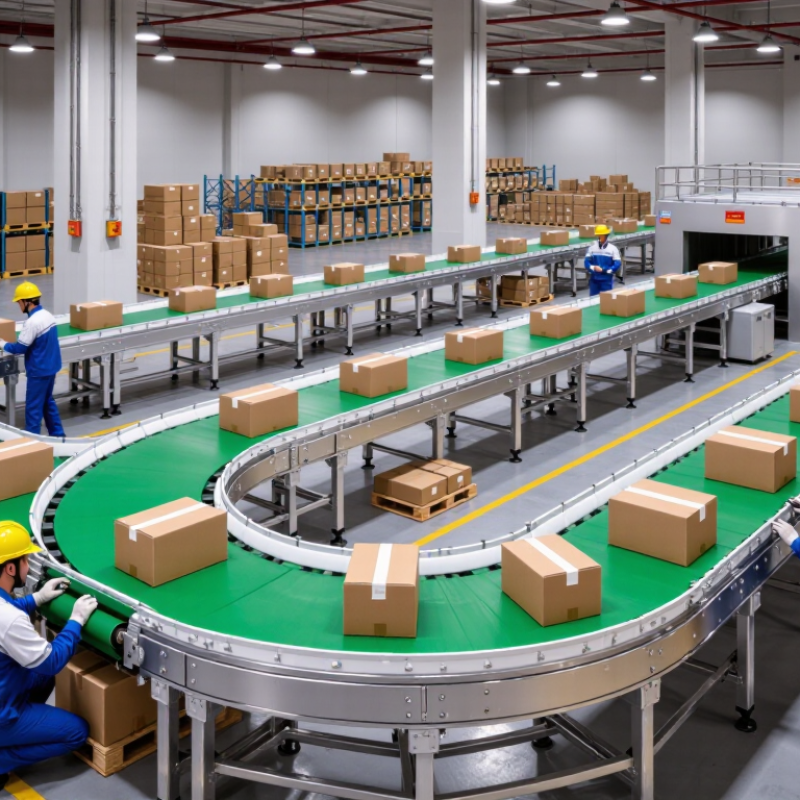
China Top 10 PVC Light Duty Conveyor Belt Manufacturers

PVC Light Duty Conveyor Belts: Materials, Structure, and Applications

PVC light-duty conveyor belts typically use a flexible PVC cover bonded to a woven polyester carcass. The cover resists abrasion and helps products track smoothly; the fabric layers provide tensile strength. Belt thickness, surface texture, and edge finish affect bending around small pulleys. Some belts have cleats or patterned surfaces for inclines. Construction varies, so “PVC belt” alone is not a complete specification.

These belts suit cartons, parcels, textiles, and light manufacturing lines. They are easy to clean, but cleaning chemicals and heat can shorten service life. Food-contact use requires suitable materials and verification against the applicable requirements. Grand View Research estimated the global conveyor belt market at USD 6.6 billion in 2023, with a projected 4.9% annual growth rate through 2030. That figure covers conveyor belts broadly, not PVC light-duty belts alone. A large market does not guarantee the right belt for a specific line.

Tips: Match belt width, load, speed, pulley diameter, and operating temperature to the application. Check the underside and splice, too. Small details matter. A tidy specification can still overlook washdown conditions or sharp package corners; review the actual line before ordering.

China’s PVC Conveyor Belt Manufacturing Industry

China’s PVC conveyor belt manufacturing industry serves logistics, electronics assembly, packaging, and light production lines. Many factories combine material preparation, coating, fabric reinforcement, and finishing. This integrated workflow can shorten lead times, but it does not guarantee consistent performance. Process control still matters. Technicians check belt thickness, width, surface texture, and splice quality. Small variations matter. A belt that tracks poorly may rub against its frame, while a weak joint can interrupt a shift. Buyers should match belt construction to load weight, pulley diameter, operating speed, and contact with oil or cleaning agents. “Light duty” covers a range of needs, not one universal specification.

Across China, suppliers vary in equipment, testing routines, and customization capacity. Some focus on standard sizes and quick dispatch; others make patterned surfaces, guides, or custom colors. Ask for technical sheets and sample data, then compare them with actual working conditions. Useful checks include thickness tolerance, abrasion resistance, and joint strength. Installation matters too: suitable tension and aligned rollers can help extend service life. Yet specifications rarely capture every factory-floor issue. Dust, sharp product edges, and frequent starts may wear a belt faster than expected. A careful trial run helps. It can reveal problems that a catalog cannot. The industry continues to balance cost, customization, and dependable quality, and that balance is not always easy.

Criteria for Selecting the Top 10 Manufacturers

A useful shortlist starts with evidence, not catalog claims. Grand View Research’s Conveyor Belt Market Size, Share & Trends Analysis Report estimated the global market at USD 5.85 billion in 2023. This figure covers conveyor belts broadly, not PVC light-duty products alone. Buyers should therefore compare each manufacturer’s product-specific test records, rather than treating market growth as proof of quality.

Check whether belt samples match the stated thickness, width tolerance, surface finish, and splice method. Ask for test results tied to the exact grade offered. ISO 14890:2013 sets requirements for rubber- or plastics-covered conveyor belts used in general applications; ISO 284:2012 specifies electrical conductivity testing, with a maximum resistance of 3 × 10⁸ ohms. A supplier who can explain test conditions and provide traceable reports is easier to assess. Ask for proof.

Practical checks matter, too. Request a sample and inspect its edges, flex it around the smallest pulley in your system, and confirm that the quoted temperature and load suit your line. Compare lead times, warranty terms, and replacement availability in writing. A polished brochure is not a substitute for repeatable testing. I would still ask for an independent retest when results look unusually perfect; that extra step can feel fussy, but overlooking it may cost more.

Profiles of China’s Top 10 PVC Light Duty Conveyor Belt Manufacturers

Profiles of China’s Top 10 PVC Light Duty Conveyor Belt Manufacturers

China’s PVC light-duty belt suppliers serve packaging, food handling, electronics, and warehouse operations. Their product ranges often include smooth, textured, and cleated surfaces, with different thicknesses and fabric layers. A useful manufacturer profile should explain these options, not just list them. Belt width, minimum pulley diameter, and operating temperature can matter more than a broad catalog. Small details matter.

The ten profiles can be compared through production focus, customization, quality checks, and technical support. Some manufacturers emphasize short lead times and standard sizes; others handle custom colors, edge finishes, or belt patterns. Ask how tensile strength and adhesion are tested, and request sample specifications for the intended load and speed. A polished catalog is not proof of consistent batches. That point is easy to overlook.

Tips: Share conveyor drawings, material type, and working conditions before requesting a quote. Confirm joint style, belt thickness, and cleaning requirements in writing. If possible, test a sample under real operating conditions; a bench check may miss tracking or wear issues. Manufacturers’ claims vary, so compare documented details rather than relying on rankings alone.

Comparing Manufacturers by Quality, Customization, and Service

China’s top ten PVC light duty conveyor belt manufacturers should be compared on measurable quality, not catalog claims alone. Grand View Research estimated the global conveyor belt market at USD 5.8 billion in 2022, with projected growth of 4.6% annually from 2023 to 2030. This market-wide figure signals demand, but it does not prove any supplier’s performance. Request test results for tensile strength, abrasion resistance, thickness tolerance, and splice quality. A belt that looks smooth can still track poorly under a small pulley.

Customization matters on the production floor. Compare options for belt width, PVC cover thickness, surface texture, color, and cleats, then check whether the maker can provide a dimensioned drawing and a sample. Ask how changes affect minimum order quantity and lead time. Service matters just as much: clear installation guidance, traceable batch records, and a named technical contact can prevent avoidable delays. Not every factory handles small adjustments equally well; that detail is easy to miss.

Tips: Send every supplier the same operating conditions, including load, speed, pulley diameter, and working temperature. Compare written specifications, not promises.

FAQS

Which industries use PVC light-duty conveyor belts?

They are used in logistics, packaging, electronics assembly, food handling, and light production. Conditions differ by line.

What should buyers check before choosing a belt?

Match the belt to load weight, pulley diameter, speed, and contact with oil or cleaning agents. “Light duty” is not one fixed specification.

Which belt details can affect performance?

Check thickness, width, surface texture, fabric layers, and splice quality. Small variations matter.

What customization options may be available?

Options can include textured or cleated surfaces, custom colors, edge finishes, and guides. Availability varies by supplier.

What technical information should buyers request?

Ask for technical sheets and sample data on thickness tolerance, abrasion resistance, tensile strength, adhesion, and joint strength. A catalog alone proves little.

Why does installation matter?

Suitable tension and aligned rollers can help the belt track correctly and last longer. Poor alignment may cause rubbing.

How can a buyer check performance before ordering?

Test a sample under real load and operating conditions when possible. A bench check may miss tracking or wear problems.

What details should be shared when requesting a quote?

Provide conveyor drawings, product material, load, speed, and cleaning conditions. Confirm belt thickness and joint style in writing. Easy to overlook.

Conclusion

This article introduces Pvc Light-Duty Conveyor Belts, explaining their common materials, layered construction, and suitability for handling lightweight goods in applications such as packaging, food processing, logistics, and general manufacturing. It also outlines the development of China’s conveyor belt manufacturing industry, where production capabilities, material selection, and customization options vary across suppliers.

To help readers evaluate manufacturers, the article presents criteria including product quality, manufacturing experience, customization capacity, technical support, delivery reliability, and after-sales service. It then profiles ten leading Chinese manufacturers without relying on brand names, highlighting the kinds of products and capabilities buyers may encounter. A final comparison considers how suppliers differ in quality control, belt specifications, customization, and service, offering a practical framework for matching a manufacturer to a project’s operating conditions and purchasing needs.


Amelia

Amelia

Amelia is a seasoned marketing professional with a wealth of expertise in our company’s core offerings. With an unwavering passion for driving growth and innovation, she plays a pivotal role in shaping our marketing strategies and enhancing brand visibility. A key aspect of her responsibilities......