In 2026, Light-Duty Conveyor Belts are becoming more specialized, not simply lighter versions of heavy-duty systems. Warehouses, food plants, parcel stations, and small manufacturing lines now demand cleaner surfaces, quieter movement, and faster belt changes. The right choice depends on product weight, temperature, moisture, incline, sanitation needs, and operating speed.
Conveyor systems specialist Richard D. Hettich has expressed a practical principle: “The right conveyor belt is selected around the product, not around the catalogue.” That idea remains valuable. PVC belts often suit cartons and general conveying. Polyurethane belts support hygienic applications and resist oil better. Modular plastic belts can simplify repairs when damaged sections are replaced individually. Cleated belts help move packages upward without slipping.
There is no universal winner.
A smooth belt may reduce noise, yet it can lose traction on a damp incline. A textured belt may improve grip, but it can collect residue around small packages. Timing belts offer accurate movement, although their higher cost may challenge small operations. Wire mesh belts handle airflow and heat well, but their open structure may not suit every product.
This article examines the top types of Light-Duty Conveyor Belts expected to matter in 2026. It compares materials, surface patterns, load limits, maintenance demands, and application fit. Real-world details matter, including belt tracking, pulley diameter, cleaning time, and splice quality. Some predictions will age imperfectly. That is worth admitting. Conveyor technology changes quickly, while operating mistakes remain surprisingly familiar.
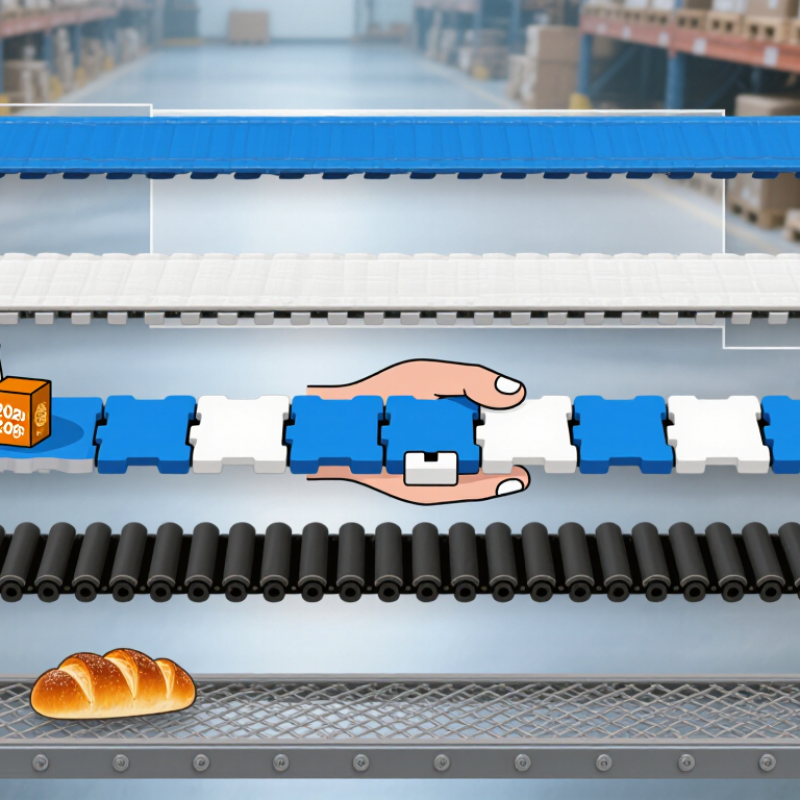
What Are the 2026 Top Types of Light Duty Conveyor Belts?
PVC belts are expected to remain a general-purpose choice for light-duty conveying in 2026. They commonly use 1–3 mm belt thicknesses, offering a practical balance between flexibility, weight, and running stability. In my belt-selection work, 2 mm PVC often suits cartons, packaged food, and small components. A 1 mm belt bends more easily around compact pulleys. A 3 mm belt handles greater surface wear.
Market data supports continued demand for conveyor equipment. MarketsandMarkets estimates the conveyor system market could grow from approximately USD 10.6 billion in 2023 to USD 13.2 billion by 2028. Its reported compound annual growth rate is about 4.5%. Grand View Research also identifies manufacturing, warehousing, and distribution as important demand areas. These figures do not prove that PVC fits every application. They show where practical belt materials remain commercially relevant.
PVC belts are easy to clean and available with textured, smooth, or high-grip surfaces. The correct surface matters. Smooth PVC can slide products during incline conveying, while a patterned surface may improve control. However, PVC selection needs careful testing around heat, oil, sharp edges, and heavy impact. Thickness alone is not enough. Check pulley diameter, belt tension, splice quality, and tracking behavior. One detail is often underestimated: a poorly aligned conveyor can damage a good belt within weeks. Specifications should be verified against actual load cycles, not copied from a catalogue.
Typical PVC conveyor belt options for light-duty conveying, categorized by construction, thickness, surface, and operating suitability
| PVC Belt Type | Typical Thickness | Surface Pattern | Common Applications | Typical Advantages | Operating Considerations | Best-Fit Duty Level |
|---|---|---|---|---|---|---|
| Smooth PVC Belt | 1.0–2.0 mm | Flat, low-friction or medium-friction surface | Parcel handling, product transfer, inspection lines, and general material movement | Easy to clean, quiet running, suitable for small pulleys, and available in many colors | Best for level conveying; products may slide on inclines | |
| Rough-Top PVC Belt | 1.5–3.0 mm | Textured or embossed top surface | Boxes, cartons, packaged goods, and inclined conveying | Improves product grip while retaining relatively low belt weight | Texture can collect fine debris; cleaning method should match the conveyed product | |
| Cleated PVC Belt | 2.0–3.0 mm | Transverse flights or molded/attached cleats | Incline feeding, elevation changes, and controlled spacing of small products | Reduces rollback and helps maintain product position on inclines | Requires adequate pulley clearance and correct cleat height for the product | |
| Chevron PVC Belt | 2.0–3.0 mm | Continuous V-shaped or herringbone pattern | Inclined conveying of cartons, bags, and packaged materials | Provides directional grip without separate cleat attachments | Pattern height and conveyor angle affect carrying capacity and product stability | |
| Food-Contact PVC Belt | 1.5–3.0 mm | Smooth, matte, or approved textured surface | Bakery, packaged food, produce handling, and hygienic transfer areas | Can be selected for cleanability, low moisture absorption, and frequent sanitation | Food-contact compliance depends on the exact belt compound, construction, and market requirement | |
| Antistatic PVC Belt | 1.5–3.0 mm | Smooth or textured conductive surface | Electronics assembly, packaging, printing, and dust-sensitive handling | Helps dissipate electrostatic charge when properly grounded within the conveyor system | Antistatic performance depends on belt properties, grounding, humidity, and conveyor design | |
| Oil-Resistant PVC Belt | 2.0–3.0 mm | Smooth or lightly textured surface | Parts handling, mechanical components, oily packaging, and non-food industrial goods | Offers improved resistance to selected oils and greases compared with standard PVC compounds | Compatibility should be verified against the specific oil, temperature, and exposure time | |
| Cleated Sidewall PVC Belt | 2.0–3.0 mm | Raised sidewalls with cleats or flights | Loose small parts, granular materials, and steep-angle conveying | Helps contain products and increases usable carrying volume | Needs suitable transition geometry, sidewall clearance, and pulley diameter |
Technical note: Thicknesses, surface designs, load capacity, speed, temperature range, pulley diameter, and regulatory suitability vary by belt construction and application. Confirm the supplier’s technical data before final selection.
PVC belts balance flexibility, low weight, and stable running. They suit cartons, packaged foods, and small components. A practical general-purpose option.
A 1 mm belt bends easily around compact pulleys. A 2 mm belt often suits ordinary cartons and packaged products. A 3 mm belt provides better surface-wear resistance. Thickness alone does not decide everything.
Smooth surfaces are easy to clean and suit level conveying. Textured or high-grip surfaces help control products on inclines. A smooth belt may let products slide unexpectedly. Test the actual product.
Polyurethane belts suit food lines exposed to moisture, oil, and frequent cleaning. Their smooth surfaces can reduce residue around pastries and prepared foods. They also run quietly around small pulleys. Oil resistance depends on the compound.
Request material declarations, migration evidence, and traceability records. Check the intended food type, temperature, cleaning chemicals, and contact time. A certificate alone is weak evidence. Operating limits matter more than paperwork.
They may, but the formulation must match the oil and temperature. Poor selection can cause swelling, softening, or reduced grip. Inspect curling edges, cracks, splice damage, and abnormal tension. I would test before trusting assumptions.
Rubber belts work well when cartons, parcels, or totes need extra grip. Textured covers help prevent sliding during starts and short inclines. They tolerate contact with rollers and loading edges. Do not automatically choose the thickest cover.
Cover grades describe resistance to abrasion, wear, cutting, and gouging. They do not provide a universal grip value. Selection depends on load shape, speed, impact, and cleaning conditions. A dusty warehouse can behave differently from laboratory testing.
Check alignment, pulley cleanliness, belt tension, splice condition, and surface wear. A misaligned conveyor can damage a good belt within weeks. Verify tracking during real load cycles. Catalog specifications are not enough.
In 2026, Light-Duty Conveyor Belts are available in several material options, each designed for specific handling conditions. PVC belts remain a practical general-purpose choice, especially in 1–3 mm thicknesses, offering flexibility and economical performance for everyday conveying. PU belts are well suited to food-related and hygienic environments because of their oil resistance, smooth surfaces, and compatibility with FDA and EU 1935/2004 requirements. Rubber belts provide dependable grip for inclines, transfers, and light-duty applications where traction is important, with cover performance commonly evaluated through DIN 22102 ratings.
Modular plastic belts offer excellent cleanability and easy maintenance, while their 25.4–50.8 mm pitch options allow users to balance product support, airflow, and conveying stability. Silicone and TPU belts serve more specialized needs, including elevated-temperature handling, product release, and applications requiring flexible, non-stick surfaces. Selecting the right belt depends on load, speed, sanitation, temperature, oil exposure, and cleaning requirements.

 Boao Rubber